Taking your dog for a ride is one of those simple joys in life. Whether you’re heading to the park, visiting the vet, or embarking on a long road trip, having your furry best friend in the passenger seat makes the journey better. The happy panting, the nose pressed against the window, and the excitement of a new destination—it’s priceless.
But then the ride ends. You get out, look back at your car’s interior, and realize the “priceless” memory has left a very visible souvenir.
Dog hair. Everywhere.
It clings to the upholstery, weaves itself into the floor mats, and somehow migrates into crevices you didn’t even know existed. If you own a breed that sheds—think Huskies, Labs, or German Shepherds—you know the struggle is real. It can turn a pristine interior into a fur-covered disaster zone in minutes.
If you are tired of your car seats looking more like your dog than actual seats, you are in the right place. We aren’t just going to tell you to vacuum it; we are going to walk you through specific, effective methods to reclaim your car from stubborn pet hair. We will cover the best tools, surprising household hacks, and preventative tips to stop the mess before it starts.
Getting your car clean doesn’t have to be expensive or frustrating. With a little patience and the right approach, you can restore your vehicle’s interior without spending a fortune at a detailer.
Why Is Dog Hair So Hard to Remove?
Before we jump into the solutions, it helps to understand why this chore is so difficult. Why can’t you just wipe it off like crumbs or dirt?
Dog hair, especially the shorter, coarser kind, acts like tiny needles. It doesn’t just sit on top of the fabric; it pokes its way deep into the fibers.
- The Velcro Effect: Think about how Velcro works. One side has hooks, and the other has loops. Your car’s upholstery acts like the loop side, snagging the hair and holding it tight.
- Static Electricity: This is the invisible enemy. Dry air inside the cabin, combined with the friction of your dog moving around, builds up a static charge. This charge essentially glues the hair to the seat. When you try to brush it, the static makes the hair cling even harder or just jump to a new spot.
- Fabric Weave: Durable car fabrics are designed to be tough, but that tight weave creates the perfect trap for fur.
To win this battle, you have to break the bond between the hair and the fabric. A simple vacuum often isn’t enough because it doesn’t have the friction needed to pull those “needles” out.
Essential Tools for Removing Dog Hair
Having the right tools makes any job easier. Professional detailers have their secrets, but most of their success comes down to using the right equipment for the specific type of fabric they are cleaning.
You don’t need to buy everything on this list, but having a few of these in your cleaning arsenal will make a huge difference.
The Power of a Good Vacuum
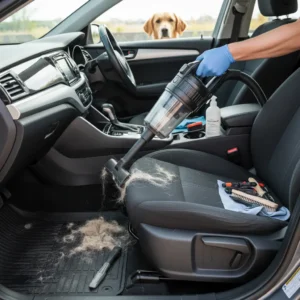
A powerful vacuum cleaner is your number one weapon, but technique matters just as much as horsepower.
- Suction Power: Weak handheld vacuums might pick up loose dirt, but they often struggle to pull hair out from deep within the fabric. A shop vac (wet/dry vacuum) usually offers the high suction needed to dislodge stubborn fur.
- The Right Attachments: Look for a rubber-bristled pet hair attachment. These rubber bristles agitate the fabric and loosen embedded hair, making it easier for the vacuum to suck it up. Standard plastic tools glide over the hair, but rubber creates the friction needed to grab it.
- Technique: Vacuum in multiple directions—up and down, then side to side. This attacks the woven hairs from different angles. Go slow. Giving the machine time to lift the debris is key.
Pro Tip: Don’t forget the nooks and crannies. Dog hair migrates under the seats, into door pockets, and even into air vents. A comprehensive vacuuming job sets the stage for the deep cleaning methods below.
Simple DIY Methods Using Household Items
You might be surprised to learn that some of the most effective hair-removal tools are probably sitting in your kitchen drawer or laundry room right now. These methods are fantastic for maintenance between deep cleans or if you are in a pinch and need to clean the car quickly.
The Rubber Glove Trick
This is one of the most popular DIY methods because it works incredibly well and costs almost nothing.
What You Need:
- A standard pair of rubber dishwashing gloves (textured fingertips work best).
- A bucket of water (optional).
How It Works:
- Put on the gloves.
- Firmly wipe your hands across the car seats and floor mats.
- The friction of the rubber acts like a magnet, pulling the hair up from the fabric and rolling it into clumps.
- Pick up the clumps and throw them away.
For extra power, lightly dampen the gloves with water. The moisture increases the grip and helps break the static charge holding the hair to the seat. Rinse the glove in the bucket when it gets covered in fur and repeat. It is surprisingly satisfying to watch the hair ball up as you wipe.
Squeegee Your Seats
A window squeegee isn’t just for glass. If you have one for your shower or car windows, you have a potent hair removal tool ready to go.
What You Need:
- A handheld squeegee with a clean rubber blade.
How It Works:
Simply drag the squeegee firmly across the upholstery. Just like the rubber glove, the rubber blade creates friction that grabs the hair. You will see a pile of fur accumulating along the edge of the blade. This is especially effective on large, flat areas like the back bench seat or the trunk floor. It effectively “shaves” the layer of fur off the seats.
Balloons and Static Electricity
This method uses science to your advantage. It’s not the best for deep cleaning, but it is great for loose, floaty hair, and it’s a fun way to get kids involved in the cleanup.
What You Need:
- A standard party balloon.
How It Works:
Inflate the balloon and rub it on your own clothes to build up a static charge. Then, pass the balloon just above the surface of the car seats. The static electricity will attract the loose dog hair, lifting it from the fabric onto the balloon. It acts like a magnet for those light hairs that tend to fly away when you try to wipe them.
Deep Cleaning Solutions for Stubborn Hair
Sometimes, the hair wins the first round. If you haven’t cleaned your car in months and your dog rides with you daily, the simple friction methods might not be enough. You need to bring out the heavy hitters.
Fabric Softener Spray
Fabric softener contains ingredients designed to coat fibers and reduce static cling. Since static is what binds dog hair to your upholstery, this solution attacks the root of the problem.
What You Need:
- A spray bottle.
- Water.
- Liquid fabric softener.
How It Works:
- Mix the Solution: Combine 1 part fabric softener with 7 parts water in a spray bottle. Shake well.
- Mist the Seats: Lightly mist the solution over the upholstery. Do not soak the seats; you don’t want the foam underneath to get wet, as that can cause mold. A light dampness is all you need.
- Wait: Let it sit for a few minutes. This allows the softener to relax the fibers and break the static bond.
- Remove: Use a stiff brush or a vacuum to remove the loosened hair. You will likely find that the vacuum picks up significantly more hair after this treatment.
Bonus: Your car will smell like fresh laundry afterwards!
The Pumice Stone Method
Specialized grooming stones, often made of pumice, are designed specifically for pet hair removal. They are abrasive enough to grab hair but usually gentle enough for sturdy fabrics.
What You Need:
- A pet hair removal stone (like a Fur-Zoff).
How It Works:
Gently drag the stone across the fabric in one direction. The porous surface acts like an eraser for fur, pulling embedded hairs out of the weave.
Warning: Be very careful with this method. It is excellent for durable carpets and floor mats, but it can be too abrasive for delicate fabrics like velour or leather. Always test on a small, hidden area first. Never use this on plastic trim or leather seats, as it will scratch them instantly.
Duct Tape or Lint Rollers
For quick touch-ups, sticky tape is a classic solution.
How It Works:
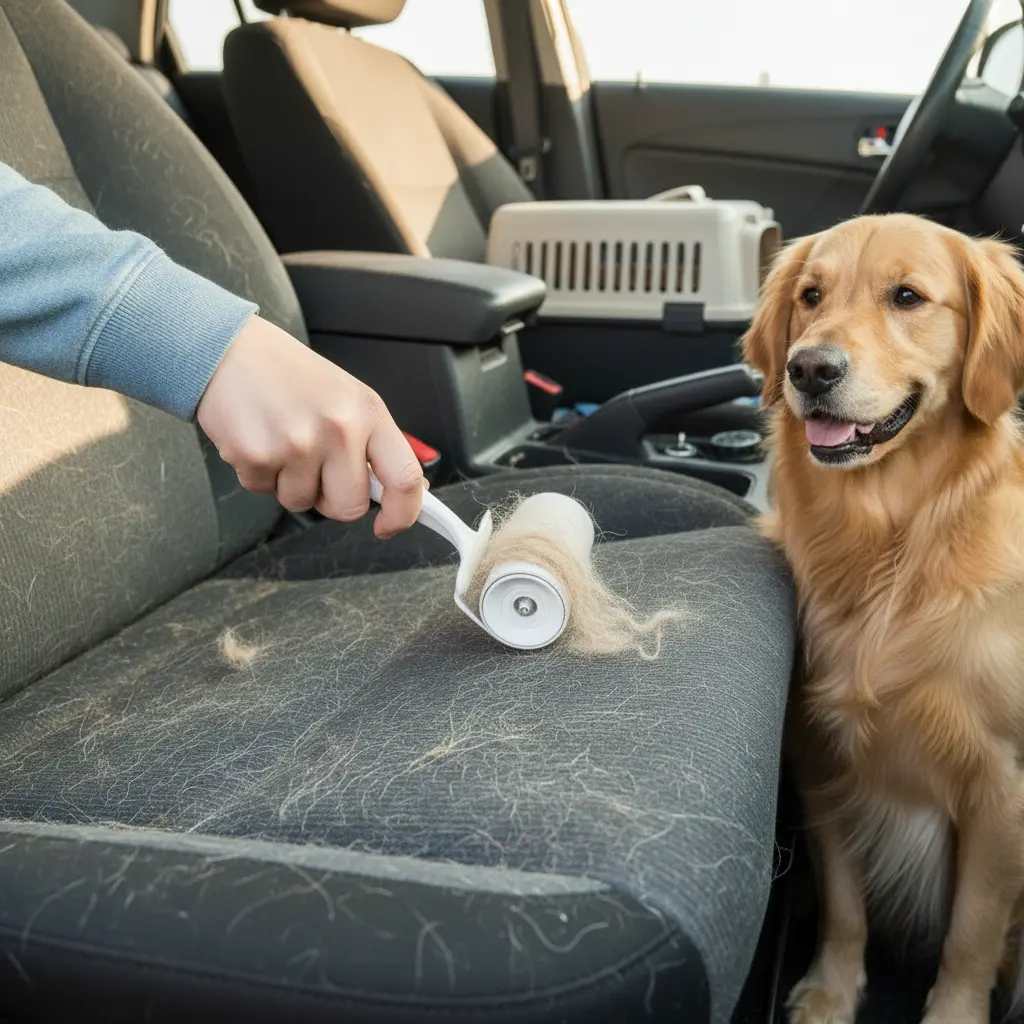
Wrap duct tape around your hand (sticky side out) and press it repeatedly onto the seats. Alternatively, use a giant lint roller. This is great for cleaning a specific spot before a passenger gets in, but it can be time-consuming and wasteful if you try to do the whole car this way. It generally only picks up the top layer of hair, not the deeply embedded stuff.
Keeping Hair Under Control: Prevention Is Key
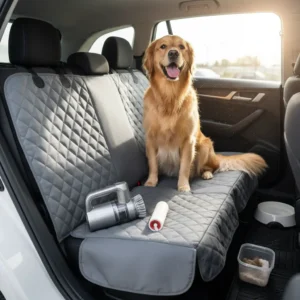
Once you’ve got your car looking spotless, you want to keep it that way. Cleaning dog hair is a repetitive task, but you can make it much easier on yourself by minimizing the mess before it happens.
Use Seat Covers
The single most effective way to protect your seats is to use a durable, waterproof car seat cover designed for dogs.
These covers act as a barrier. Instead of the hair weaving into your car’s upholstery, it sits on top of the cover. Most are made from heavy-duty canvas or polyester that is resistant to hair, scratches, and muddy paws. When the cover gets dirty, you simply unclip it, shake it out, and throw it in the washing machine. It’s a small investment that saves hours of cleaning time.
Regular Brushing
Brush your dog regularly, especially right before a car ride. It sounds simple, but removing loose fur from your dog means less fur ends up on your seats.
If you can spend five minutes brushing your dog with a de-shedding tool before they hop in the car, you save yourself thirty minutes of vacuuming later. Plus, most dogs love the extra attention!
Containment Safety
Using a dog hammock or a travel crate serves two purposes: it contains the mess and keeps your pet safe.
A dog hammock hangs between the front and back headrests, creating a “U” shape that protects the backseat and the floor. It keeps the hair confined to one specific area rather than letting it drift all over the car.
Crates are even better for containment and are statistically the safest way for a dog to travel. They prevent your dog from becoming a distraction to the driver and keep them secure in the event of a sudden stop.
For more detailed information on keeping your pet safe on the road, the Center for Pet Safety offers valuable resources and crash-test data on various containment products.
Conclusion
A clean, hair-free car makes every journey more enjoyable for both you and your passengers. It’s nice to be able to offer a ride to a friend without having to apologize for the layer of fur on the passenger seat.
You don’t need to be a professional detailer to get professional results. By combining these cleaning techniques—like the rubber glove trick or the fabric softener spray—with a few preventative measures, you can spend less time cleaning and more time creating happy memories with your four-legged co-pilot.
Remember, consistency is your friend. A quick wipe-down once a week is far easier than a massive deep-clean once a year. Find the method that works best for your specific car interior and your dog’s coat type, and stick with it.
Explore our other articles at Dog Wellness Hub for more practical tips on living your best life with your dog!
FAQs
Q: Do these methods work on all types of car seats?
Most methods work on standard cloth upholstery, but be careful with delicate fabrics like velour. For leather, a damp cloth is usually enough since hair doesn’t embed in it.
Q: How often should I clean dog hair out of my car?
It depends on how much your dog sheds, but a quick weekly maintenance clean prevents buildup. Do a deep clean monthly or as needed.
Q: Will the fabric softener spray leave a residue?
If diluted properly (1 part softener to 7 parts water), it shouldn’t leave a sticky residue. Mist lightly and let it dry completely.
Q: Is it safe to use a wire brush on car seats?
No, wire brushes are too harsh and can rip or fray automotive upholstery. Stick to rubber brushes or pumice stones designed for detailing.
Q: Can I use a lint roller for the whole car?
You can, but it is inefficient and wasteful for large areas. Lint rollers are best for quick touch-ups on small spots or your clothes.
About The Author