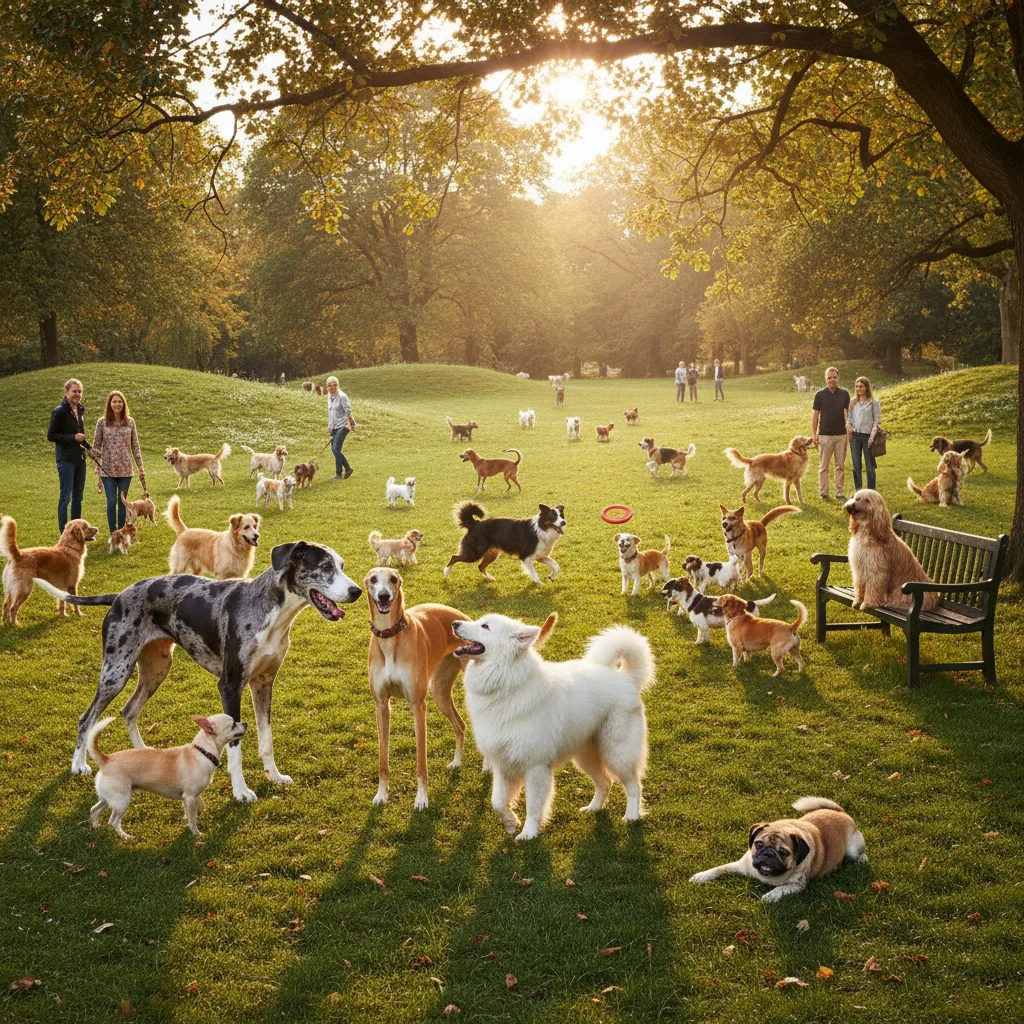
If you are a dog lover, you have probably found yourself scrolling through photos of puppies online or watching the National Dog Show, marveling at the sheer variety of canines out there. From the cloud-like fluff of a Samoyed to the aerodynamic build of a Greyhound, the diversity in the dog world is nothing short of incredible.
But have you ever tried to pin down an exact number? If you ask Google, “How many dog breeds are there?”, you might expect a simple figure like 300 or 500. Instead, you likely discovered that it is a surprisingly tricky question to answer.
The simple truth is that there is no single, magic number. The total count changes depending entirely on who you ask and where you live. It is a bit like asking how many countries there are—the answer depends on which organization’s map you are looking at.
In this guide, we are going to dig into why counting dog breeds is so complicated, explore the major organizations that decide who makes the list, and look at the fascinating world of dogs that exist beyond the official rulebooks.
Why the Numbers Don’t Match Up
Counting dog breeds isn’t as straightforward as counting apples in a basket. This is because there is no single, global government for dogs. Instead, several major organizations, known as kennel clubs, maintain their own separate registries.
Each club has its own specific set of rules, history, and standards for what it takes to be considered an “official” breed. A dog might be a household name in France but completely unrecognized in the United States. This gap in international recognition is the main reason you will see different totals depending on which source you consult.
What Exactly Is a Kennel Club?
Kennel clubs are essentially the gatekeepers and historians of the dog world. Their primary job is to maintain the integrity of purebred bloodlines. They do this by:
- Setting Standards: They create the “breed standard,” which is a detailed blueprint describing a breed’s ideal appearance, temperament, movement, and physical traits.
- Tracking Lineage: They keep massive databases of pedigrees to ensure dogs are truly purebred.
- Hosting Events: They organize dog shows and field trials to evaluate breeding stock.
The path to recognition is long and difficult. For a new breed to be added to a registry, breeders usually have to prove that there is a healthy, stable population of dogs and that puppies will consistently inherit the same specific traits from their parents. This concept is known as “breeding true.”
The Big Counts: What the Major Clubs Say
To understand the scope of dog breeds, we need to look at the numbers from the world’s most influential kennel clubs. The differences between them paint a clear picture of just how complex—and political—the world of dog breeds can be.
Fédération Cynologique Internationale (FCI)
If you want the most global perspective, you look to the FCI. Based in Belgium, the Fédération Cynologique Internationale (World Canine Organisation) is the largest federation of kennel clubs on the planet. It has members and contract partners in roughly 99 countries.
- The Count: The FCI currently recognizes 356 breeds.
- The Approach: They group dogs based on their original function (like sheepdogs, terriers, or dachshunds) and country of origin. This gives us a fascinating map of canine history. because the FCI covers so many countries, their list is often considered the most comprehensive international standard.
American Kennel Club (AKC)
For dog enthusiasts in the United States, the American Kennel Club (AKC) is the gold standard. Founded back in 1884, it is a non-profit registry that practically everyone in the U.S. recognizes.
- The Count: As of today, the AKC fully recognizes 200 breeds.
- The Process: The AKC is known for being somewhat more conservative or slower to recognize foreign breeds compared to the FCI. They maintain a “Miscellaneous Class,” which serves as a sort of waiting room for breeds on their way to full recognition. This ensures that by the time a breed is “official,” it has a solid, sustainable population in the U.S.
The Kennel Club (UK)
Across the pond, we have The Kennel Club in the United Kingdom. It holds the distinction of being the oldest recognized kennel club in the world, founded in 1873.
- The Count: They recognize 222 distinct breeds.
- The Philosophy: Similar to the AKC, they have a rich tradition and specific groupings (like Gundog, Hound, and Pastoral). Being the oldest, they have heavily influenced how other clubs operate.
Canadian Kennel Club (CKC)
In Canada, the Canadian Kennel Club (CKC) serves as the primary registry for purebred dogs.
- The Count: The CKC recognizes 187 breeds.
- The Connection: While they operate independently, there is often overlap with AKC breeds due to the close geographic proximity, though their lists are not identical.
Beyond the Official Lists: The “Unofficial” Dogs
If we stopped counting at the official registries, we would be missing a huge part of the canine population. The world is full of dogs that aren’t on these formal lists but are beloved by millions of families.
If you were to add all of these unofficial but distinct types of dogs to the total, the number would easily climb into the thousands.
1. The Rise of Designer Mixes
You almost certainly know a “designer dog.” These are dogs created by intentionally crossing two different purebreds to achieve a specific look or temperament.
- Popular Examples: The Goldendoodle (Golden Retriever + Poodle), the Puggle (Pug + Beagle), or the Cockapoo (Cocker Spaniel + Poodle).
- Status: While these dogs are incredibly popular and fetch high prices, they are not considered distinct breeds by major kennel clubs like the AKC or FCI. They are technically mixed-breed dogs. However, their popularity is so massive that they have their own registries and clubs.
2. Landrace Dogs
This is a fascinating category that often gets overlooked. Landrace dogs are types of dogs that developed naturally over centuries in a specific geographical area.
Unlike modern breeds that were carefully designed by humans for specific looks, landraces adapted to their local environment and tasks (like guarding livestock or hunting vermin) largely on their own.
- Natural Selection: Nature did the breeding here, not humans.
- The Evolution: Many of today’s “official” breeds started out as landraces. For example, the Border Collie began as a landrace herding dog in the border country between Scotland and England before it was standardized. There are still many landrace populations around the world that haven’t been standardized yet.
3. Developing Breeds
These are the “up-and-comers.” These are newer breeds that are still in the process of being refined. Dedicated enthusiasts and breeders are working hard to create a consistent standard with the ultimate goal of earning official recognition from a major kennel club.
This phase can take decades. It requires keeping meticulous records of lineage and health to prove that the breed is viable and distinct from its ancestors.
Why Does Breed Recognition Matter?
You might be wondering, “Why does it matter if a dog is on a list or not? A dog is a dog!”
And on an emotional level, you are absolutely right. A pedigree doesn’t make a dog more lovable or loyal. However, breed recognition plays a few important roles:
- Predictability: When a breed is recognized, it means there is a standard. If you buy a purebred Labrador Retriever, you know roughly how big it will get, what its coat will be like, and what its general temperament should be. This helps families choose a dog that fits their lifestyle.
- Health Tracking: Official clubs track genetic health issues. This allows breeders to screen for common problems (like hip dysplasia in German Shepherds) and try to reduce them in future generations.
- Preservation: Some breeds are ancient and rare. Official recognition helps preserve these historic bloodlines from going extinct.
Celebrating Canine Diversity

The incredible spectrum of dog breeds is a living record of the special bond between humans and dogs. For thousands of years, we have shaped dogs to help us with tasks like hunting, herding, guarding, and simply being loyal companions. This long partnership created the amazing variety of sizes, coats, and personalities we know today.
Knowing a dog’s breed can give you clues about its grooming needs, energy level, or potential disposition. But it’s just a starting point. Every dog is an individual, and its personality is also shaped by its training, environment, and unique experiences.
Whether you have a champion show dog with a mile-long pedigree or a lovable mutt of mysterious origins, the most important thing is to give them the love, care, and healthy lifestyle they deserve.
At Dog Wellness Hub, our mission is to empower you with trusted information to help your dog live its happiest, healthiest life. Explore our library of articles to learn more about everything from nutrition to behavior.
Frequently Asked Questions (FAQs)
What is the newest AKC-recognized breed?
The Lancashire Heeler is the most recent addition, officially joining the AKC registry in January 2024.
Are mixed-breed dogs healthier than purebreds?
They can benefit from “hybrid vigor,” potentially lowering the risk of some genetic conditions, but diet, exercise, and vet care are equally critical for health.
How is a new dog breed created?
It involves generations of selective breeding where breeders choose dogs with specific traits to ensure those characteristics become consistent and predictable in offspring.
Can I register my mixed-breed dog?
Yes, many clubs like the AKC have programs (like Canine Partners) that allow mixed-breed dogs to register and compete in sports like agility and obedience.
Why do different countries have different breeds?
Breeds often develop to suit local climates and tasks; a dog bred for herding in the Scottish Highlands has different needs than a hairless dog bred in Mexico.
About The Author