
Welcoming a dog into your home is an exciting new chapter. It’s a time of happy greetings, playful antics, and the start of a beautiful friendship. Along with all the fun comes the responsibility of keeping your new companion healthy. One of the most important things you can do for your dog’s long-term health is to make sure they are properly vaccinated.
Vaccines are a cornerstone of preventive veterinary care. They protect your dog from a range of serious, and sometimes deadly, diseases. The world of veterinary medicine can seem complicated, with talk of different viruses and vaccination schedules. This guide is here to simplify it all. We will walk you through the types of vaccines, why they matter, and what to expect, so you can feel confident in making the best health decisions for your furry family member.
Why Vaccinating Your Dog is So Important
Vaccines work by preparing your dog’s immune system to fight off specific diseases. They introduce a harmless piece of a virus or bacteria, which teaches the body to recognize and create defenses against the real thing. Think of it as a dress rehearsal for the immune system. If your dog is ever exposed to the actual illness, their body will be ready to defeat it.
This process is incredibly effective. Diseases that were once common and devastating, like Canine Distemper, are now rare because of widespread vaccination. By vaccinating your own dog, you’re not just protecting them. You are also contributing to the health of the entire dog community.
This is a concept known as “herd immunity.” When most dogs in a population are vaccinated, it becomes much more difficult for a disease to spread. This protects the most vulnerable animals, such as puppies who are too young for all their shots or dogs with weakened immune systems. Your single act of vaccination has a ripple effect that keeps many other dogs safe.
Core vs. Non-Core Vaccines Explained
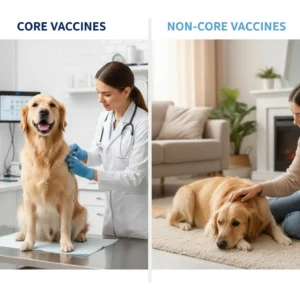
Veterinarians classify vaccines into two main categories: core and non-core. This helps create a customized vaccination plan that fits your dog’s specific needs instead of a one-size-fits-all approach.
Core Vaccines: The Must-Haves for Every Dog
Core vaccines are recommended for every single dog, no matter their breed, size, or lifestyle. They protect against diseases that are widespread, easily transmitted, and often fatal.
- Rabies: This is a deadly virus that attacks the central nervous system. It can infect any mammal, including humans, and is primarily spread through the bite of an infected animal. Because of the serious risk to public health, the rabies vaccine is required by law in almost every state. Puppies typically get their first rabies shot around 16 weeks of age, with a booster given one year later. After that, boosters are required every one to three years, depending on your local laws.
- Canine Distemper: This is a contagious and severe virus that affects a dog’s respiratory, gastrointestinal, and nervous systems. It can cause permanent brain damage in dogs that survive. It spreads through the air, so your dog doesn’t even need to come into direct contact with an infected animal to catch it.
- Parvovirus: Often just called “Parvo,” this is a highly contagious virus that is particularly dangerous for puppies. It causes severe vomiting and bloody diarrhea, leading to life-threatening dehydration. The virus is very hardy and can survive in the environment for months, meaning it can be brought into your home on shoes or clothing.
- Canine Hepatitis (Adenovirus): This virus targets the liver, kidneys, and eyes. While now less common due to effective vaccines, it remains a serious threat. It is spread through the bodily fluids of infected dogs.
To make things easier, the vaccines for Distemper, Parvovirus, and Hepatitis are usually given together in one combination shot, often called the DAPP or DHPP vaccine. This single injection reduces the number of pokes your puppy needs.
Non-Core Vaccines: Recommended Based on Lifestyle
Non-core vaccines are considered optional, but they might be very important for your dog. Your veterinarian will recommend these based on your dog’s unique risk of exposure. Factors like your geographic location, your dog’s daily activities, and your travel habits all play a role.
- Bordetella (Kennel Cough): If your dog is a social butterfly who visits doggy daycare, boarding kennels, dog parks, or group training classes, this vaccine is a must. Bordetella is a leading cause of kennel cough, a respiratory infection that causes a persistent, harsh cough. While not usually life-threatening, it can be very uncomfortable for your dog and can last for weeks. Many facilities will require proof of this vaccination before allowing your dog to attend.
- Leptospirosis: This is a bacterial disease spread through the urine of infected wildlife, such as raccoons and rodents. The bacteria can contaminate soil and standing water, like puddles, ponds, or lakes. Dogs can get sick from drinking or swimming in contaminated water. “Lepto” can cause severe kidney and liver failure and can also be transmitted to people. It’s a growing concern even in urban areas.
- Lyme Disease: Transmitted by certain types of ticks, Lyme disease can lead to fever, joint pain, and lameness. It is most common in the Northeast, Upper Midwest, and Pacific coast regions of the United States. If you live in or travel to an area with a high tick population, this vaccine, combined with regular tick prevention, offers strong protection.
- Canine Influenza: Also known as the dog flu, this is another contagious respiratory infection. It spreads easily in places where dogs gather. Your vet might recommend this vaccine if your dog is frequently in social settings or if there is an outbreak in your area.
For more information on specific animal diseases and vaccination, you can consult resources from the U.S. Department of Agriculture (USDA) Animal and Plant Health Inspection Service.
A Typical Vaccination Timeline for Your Dog

Building immunity takes time. Your vet will create a specific schedule for your puppy, but here is a general idea of what you can expect.
Puppy Vaccination Schedule
Puppies get some temporary immunity from their mother’s milk, but this protection wears off after a few weeks. The vaccination series is designed to build their own long-lasting immunity.
First Visit (6-8 Weeks Old)
- Your puppy will get their first DAPP shot to begin protection against Distemper, Adenovirus, and Parvovirus.
- A veterinarian will also perform a full physical exam to ensure your puppy is healthy.
Second Visit (10-12 Weeks Old)
- A second DAPP booster is given to strengthen the immune response.
- If needed, this is when the first dose of a non-core vaccine series, like Leptospirosis or Lyme disease, might be started.
Third Visit (14-16 Weeks Old)
- The final puppy DAPP booster is administered.
- The first Rabies vaccine is typically given at this age.
- Boosters for any non-core vaccines will also be given.
Keeping Up with Boosters for Adult Dogs
Vaccinations aren’t just for puppies. Adult dogs need periodic boosters to maintain their immunity over their lifetime.
- Core Vaccines: After the puppy series and a one-year booster, the DAPP vaccine is typically given every three years. The Rabies vaccine is boosted every one to three years, according to state law. Be sure to keep your dog’s rabies certificate in a safe place, as you’ll need it for licensing and other services.
- Non-Core Vaccines: Immunity from vaccines like Bordetella, Leptospirosis, and Lyme disease does not last as long. These typically require annual boosters to ensure your dog stays protected.
Your veterinarian is the best person to help you create a vaccination plan that is perfectly suited to your dog. They will consider your pet’s age, overall health, and specific lifestyle to recommend a schedule that provides protection without over-vaccinating. An older dog who stays home will have different needs than a young, active dog who joins you on hikes.
Your proactive steps in vaccination are a true investment in your dog’s future. By staying on schedule, you are setting your companion up for a long, vibrant, and healthy life by your side.
Ready to make sure your best friend is protected? Schedule an appointment with your veterinarian to discuss your dog’s specific vaccination needs. A simple conversation today can prevent future heartbreak and ensure many more years of happy memories together.
Frequently Asked Questions (FAQs)
Q: Are there side effects from vaccines?
A: Most dogs have no issues. Some may feel a little tired, have mild soreness at the injection site, or a slight fever for a day. These are normal signs that the immune system is responding. Serious reactions are very rare.
Q: Does my indoor dog still need to be vaccinated?
A: Yes. Viruses can enter your home on your clothes and shoes. Also, the rabies vaccine is required by law. You also want them protected in case of an emergency or if they accidentally get outside.
Q: What is a titer test?
A: A titer test is a blood test that measures the level of antibodies in your dog’s blood for a specific disease. It can help determine if a booster vaccine is needed, but it is not legally accepted as a substitute for the rabies vaccine.
Disclaimer: The information provided in this blog post is for educational purposes only and does not constitute veterinary advice. Always consult with a qualified veterinarian regarding your dog’s health and medical conditions.
About The Author