If you are new to the world of dog training, teaching the “sit” command is the perfect place to start. It is a fundamental skill that every dog, whether a playful puppy or a wise senior, can learn. But teaching your dog to sit is about more than just showing off a new trick; it is about building a foundation for better behavior, safety, and a stronger bond between you and your furry companion.
At Dog Wellness Hub, we believe training should be a positive and rewarding experience for both you and your dog. This comprehensive guide provides easy-to-follow steps, expert tips for overcoming common hurdles, and answers to frequently asked questions, all designed to help you succeed.
Why Is Teaching “Sit” So Important?
Training your dog to sit is one of the most useful things you will ever do as a pet parent. It is the cornerstone of good manners and a building block for more advanced skills.
Here is why it matters:
- Promotes Better Manners: A dog that can sit on command is less likely to jump on guests. It gives them a polite, calm way to greet new people and receive attention.
- Enhances Safety: A reliable “sit” can be a lifesaver. It allows you to stop your dog from darting into a busy street, approaching an unfriendly dog, or getting into a dangerous situation.
- Simplifies Daily Routines: It makes everyday activities much smoother. You can ask your dog to sit before putting on their leash, during feeding time to prevent them from rushing the bowl, or while waiting to cross the street.
- Foundation for Other Commands: Once your dog masters “sit,” teaching commands like “stay,” “down,” or even more complex tricks becomes significantly easier. They have already learned the process of listening to a cue and performing an action for a reward.
Most importantly, training sessions are a powerful way to communicate with your dog. It is a fun, engaging process that deepens your understanding of each other and brings out the best in your pup’s personality.
Preparing for a Successful Training Session
Before you start, a few minutes of preparation can make all the difference. Setting the stage correctly helps your dog focus and learn more effectively.
What You Will Need
- High-Value Treats: Choose small, soft, and extra-tasty treats that your dog absolutely loves. This should be something more exciting than their regular kibble. Think tiny pieces of chicken, cheese, or specially made training treats.
- A Quiet Space: Pick a room or area with minimal distractions. Turn off the television, put your phone on silent, and keep other pets or family members out of the room for the first few sessions.
- A Positive Attitude: Your dog can sense your energy. Approach each session with patience, enthusiasm, and a calm demeanor. Training should always feel like a fun game, not a chore.
The Best Time to Train
Timing is everything. You want to train when your dog is in the right state of mind to learn.
- Choose a time when your dog is calm and alert, not bouncing off the walls with energy or sleepy and ready for a nap.
- Avoid training right after a big meal or a long, tiring play session.
- Keep sessions short and sweet. Multiple 5-minute sessions throughout the day are far more effective than one long, 30-minute lesson. This prevents both you and your dog from getting frustrated.
Step-by-Step: How to Teach Your Dog to Sit
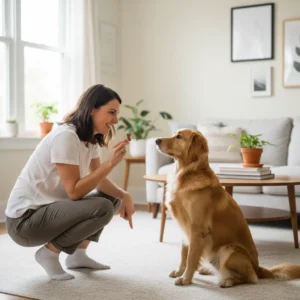
This method uses positive reinforcement, which is a humane and effective way to train. We will use a treat to lure the dog into the desired position.
Step 1: Get Your Dog’s Attention
Stand or kneel in front of your dog. Hold a high-value treat in your hand and let them see and sniff it. Once you have their full, undivided attention, you are ready to begin.
Step 2: Lure Them into a Sit
Hold the treat close to your dog’s nose. Slowly move your hand upward and slightly back over their head, as if you are drawing an arc from their nose to a point between their ears.
As their head follows the treat upward, their rear end will naturally lower to the ground. This is a simple matter of canine anatomy. The moment their bottom touches the floor, give them enthusiastic praise like “Yes!” or “Good sit!” and immediately give them the treat.
Step 3: Practice the Movement
Repeat this luring motion several times. The goal is to make the movement smooth and help your dog understand the connection between the motion and the reward.
Important: Do not push your dog’s hind end down or physically force them into position. This can create a negative association with training and may even cause injury. Let them figure it out on their own.
Step 4: Add the Verbal Cue “Sit”
Once your dog is consistently following the lure into a sit, it is time to add the word. Just before you begin the hand motion, say the word “Sit” in a clear, cheerful voice.
The sequence should be:
- Say “Sit.”
- Lure them with the treat.
- Praise and reward the instant they sit.
With repetition, your dog will start to associate the word “Sit” with the action.
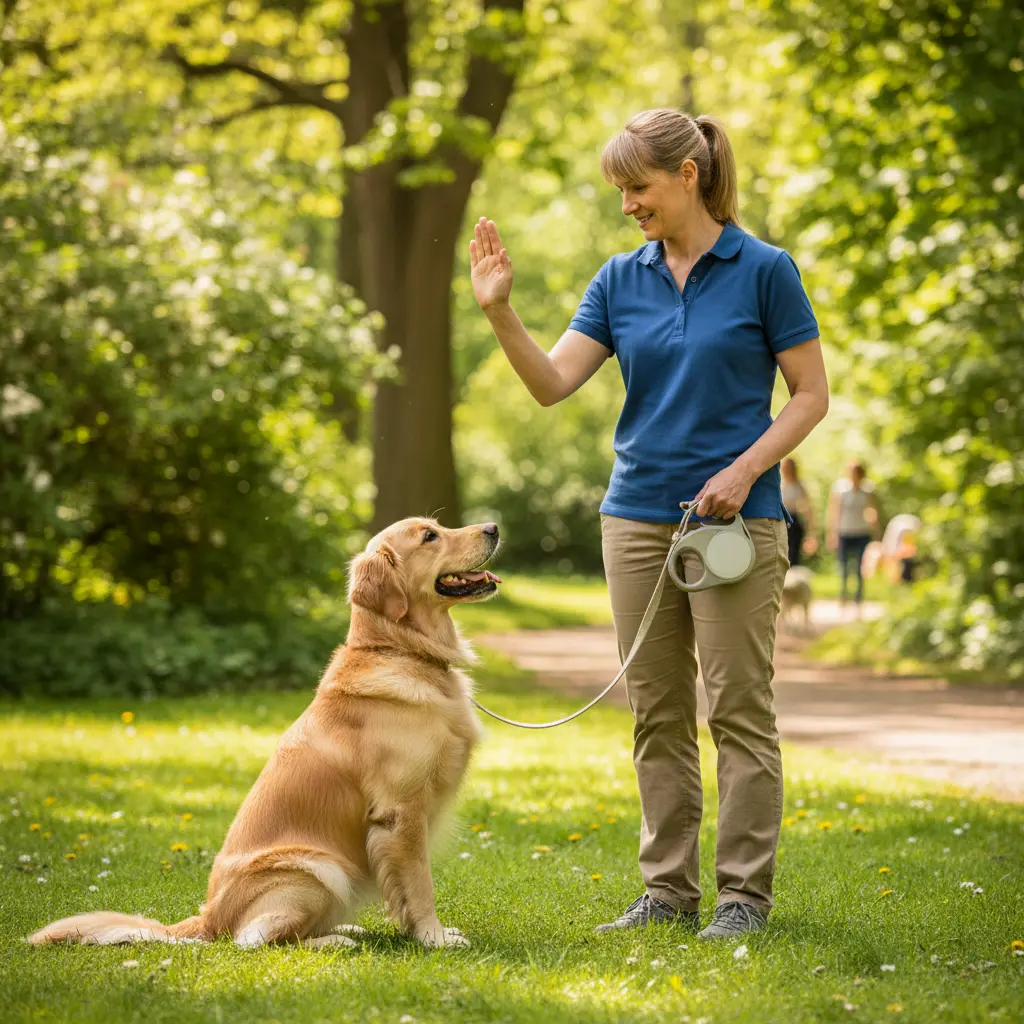
Step 5: Fade the Lure and Introduce a Hand Signal
When your dog reliably sits with the verbal cue and lure, start to phase out the treat in your hand. Make the same hand motion, but without a treat visible. When they sit, praise them and then give them a treat from your other hand.
This empty-hand motion will eventually become your hand signal. Gradually, you can make the hand signal smaller and less dramatic.
Step 6: Reduce the Treats
Once your dog understands the command, you don’t need to reward them with a treat every single time. Start mixing in other rewards like enthusiastic petting, verbal praise (“Good dog!”), or a favorite toy. This is called intermittent reinforcement, and it actually makes the behavior stronger.
Common Training Problems and How to Fix Them
Even with a simple command like “sit,” you might run into a few roadblocks. Here is how to troubleshoot them.
- Problem: My dog just backs up instead of sitting.
- Solution: You are likely holding the treat too far away from their nose. Try practicing with your dog in a corner so they cannot back up, which encourages them to lower their rear instead.
- Problem: My dog jumps up to get the treat.
- Solution: You are holding your hand too high. Keep the treat lower and closer to their head as you make the arc motion. If they jump, pull the treat away, wait a moment for them to settle, and try again.
- Problem: My dog only sits when I have a treat.
- Solution: This is a common issue! It means you need to work on fading the lure and moving to intermittent reinforcement. Practice with an empty hand signal and reward them with a “hidden” treat after they perform the command.
Taking the Show on the Road
Once your dog has mastered sitting in a quiet room, it is time to generalize the behavior. Practice in different parts of the house, in the backyard, and eventually on quiet sidewalks.
Every new environment is full of new sights, sounds, and smells. Be patient and expect that you might need to take a step back and use the lure again at first. This is normal! Consistent practice in various locations will teach your dog that “sit” means sit, no matter where you are.
For more information on the principles of positive reinforcement, you can explore resources from reputable organizations like the American Veterinary Medical Association, which provides guidance for pet owners on training.
Final Thoughts
Training is a journey, not a race. Teaching your dog to sit is the first step in building a lifetime of clear communication and mutual respect. Remember to celebrate the small wins, keep your sessions fun, and be patient with your companion. Your calm and consistent approach will help your dog learn to sit reliably and prepare them for whatever new skill you want to teach next.
Ready to build a better bond with your dog? Start today! Grab some treats, find a quiet spot, and take the first step toward a more rewarding relationship.
Frequently Asked Questions (FAQs)
How old should my dog be to start training?
Puppies can begin learning basic commands like “sit” as young as 7 or 8 weeks old. However, it is never too late to start, and training works at any age.
What if my dog is not motivated by treats?
Every dog has something they love. If they are not interested in food, try using a favorite squeaky toy, a quick game of tug, or enthusiastic petting as a reward.
Is it okay to train an older, adopted dog?
Absolutely! Senior dogs are perfectly capable of learning new skills. They might take a bit more time and patience, but positive, reward-based training is excellent for building trust.
Disclaimer: The information provided in this article is for educational and informational purposes only and is not intended as professional advice. For guidance on specific concerns about your dog’s behavior or health, consult a veterinarian or a certified professional dog trainer.
About The Author