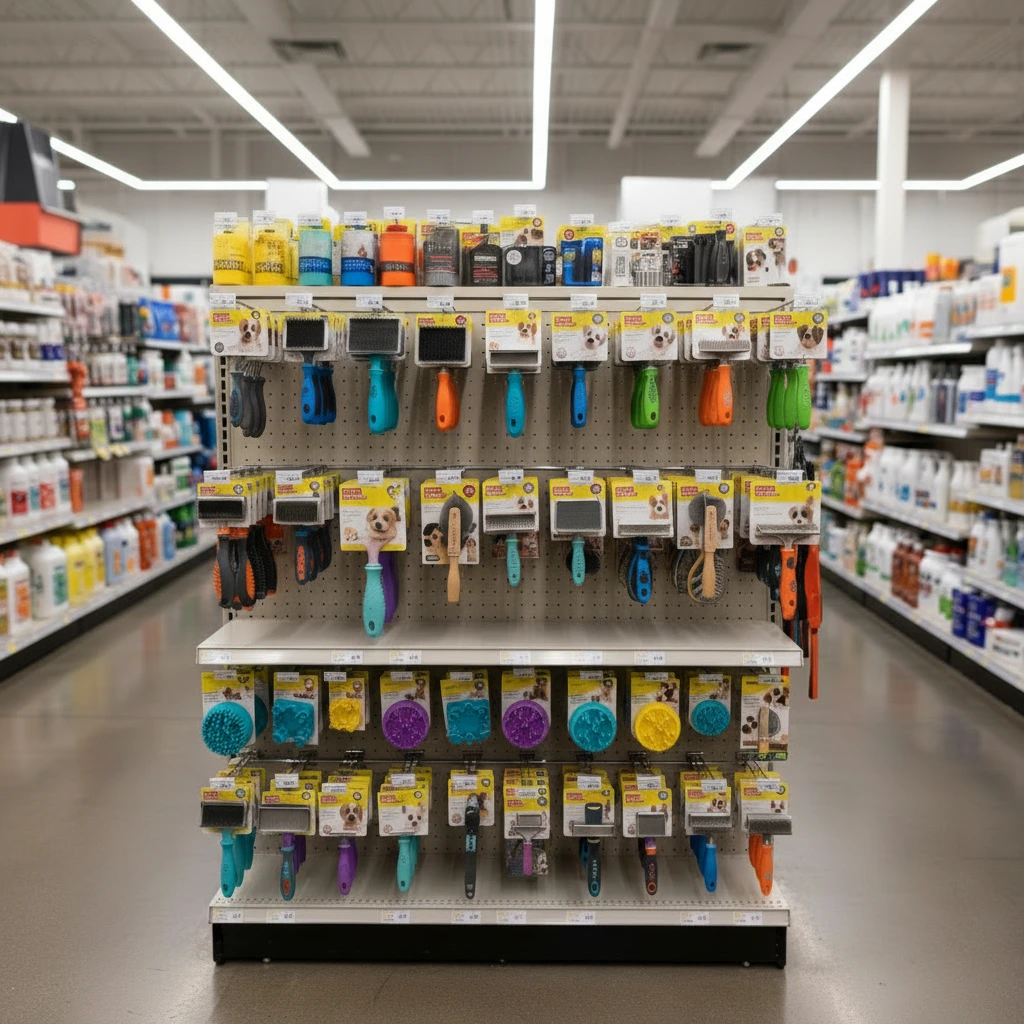
Walking into the grooming aisle of a pet store can be overwhelming. You’re faced with an entire wall of tools that look confusingly similar, yet you know they must serve different purposes. There are brushes with fine wire bristles, some with soft natural ones, others with rubber nubs, and combs that resemble small garden rakes.
It’s tempting to grab any brush, cross your fingers, and hope it works. However, using the wrong grooming tool can do more harm than good. It might make grooming an uncomfortable experience for your dog, or even damage their skin and coat. You wouldn’t use a fine-toothed comb on thick, tangled curls, and the same logic applies to your pet. A soft bristle brush simply won’t work on a heavily matted Poodle mix.
Selecting the correct brush makes grooming sessions quicker, more effective, and far more pleasant for your dog. This guide will demystify the three most common options—slicker, bristle, and pin brushes—so you can confidently choose the perfect tool for your furry friend.
Why the Type of Brush Is So Important
Before we get into the tools themselves, let’s establish why this choice matters so much. Grooming is not just about aesthetics; it plays a vital role in your dog’s overall health and happiness.
- Promotes Skin and Coat Health: Brushing helps distribute the natural oils (sebum) produced by your dog’s skin. This process moisturizes the fur, prevents dryness, and adds a healthy shine.
- Ensures Comfort: Regular brushing removes dead, loose hair from the undercoat. This trapped fur can cause significant itching and prevent proper air circulation, making your dog uncomfortably hot.
- Strengthens Your Bond: A gentle grooming session can be a quiet, relaxing activity that reinforces the connection between you and your pet.
- Provides an Opportunity for Health Checks: Grooming is the perfect time to perform a quick wellness check. As you brush, you can easily spot any unusual lumps, bumps, ticks, fleas, or skin irritations that might otherwise go unnoticed.
Using a brush that scratches or irritates your dog’s skin will quickly teach them to dread grooming. On the other hand, if your brush isn’t effective at removing the dead undercoat, you’ll still find yourself dealing with clouds of fur around your home, even right after a grooming session.
The Slicker Brush: Your Go-To for Tangles and Mats
If you share your home with a dog that has long hair, a curly coat, or a dense undercoat, a slicker brush will likely become your most valuable grooming tool.
What Does It Look Like?
A slicker brush features a wide, flat or slightly curved head packed with countless fine wire bristles. These bristles are short and angled, which is the key to their effectiveness.
What Is It Designed For?
The slicker brush is the undisputed champion of detangling. Its fine, bent pins are engineered to penetrate deep into a thick coat, grabbing loose fur and gently breaking apart knots and mats before they become a serious problem. It is particularly effective at removing impacted undercoat—the dense, woolly fur that sheds but gets trapped close to the skin.
Ideal Breeds for Slicker Brushes:
- Golden Retrievers and other Retrievers
- Poodles and any Poodle mix (Goldendoodles, Labradoodles, etc.)
- Yorkshire Terriers (for their long, fine hair)
- Cocker Spaniels
- Saint Bernards and other long-coated breeds
How to Use a Slicker Brush Safely
The wire bristles require a gentle touch. The biggest mistake owners make is applying too much pressure. The goal is to let the bristles do the work of pulling through the hair, not to scrape the brush against the skin. Pushing down too hard can cause “brush burn,” an uncomfortable abrasion on your dog’s sensitive skin.
Pro Tip: Always use light, short strokes, moving away from the skin. If you encounter a significant tangle, don’t try to force the brush through it. Instead, gently work at the edges of the knot to loosen it bit by bit. For severe mats, it’s always safest to consult a professional groomer.
The Bristle Brush: For Shine and a Smooth Finish
Think of the bristle brush as the polisher in your grooming kit. It’s much softer and gentler than a slicker brush and serves a completely different purpose.
What Does It Look Like?
Bristle brushes have bristles made from either natural fibers, like boar hair, or synthetic materials like nylon. The bristles are packed closely together, much like a brush you might use to polish a pair of leather shoes.
What Is It Designed For?
A bristle brush is not a detangling tool. It will glide right over any significant knots. Instead, its primary function is to smooth the topcoat, remove surface-level dust and dander, and enhance shine. The tightly packed bristles are excellent at stimulating the skin and distributing natural oils from the base of the hair to the tip.
Ideal Breeds for Bristle Brushes:
- Short-haired dogs: Pugs, Boston Terriers, Greyhounds, Jack Russell Terriers, Boxers.
- Dogs with smooth coats: These dogs benefit most from the polishing effect.
- As a finishing tool: On long-haired dogs like Setters or Afghan Hounds, a bristle brush can be used after detangling with a slicker or pin brush to create a smooth, glossy finish.
Choosing the Right Bristle Stiffness
- For very short, smooth coats, stiffer bristles are needed to make contact with the skin.
- For slightly longer coats, choose longer and more widely spaced bristles.
- For dogs with sensitive skin, always opt for the softest bristles available.
The Pin Brush: The Everyday Gentle Groomer
The pin brush is a versatile middle-ground option that looks the most like a typical human hairbrush.
What Does It Look Like?
A pin brush typically has an oval-shaped head with long, straight wire pins set far apart. A critical feature is that the tips of these pins are protected with small rubber or plastic nubs to prevent scratching the skin.
What Is It Designed For?
Pin brushes are excellent for general grooming on dogs with medium to long, silky coats that are not prone to severe matting. They are effective at lifting out loose hair and light debris without the aggressive pulling action of a slicker brush. The wide spacing between the pins allows the brush to move through the hair easily, fluffing it up and separating strands without damaging the texture.
Ideal Breeds for Pin Brushes:
- Shetland Sheepdogs (Shelties)
- Collies
- German Shepherds (for grooming the topcoat)
- Setters and Spaniels with silky fur
A Note on Pin Tips
The protective nubs on the end of the pins are essential for your dog’s comfort. Check your brush regularly to ensure none have fallen off, as an exposed wire pin can be sharp. Some higher-quality pin brushes feature metal pins that have been polished smooth at the tips, which can be more durable than plastic-tipped versions.
Comparing the Three: A Quick-Reference Chart
|
Brush Type |
Best For |
Coat Types |
Key Feature |
|---|---|---|---|
|
Slicker Brush |
Mats, tangles, undercoat |
Long, curly, double-coated |
Fine, bent wire bristles |
|
Bristle Brush |
Shine, smoothing, skin |
Short, smooth coats |
Densely packed natural/nylon bristles |
|
Pin Brush |
General grooming, fluffing |
Medium-to-long, silky coats |
Widely spaced pins with protected tips |
What About Undercoat Rakes?
While not one of the main three, the undercoat rake is an essential tool for specific breeds and deserves a special mention. If you own a dog that sheds heavily, like a Husky, Malamute, Chow Chow, or German Shepherd, you may find that the brushes above just don’t cut it during shedding season.
An undercoat rake is a T-shaped tool with one or two rows of long, sturdy metal teeth. It’s designed for one job: to reach deep beneath the topcoat and efficiently pull out the dead, fluffy undercoat that gets trapped near the skin. If you feel like you can brush your dog for an hour and still have fur flying everywhere, you likely need an undercoat rake.
For detailed guidelines on humane animal care and grooming practices, you can consult resources provided by the USDA Animal Welfare Information Center.
How to Know If You’ve Chosen the Right Brush
Once you have your new brush, how can you tell if it’s actually working?
- The Part Test: After brushing a section of fur, use your fingers to part the hair all the way down to the skin. If you still see a web of tangled fur at the base, your brush isn’t penetrating deep enough. You may need a slicker brush or an undercoat rake.
- The Brush Check: After a few strokes, look at the brush. Is it collecting hair? If you have a dog that sheds and the brush is consistently clean, it’s not effectively grabbing the loose fur.
- The Dog’s Reaction: Pay close attention to your dog’s body language. If they flinch, whine, or try to move away when you brush a certain area, the tool may be too harsh, or you might be pressing too hard.
Final Thoughts: Grooming is a Partnership
Grooming is an essential part of responsible dog ownership. Your dog depends on you to keep their coat clean and comfortable. If you’re just starting, it’s wise to have more than one brush on hand. Many owners of double-coated breeds, for example, use an undercoat rake first, followed by a slicker brush for tangles, and finish with a pin brush to fluff the coat.
Don’t hesitate to ask a professional groomer for their recommendation during your dog’s next visit. They are experts on coat types and can show you the exact tools and techniques they use for your dog.
Taking the time to choose the right brush is a simple step that pays huge dividends for your dog’s health and comfort. Turn grooming into a positive, bonding experience, and you’ll both come to enjoy it.
Frequently Asked Questions
1. Can I just use a human hairbrush on my dog?
While it might work in an emergency, it’s not recommended. Human brushes aren’t designed to handle the density and texture of a dog’s coat, especially a double coat. A dog-specific brush will be far more effective and comfortable for your pet.
2. My dog absolutely hates being brushed. What can I do?
Start with very short sessions (30-60 seconds) and use high-value treats to create a positive association. End the session on a good note before your dog gets anxious. Also, double-check that your brush isn’t causing pain—you may need a gentler tool or a lighter touch.
3. How should I clean my dog’s brushes?
Remove trapped hair from the brush after every use. About once a month, wash the brush thoroughly with warm water and a small amount of mild soap or dog shampoo. Make sure it dries completely to prevent mildew or bacterial growth.
4. Do short-haired dogs really need to be brushed?
Yes! Even though they don’t get mats, short-haired dogs still shed. Brushing them once a week helps remove loose hair before it covers your furniture, and it also stimulates their skin and promotes a shiny, healthy coat.
Disclaimer: The information provided in this article is for educational and informational purposes only and is not intended as veterinary or professional advice. Always consult with your veterinarian or a professional groomer for personalized guidance.
About The Author