
That moment of unease is familiar to many dog owners. You look over at your furry friend, and they’re trembling. Your mind starts racing. Are they cold? Scared? Sick? It’s hard not to worry when you see them shaking and can’t immediately pinpoint the cause.
The truth is, dogs shake for a lot of reasons. Sometimes, it’s as simple as pure, unadulterated joy because you just grabbed the leash. Other times, it can be a quiet signal that something more is going on beneath the surface. Understanding the difference between a harmless quiver and a potential warning sign is key to being a confident and proactive pet parent.
This article is designed to help you recognize the difference between normal, harmless dog behaviors and those that signal a possible health concern. We’ll also explain what you can do as a caring pet owner and link to trusted veterinary sources throughout.
Everyday Reasons Dogs Shake
Some types of shaking aren’t a cause for worry and are actually quite common among healthy dogs. If your dog’s shaking is brief, situational, or attached to positive events, it may not be anything to stress about.
Excitement and Anticipation
Plenty of dogs tremble with excitement—especially when you jingle car keys, grab the leash, or a favorite person comes home. You might see:
- Whole-body quivering coupled with wagging or circling
- Excited, high-pitched barking
- Energy surges right before playtime or walks
These happy shakes tend to disappear once your dog settles down.
Cold Temperatures
Dogs can get chilly, especially:
- Smaller breeds like Chihuahuas
- Dogs with short or thin fur
- Elderly pets who feel the cold more than they used to
Shivering in cold weather, after a bath, or on tile floors is usually your pup’s natural way to warm up. Tossing on a dog sweater or providing a snuggly blanket is often all that’s needed.
Mild Fear or Nervousness
Like people, many dogs shake when they’re scared or uneasy. Common triggers include:
- Thunderstorms or fireworks
- Trips to the vet or groomer
- Unfamiliar visitors or places
Some signs your dog is stressed:
- Hiding or pacing
- Flattened ears
- Panting or yawning
Reducing scary triggers and offering calm reassurance can help your dog regain confidence.
Shaking Linked to Health or Medical Problems
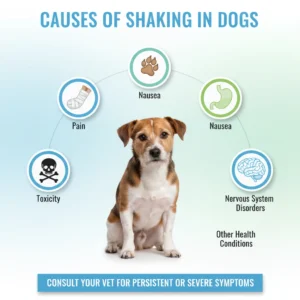
While the causes above are often harmless, shaking can also signal illness, pain, or poisoning. If shaking is new, persistent, or paired with other worrying symptoms, it’s important to investigate further.
Pain and Discomfort
Because dogs are great at hiding pain, trembling is sometimes one of the few clues. Watch for other signs such as:
- Limping or sudden reluctance to move
- Whining or yelping
- Loss of appetite
Causes might be anything from muscle sprains and arthritis to dental problems. If you suspect your pet is hurting, schedule a check-up so your vet can pinpoint the cause.
Nausea or Digestive Upset
Stomach issues are another common trigger for shaking in dogs. Look for:
- Drooling or lip-licking
- Restlessness
- Refusing food
Nausea can be related to motion sickness, eating something they shouldn’t, or even a viral infection.
Toxicity or Poison Exposure
Ingestion of something toxic can lead to dramatic symptoms, including severe shaking. Substances dangerous to dogs include:
- Chocolate, grapes, raisins, or artificial sweeteners (like xylitol)
- Rodent poison, antifreeze, or cleaning chemicals
- Certain plants, like lilies or azaleas
If you notice sudden shaking and suspect poisoning, contact your veterinarian or a pet poison helpline immediately. Find comprehensive toxic substance lists and emergency guidelines on the American Veterinary Medical Association’s Poison Prevention page.
Nervous System or Muscle Disorders
Some medical conditions make dogs tremble or even have uncontrollable shakes. These include:
- Generalized Tremor Syndrome (Shaker Syndrome): Especially in smaller breeds; cause is unclear but may be autoimmune.
- Seizures: Not always dramatic—some simply look like limb twitching or “zoning out.”
- Canine distemper: A dangerous viral infection, with shaking or twitching as classic symptoms, especially in unvaccinated dogs.
Timely vaccination and regular vet checkups are crucial. For more information on disease prevention and vaccines, see the American Kennel Club Vaccination Guide.
Other Health Conditions
Less common, but still worth noting, are:
- Low blood sugar (hypoglycemia), especially in young or small-breed dogs
- Kidney or liver illness
- Addison’s disease (an adrenal disorder)
Each has unique signs, but unexplained shaking can be an early clue that something deeper is going on.
When to Contact Your Veterinarian
So, how do you know if your dog’s shaking is serious? You should reach out to your vet if you notice any of the following:
- The shaking is new, frequent, or severe
- There are additional symptoms (vomiting, diarrhea, weakness, confusion)
- Your dog seems to be in pain or great distress
- Exposure to something toxic is possible
- The shaking is accompanied by collapse, confusion, or trouble breathing
Your vet may perform a physical exam, blood tests, or even X-rays depending on the situation. Trust your intuition; it’s better to check than to wait when it comes to your dog’s health.
How to Support Your Dog at Home
If you’re not seeing red flags and your vet isn’t concerned, here are safe ways to help a trembling pet:
- Offer warmth and comfort (blankets, heated beds in cold weather)
- Create a quiet spot if your dog is jumpy or scared
- Use positive reinforcement and plenty of affection during calm moments
- Stick to routines and provide gentle exercise and enrichment
Never give any medication (over-the-counter or prescription) to your dog unless your veterinarian directs you to do so, as many are unsafe for dogs.
Improving Your Website’s Approval Odds and SEO Rankings
For fellow bloggers and website owners: If you want your informational content to build trust, comply with Google’s latest updates, and get AdSense approval, consider these best practices:
- Cite authoritative sources: Always refer readers to trusted organizations. See links to the AVMA and AKC as examples.
- Prioritize reader experience: Use headings, bullet points, and short paragraphs for easier reading (as modeled here).
- Write with authenticity and expertise: Share information in your own words. Avoid AI-generated content patterns.
- Keep evergreen, unique content: Always create fresh, original articles that are updated and factually reliable.
Frequently Asked Questions (FAQs)
1. Why do small dogs seem to shake more than big dogs?
Small breeds have a higher metabolism and less body fat, making them lose heat faster. They can also be more prone to anxiety, leading to more frequent trembling.
2. Is shaking just a normal part of my dog getting old?
While conditions like arthritis that cause pain and shaking are more common in senior dogs, it’s not a normal part of aging. It’s a sign of a medical issue that should be evaluated by a vet.
3. My dog always shakes after a bath. Is that okay?
Usually, yes. They are likely cold and trying to warm up. Towel them off thoroughly and keep them in a warm room until they are completely dry.
4. What should I do if I think my dog ate something poisonous?
Contact your veterinarian or an animal poison control hotline immediately. Do not wait for symptoms to appear or try any home remedies without professional guidance.
Note: This article does not replace professional veterinary diagnosis or treatment.
About The Author