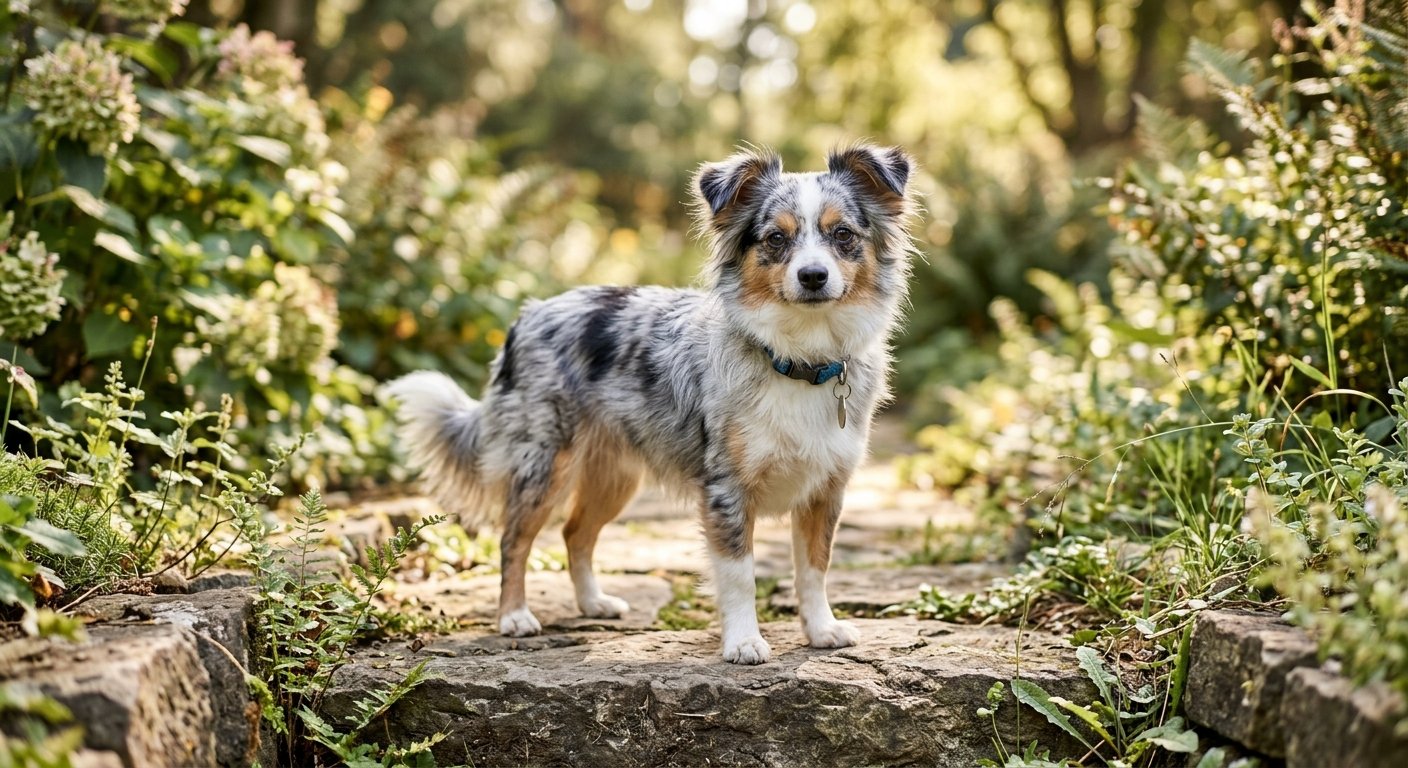
A Miniature Australian Shepherd Chihuahua mix combines two dogs with very different physical characteristics. The Miniature American Shepherd—often informally called a Mini Aussie—is an energetic herding dog, while the Chihuahua is a tiny companion breed known for its alert personality and strong attachment to its people.
The result can be a small or small-to-medium dog with an interesting combination of traits. Some may have the expressive eyes and compact build of a Chihuahua, while others inherit the longer legs, colorful coat, or athletic appearance associated with a Miniature American Shepherd.
However, this crossbreed does not have a standardized size, appearance, or temperament. A puppy’s adult characteristics depend on its parents and the traits it inherits.
If you are considering one of these dogs, this guide explains what to expect, how to prepare for its exercise and training needs, and what to know about grooming, health, and choosing a puppy responsibly.
What Is a Miniature Australian Shepherd Chihuahua Mix?
A Miniature Australian Shepherd Chihuahua mix is a cross between a small herding dog and a toy companion breed.
There is an important naming distinction to understand. The American Kennel Club recognizes the Miniature American Shepherd as a breed. “Mini Aussie” is a common informal name for this breed, but it is not the same as simply describing any small Australian Shepherd.
You can learn more through the American Kennel Club’s Miniature American Shepherd profile and Chihuahua profile.
Because these parent breeds differ in size, body structure, and working history, their puppies may vary considerably. Some may be quite small, while others may develop a more athletic build and need more activity than a typical toy dog.
The cross is not a standardized breed with a single official breed standard, so descriptions of its appearance and temperament should be treated as possibilities rather than guarantees.
Miniature Australian Shepherd Chihuahua Mix Appearance
The appearance of this mix depends on which characteristics it inherits from each parent.
Body Shape and Size
A puppy may have a compact body and relatively short legs, or it may grow into a more athletic dog with longer legs and a narrower outline.
The Chihuahua parent can contribute a small frame, while the Miniature American Shepherd may contribute a sturdier body and greater athleticism.
Do not assume that every puppy will have the same proportions. Even puppies from the same litter can look noticeably different.
Face, Ears, and Eyes
Possible facial characteristics include a relatively narrow muzzle, expressive eyes, and ears that stand upright, fold, or sit partly raised.
Chihuahuas commonly have erect ears, while Miniature American Shepherds may have ears that are triangular and set high, with the tips folding over.
The mix may inherit either style or a combination. Eye color also varies, particularly in dogs with merle-patterned coats.
Coat Colors and Patterns
Miniature American Shepherds occur in several recognized colors, including black, blue merle, red, and red merle, with possible tan or white markings. Chihuahuas also appear in many colors and patterns.
As a result, the mix may have:
- Black or brown coloring.
- Red or tan shades.
- Cream or white markings.
- Merle-patterned areas, depending on inherited genetics.
- A combination of dark and light patches.
These are possibilities, not a guaranteed list for every litter.
A puppy’s coat may also change in appearance as it matures. Ask the breeder about the parents’ coats and ancestry, but remember that photographs cannot predict every detail of an adult dog’s appearance.
Coat Length and Texture
Some individuals may have a short, smooth coat, while others develop longer hair or more feathering around the ears, legs, and tail.
The grooming routine should reflect the actual coat rather than the name of the crossbreed.
A short-coated dog may need less brushing, while a longer-coated individual may require more frequent grooming to prevent tangles.
How Big Does a Miniature Australian Shepherd Chihuahua Mix Get?
This is one of the most difficult characteristics to predict accurately.
Chihuahuas are very small dogs, while Miniature American Shepherds are larger, compact herding dogs. Their cross may be small or small-to-medium, but there is no reliable standardized adult weight range for this mix.
The size of the parents provides useful context, although it cannot guarantee the puppy’s final dimensions.
What Influences Adult Size?
Several factors affect how large the dog may become:
- The actual size of both parents.
- Inherited body proportions and growth characteristics.
- Sex and individual development.
- Nutrition and general health.
- Whether the puppy inherits more of the Chihuahua’s compact build or the Miniature American Shepherd’s athletic frame.
Ask the breeder for the parents’ actual weights and heights. A veterinarian can monitor the puppy’s growth and body condition to help assess its development.
Is This Mix a Teacup Dog?
The term “teacup” is often used in marketing to describe unusually small dogs, but it is not an official size category for this cross.
Be cautious if a seller guarantees an extremely small adult weight or advertises a puppy as rare simply because it is tiny.
Very small puppies may need careful monitoring for feeding difficulties, injuries, and other health concerns. A responsible breeder should prioritize health and appropriate development rather than selecting solely for the smallest possible size.
Miniature Australian Shepherd Chihuahua Mix Temperament
The temperament of this mix can be particularly interesting because its parents were developed for different purposes.
Miniature American Shepherds are herding dogs that often enjoy activity, training, and having a job to do. Chihuahuas are alert companion dogs that may form close attachments to familiar people.
A cross may be playful, intelligent, attentive, energetic, or strongly bonded to its household. However, these traits vary between individuals.
Is This Mix Affectionate?
Many dogs from these parent breeds enjoy spending time with their families. A Chihuahua-influenced dog may prefer staying close to one person, while a Miniature American Shepherd-influenced dog may enjoy participating in family activities.
The individual dog’s personality matters more than the breed label.
Give your dog opportunities to relax independently, and avoid forcing it to be held or handled when it wants space.
Is It a Good Family Dog?
It can be a suitable family companion when the dog’s temperament and size are a good fit for the household.
However, a small dog may be vulnerable to accidental injury during rough play. Children should be taught to handle the dog gently, avoid picking it up without adult help, and leave it undisturbed while sleeping or eating.
If the dog shows herding-related behaviors, such as chasing moving feet, redirect the behavior toward an appropriate toy or training activity.
Supervise interactions with young children and assess the individual dog’s comfort around people rather than assuming that all members of the mix behave alike.
Can This Mix Be Left Alone?
Some individuals may struggle when separated from their owners, particularly if they have not learned to settle comfortably on their own.
Build independence gradually. Start with short, manageable periods in a safe environment and reward calm behavior.
If the dog repeatedly barks, destroys objects, tries to escape, or becomes distressed when left alone, consult a qualified trainer or veterinary behavior professional. These signs should not automatically be dismissed as stubbornness.
Exercise Needs: How Active Is This Mix?
Do not assume that a small dog needs very little exercise.
The Miniature American Shepherd has a working-herding background, and some mixes inherit a strong need for activity and mental stimulation. The Chihuahua side may contribute a smaller body size, but it does not eliminate the need for regular movement.
Suitable Daily Activities
Depending on age, health, and fitness, activities may include:
- Walks at a comfortable pace.
- Short reward-based training sessions.
- Supervised play with suitable toys.
- Sniffing games and food puzzles.
- Simple agility-style games adapted to the dog’s body.
- Opportunities to explore safe environments.
Puppies need age-appropriate activity, while adults may tolerate more demanding routines. Avoid forcing a small dog to keep up with larger dogs over long distances.
Watch for limping, reluctance to continue, excessive fatigue, or unusual breathing. Stop activity and seek veterinary advice if symptoms persist or appear concerning.
Why Mental Stimulation Matters
Herding-related traits may make some individuals especially interested in movement, patterns, and problem-solving.
Try hiding a few pieces of the dog’s measured daily food in an easy-to-search area or teaching a simple trick. These activities can provide mental engagement without requiring strenuous exercise.
Rotate activities according to your dog’s interest and ability. If an activity causes frustration or fear, simplify it and reward small steps.
Training a Miniature Australian Shepherd Chihuahua Mix
Training can be rewarding when it is consistent, positive, and adapted to the dog’s personality.
Some individuals may learn quickly but become distracted by movement or interesting smells. Others may be cautious in unfamiliar settings and need more time to build confidence.
Start With Basic Skills
Prioritize:
- Responding to its name.
- Coming when called in safe, controlled settings.
- Walking comfortably on a leash.
- Settling on a mat or in a designated resting area.
- Accepting gentle handling.
- Remaining calm around visitors and everyday household sounds.
Use small treats, praise, and play as rewards. Keep sessions short and practice in quiet surroundings before introducing distractions.
Socialization Without Overwhelming the Dog
Socialization means introducing the dog to people, sounds, surfaces, and situations in a way that encourages comfortable responses.
It does not mean forcing a puppy to greet strangers or interact with every dog it encounters.
Let the dog observe unfamiliar experiences at a comfortable distance. Reward calm behavior and allow it to move away if it becomes uncertain.
If the dog repeatedly reacts with fear, growling, or snapping, seek professional guidance. Punishing warning signals may make it harder to recognize when the dog is uncomfortable.
Grooming a Miniature Australian Shepherd Chihuahua Mix
Grooming needs depend on the coat the dog inherits.
Brushing and Shedding
A short-coated dog may need only occasional brushing, while a longer-coated individual may need more frequent grooming.
Use a brush appropriate for the coat and inspect areas where tangles may form, including behind the ears, beneath the legs, and around the tail.
Shedding can vary between individuals. Do not assume the mix is hypoallergenic or that a short coat means no shedding.
Bathing and Skin Care
Bathe the dog when necessary using a shampoo formulated for dogs. Rinse thoroughly and dry the coat appropriately.
Avoid frequent bathing solely to change the coat’s appearance. If you notice persistent itching, redness, sores, or unusual hair loss, consult a veterinarian instead of treating the problem with unverified home remedies.
Nails, Ears, and Teeth
Routine care should include nail trimming, ear checks, and dental hygiene.
Small dogs can develop significant dental problems, so introduce toothbrushing with dog-safe toothpaste early and arrange veterinary dental examinations as recommended.
If your dog resists handling, build comfort gradually using rewards rather than forcing the procedure.
Health Considerations for This Mix
A mixed-breed dog can inherit health risks from either parent. Its individual risk depends on ancestry, genetics, body structure, and other factors.
No appearance or breed label can guarantee that a puppy will remain healthy.
Dental Problems
Chihuahuas are small dogs, and dental crowding can be a concern in small mouths. Dental care is important for this mix, particularly if the dog inherits a compact jaw.
Watch for persistent bad breath, red gums, drooling, difficulty chewing, or changes in eating behavior.
Brush with dog-safe toothpaste and ask your veterinarian whether professional dental cleaning is needed.
Patellar Luxation
Patellar luxation occurs when the kneecap moves out of its normal position. It is a recognized concern in several small dog breeds.
Possible signs include intermittent skipping, holding up a hind leg, or changes in gait. These symptoms can have other causes, so a veterinary examination is necessary.
If you notice recurring movement changes, arrange an assessment rather than assuming the dog is simply playing.
Eye and Inherited Conditions
Both parent breeds have health considerations that responsible breeders should understand. The appropriate screening depends on the parents’ ancestry and breeding lines.
Ask for documented health screening and discuss the dog’s history with your veterinarian. Do not assume that a crossbreed automatically avoids the conditions associated with either parent.
Merle Coat Genetics
If the dog inherits a merle coat pattern, it is worth understanding the genetics behind that appearance.
Merle is associated with a genetic variant affecting pigment distribution. Certain merle breeding combinations can increase the risk of hearing and eye abnormalities in offspring.
The risk depends on the specific genetic inheritance, not simply on whether a dog looks merle. A responsible breeder should understand merle genetics and avoid risky breeding combinations.
The UC Davis Veterinary Genetics Laboratory’s dog coat-color resource explains the genetic basis of canine coat patterns.
Feeding and Maintaining a Healthy Weight
Feed a complete and balanced diet suitable for the dog’s age, size, activity level, and health.
Small dogs can have different calorie needs from larger dogs, so avoid estimating portions based on appearance alone. Follow the food’s feeding guidance as a starting point and adjust according to body condition and veterinary advice.
Helpful habits include:
- Measuring meals.
- Counting treats as part of daily intake.
- Keeping fresh water available.
- Avoiding frequent high-calorie table scraps.
- Monitoring weight and body condition.
- Discussing unexplained weight changes with a veterinarian.
If your dog is exceptionally small, has difficulty eating, or experiences repeated digestive problems, seek veterinary advice before changing its diet substantially.
Is This Mix Suitable for Apartment Living?
A Miniature Australian Shepherd Chihuahua mix may adapt well to apartment living if its exercise, training, enrichment, and companionship needs are met.
However, some individuals may be vocal or become restless without sufficient activity. Apartment owners should consider how the dog responds to hallway sounds, unfamiliar people, and time alone.
Provide a comfortable resting space, establish predictable routines, and practice calm behavior around common household noises.
The most important consideration is not simply the size of the home. It is whether the environment and daily routine suit the individual dog’s needs.
How to Choose a Healthy Puppy
If you are considering purchasing a puppy, choose a breeder who is transparent about health, temperament, and the characteristics of both parents.
Ask:
- Can I meet the parents or see reliable information about them?
- What are the parents’ actual sizes and health histories?
- What health screening has been completed?
- Have the puppies received appropriate veterinary care?
- How are the puppies being socialized?
- Can you provide documentation supporting any coat-color or ancestry claims?
- What support is available after the puppy goes home?
Be cautious of sellers who guarantee a particular adult size, advertise extreme smallness as a health benefit, or pressure you to pay immediately.
Adoption is another option. An adult mixed-breed dog may have a more established size and personality, making it easier to assess whether the dog suits your home.
Common Myths About the Miniature Australian Shepherd Chihuahua Mix
Myth 1: Every Puppy Will Be Tiny
Fact: The puppy’s adult size depends on the parents and inherited characteristics. The Miniature American Shepherd parent may contribute a larger, more athletic build.
Myth 2: A Small Dog Needs Almost No Exercise
Fact: Exercise needs depend on the individual dog’s energy, age, health, and inherited traits. Small dogs can still need regular movement and mental enrichment.
Myth 3: This Mix Is Naturally Easy to Train
Fact: Training needs vary. Intelligence does not guarantee immediate obedience, and consistency is important for every dog.
Myth 4: Merle Coloring Guarantees a Health Problem
Fact: Merle coloring alone does not establish that a dog is unhealthy. Specific genetic combinations can increase certain risks, which is why responsible breeding and appropriate screening matter.
Frequently Asked Questions
How big does a Miniature Australian Shepherd Chihuahua mix get?
There is no standardized adult size for this cross. The parents’ sizes and the puppy’s growth provide useful clues, but an exact adult weight cannot be guaranteed.
Is this mix good for first-time dog owners?
It may suit a first-time owner who is prepared for training, socialization, exercise, and preventive care. Evaluate the individual dog’s temperament and needs rather than relying on the mix’s name.
Does a Miniature Australian Shepherd Chihuahua mix shed?
Yes, it may shed to varying degrees. Coat length, inherited coat characteristics, and individual differences influence how much grooming is needed.
Is this mix hypoallergenic?
There is no basis for assuming that this cross is hypoallergenic. Individuals may shed and release allergens, even if they have relatively short hair.
Can this mix live with cats?
Some individuals can live successfully with cats, but introductions should be gradual and supervised. The dog’s behavior, training, and response to smaller animals matter more than the breed label.
Are Miniature Australian Shepherd Chihuahua mixes easy to train?
They can learn well with consistent, reward-based training. However, energy levels, confidence, and distractions vary, so the training approach should be adapted to the individual dog.
What should I feed this mix?
Choose a complete and balanced food appropriate for the dog’s life stage, size, and health. Measure portions and ask a veterinarian for guidance if the dog is very small or has special nutritional needs.
Final Thoughts
The Miniature Australian Shepherd Chihuahua mix can be an interesting companion for someone who appreciates a small dog with the potential for an active, intelligent, and attentive personality.
However, its adult size, coat, and temperament can vary considerably. Before bringing one home, learn about both parents, ask for health information, and consider the dog’s individual exercise and training needs.
With appropriate nutrition, consistent training, preventive veterinary care, and a routine suited to its body and personality, a well-matched dog can become a rewarding part of the family.
Want to build a healthier daily routine for your dog? Visit Dog Wellness Hub for practical advice on nutrition, grooming, training, and responsible pet care.
Veterinary Disclaimer
This article is for general educational purposes and does not replace professional veterinary advice, diagnosis, or treatment. Consult a veterinarian about your dog’s health, nutrition, exercise, and inherited risks. Sudden weakness, severe pain, breathing difficulty, or other emergency symptoms require prompt veterinary attention.
No comment