
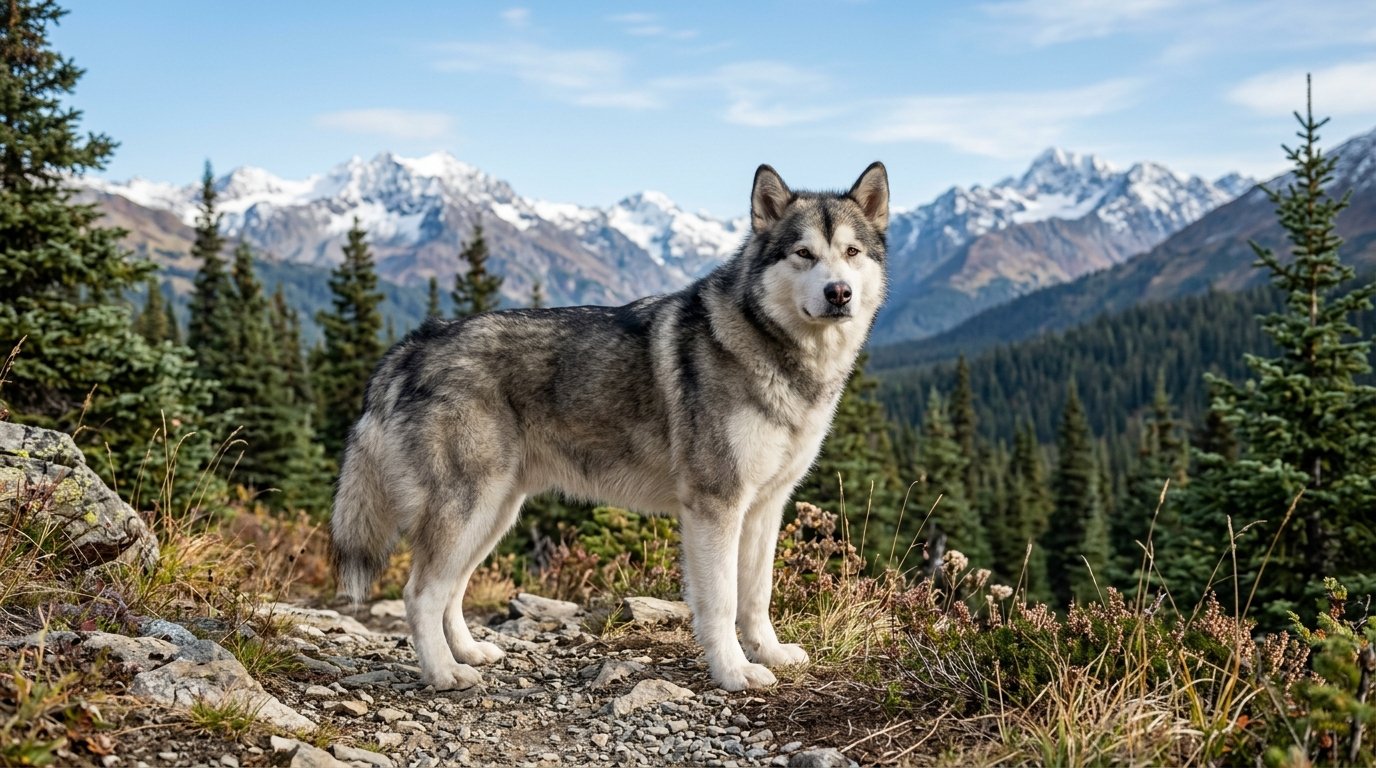
The Alaskan Malamute is a powerful, fluffy working dog known for its strength, endurance, and friendly nature. With its thick double coat, upright ears, and wolf-like appearance, it is easy to understand why so many people fall in love with this Arctic breed.
But if you are thinking about welcoming an Alaskan Malamute into your family, one question matters just as much as its appearance: How long will your dog live?
Alaskan Malamutes generally have a life expectancy of around 10–14 years, although individual dogs may live shorter or longer lives. Genetics, body condition, preventive veterinary care, exercise, and inherited health conditions can all influence longevity.
The good news is that thoughtful daily care can help support your Malamute’s health throughout its life. This guide explains the breed’s expected lifespan, common health concerns, signs of aging, and practical ways to help your dog enjoy a comfortable, active life.
What Is the Average Lifespan of an Alaskan Malamute?
The typical life expectancy of an Alaskan Malamute is approximately 10–14 years. This is a general breed estimate, not a guarantee for an individual dog.
The American Kennel Club lists a life expectancy of approximately 10–14 years in its Alaskan Malamute breed profile.
Some Malamutes remain active and comfortable well into their senior years. Others develop medical problems earlier because of inherited conditions, injuries, or other health factors.
A dog’s lifespan also does not tell the whole story. Two dogs may live to a similar age but experience very different levels of comfort and mobility. The goal is to support both longevity and quality of life.
How Does the Malamute’s Lifespan Compare With Other Dogs?
Alaskan Malamutes are large, muscular dogs. Larger dogs often have shorter average lifespans than smaller dogs, although size is only one factor and individual outcomes vary.
| Dog type | General lifespan context |
|---|---|
| Alaskan Malamute | Approximately 10–14 years |
| Small companion breeds | Many commonly live into their teens |
| Medium-sized breeds | Lifespan varies widely by breed |
| Giant breeds | Many have shorter average lifespans than smaller dogs |
These are broad comparisons, not predictions for an individual dog. Breed-specific estimates also depend on the population studied and the source providing the figure.
For a Malamute, maintaining a healthy body condition and identifying medical problems early are more useful than comparing its expected lifespan with that of another breed.
What Factors Affect an Alaskan Malamute’s Lifespan?
There is no single habit that guarantees a long life. Instead, several factors work together to influence a dog’s health and longevity.
1. Genetics and Responsible Breeding
A puppy inherits genetic information from both parents. Some inherited traits can influence its risk of developing certain medical conditions.
When choosing an Alaskan Malamute puppy, ask the breeder about the health history of the parents and the recommended screening for the breed. Request documentation rather than relying on a general statement that the parents are healthy.
The Alaskan Malamute Club of America’s health information is a useful starting point for learning about breed-specific concerns and responsible breeding practices.
A responsible breeder should be willing to discuss health testing, the ages and medical histories of previous dogs, and any known inherited conditions in the family line.
Adoption is also an excellent option. If you adopt an adult Malamute, ask for its available medical records and arrange a veterinary examination soon after bringing it home.
2. Maintaining a Healthy Weight
Alaskan Malamutes have a naturally strong, substantial build. However, a large frame should not be confused with excess body fat.
Carrying extra weight can increase the load on joints and make exercise more difficult. It can also complicate the management of existing orthopedic conditions.
To help your Malamute maintain a suitable body condition:
- Measure meals instead of estimating portions.
- Include treats in the daily calorie total.
- Adjust food intake as activity changes.
- Avoid frequent high-calorie table scraps.
- Check body condition regularly.
- Ask your veterinarian to establish an appropriate target weight.
You should be able to feel your dog’s ribs without pressing excessively hard, although the ideal body shape varies with age and individual build. Ask your veterinarian to demonstrate how to assess your Malamute’s body condition correctly.
3. Nutrition and Feeding Habits
A balanced diet provides the nutrients your dog needs for growth, muscle maintenance, immune function, and general health.
Puppies, adults, and senior dogs may have different nutritional requirements. Your Malamute’s food should suit its life stage, activity level, body condition, and medical needs.
Avoid assuming that a working breed needs unlimited food simply because it is large or energetic. Portion requirements depend on the individual dog and the calorie content of its food.
If your dog gains or loses weight unexpectedly, discuss the change with a veterinarian before making major dietary adjustments.
4. Exercise and Mental Stimulation
Alaskan Malamutes were developed for demanding work in Arctic conditions. Many enjoy walking, hiking, pulling activities when appropriately trained, and other opportunities to use their strength and energy.
Regular exercise can support fitness, muscle maintenance, and a healthy body condition. Mental stimulation is also important because boredom may contribute to unwanted behaviors.
Suitable activities can include:
- Walks adjusted to your dog’s fitness.
- Supervised exploration and sniffing.
- Reward-based training.
- Food puzzles and scent games.
- Appropriately managed pulling or hiking activities for conditioned adults.
Do not push an unfit dog into strenuous exercise. Puppies, senior dogs, and dogs with joint or heart conditions may need a different routine.
5. Preventive Veterinary Care
Routine veterinary examinations can help identify health changes before they become more serious.
Your veterinarian can recommend vaccinations, parasite prevention, dental care, screening tests, and other preventive measures based on your dog’s age, lifestyle, location, and medical history.
There is no universal schedule that fits every Malamute. Puppies, healthy adults, and senior dogs have different needs, and dogs with existing medical conditions may need more frequent monitoring.
Keep a record of weight changes, appetite, mobility, medications, and any unusual behavior. These details can help your veterinarian identify patterns over time.
Common Health Problems That May Affect Alaskan Malamutes
Alaskan Malamutes can develop a variety of health conditions. Knowing the possible warning signs can help you seek veterinary care when something changes.
However, not every Malamute will develop these conditions, and symptoms alone cannot confirm a diagnosis.
Hip Dysplasia
Hip dysplasia is a developmental condition in which the hip joint does not fit or function normally. It can contribute to joint instability and, in some dogs, arthritis.
Possible signs include:
- Stiffness after resting.
- Difficulty getting up.
- Reluctance to climb stairs or jump.
- Changes in gait.
- Reduced interest in exercise.
These signs have several possible causes. A veterinarian can assess your dog’s movement and determine whether imaging or other tests are needed.
Maintaining a suitable body condition and providing appropriate exercise may help support mobility, but these measures cannot guarantee that hip dysplasia will be prevented.
Cataracts and Other Eye Problems
Some Malamutes can develop inherited or age-related eye conditions. Cataracts involve clouding of the lens and may interfere with vision.
Watch for changes such as cloudy-looking eyes, bumping into objects, hesitation in unfamiliar surroundings, or difficulty navigating in low light.
Cloudiness does not always mean cataracts, and an eye examination is needed to identify the cause.
Breeders should follow the eye-screening recommendations relevant to the breed and their breeding lines. Ask your veterinarian whether an eye examination is appropriate for your dog.
Hypothyroidism
Hypothyroidism occurs when the thyroid gland does not produce enough thyroid hormone. It can affect metabolism and several body systems.
Possible signs include unexplained weight gain, reduced energy, changes in coat quality, hair loss, and skin problems.
These signs are not specific to hypothyroidism. A veterinarian may recommend blood tests to determine whether thyroid function is abnormal.
Do not give thyroid medication or supplements without veterinary guidance. Treatment depends on the diagnosis and may require ongoing monitoring.
Inherited Neurological Conditions
Certain inherited neurological disorders have been reported in Alaskan Malamutes, including polyneuropathy in some family lines.
Possible warning signs of neurological problems include weakness, an unusual gait, reduced coordination, or changes in exercise tolerance. These symptoms can also occur with many other conditions.
If you notice a persistent change in movement or coordination, arrange a veterinary assessment. Sudden severe weakness or inability to stand requires urgent attention.
If you are purchasing a puppy, ask the breeder which genetic tests are recommended for the specific breeding line and request the results.
Dental Disease
Dental problems can cause pain, inflammation, and difficulty eating. Dogs may continue eating despite oral discomfort, so changes can be subtle.
Watch for persistent bad breath, red gums, broken teeth, drooling, or reluctance to chew.
Regular brushing with dog-safe toothpaste and veterinary dental examinations can help maintain oral health. Professional cleaning may be recommended when plaque and tartar cannot be managed at home.
Obesity and Reduced Mobility
Excess body fat can make movement more difficult and place additional strain on joints.
A Malamute that becomes less active may gain weight, which can make exercise even less comfortable. This cycle is worth addressing early.
If your dog is gaining weight or struggling with movement, ask your veterinarian to evaluate both its body condition and the reason for its reduced activity.
How Can You Help Your Alaskan Malamute Live a Longer, Healthier Life?
You cannot control every inherited risk, but you can make daily choices that support your dog’s well-being.
Build a Sustainable Exercise Routine
Consistency matters more than occasional exhausting workouts.
Choose activities your dog enjoys and can perform comfortably. Increase intensity gradually, especially after periods of reduced activity.
Watch for limping, stiffness, unusual fatigue, or reluctance to continue. If these signs recur, arrange a veterinary assessment rather than assuming your dog simply needs more exercise.
Protect Your Malamute From Heat
Alaskan Malamutes have thick double coats adapted to cold environments. They can be vulnerable to overheating during strenuous activity in warm or humid weather.
Practical precautions include:
- Walking during cooler parts of the day.
- Providing constant access to fresh water.
- Offering a cool, shaded resting area.
- Avoiding strenuous activity in hot conditions.
- Never leaving your dog in a parked vehicle.
Heavy or abnormal panting, excessive drooling, weakness, confusion, vomiting, or collapse can indicate heat-related illness.
Suspected heatstroke is an emergency. Contact an emergency veterinarian immediately and follow their instructions while arranging transport. Do not wait for symptoms to disappear on their own.
Keep Up With Dental Care
Dental care is easy to overlook because problems often develop gradually.
Introduce toothbrushing in a calm, positive way. Start by allowing your dog to become comfortable with gentle handling around the muzzle, then gradually introduce a dog toothbrush and toothpaste.
Never use human toothpaste unless a veterinarian has specifically confirmed that the product is safe for your dog. Some ingredients in human products can be harmful to pets.
If brushing is difficult, ask your veterinarian about other ways to support oral health.
Support Joint Health
For a large dog, maintaining appropriate body condition and muscle strength can support comfortable movement.
Use nonslip surfaces where practical, provide a comfortable resting area, and avoid forcing activities that cause pain. Ask your veterinarian about exercise modifications if your dog has arthritis or another orthopedic condition.
Do not start joint supplements or pain medication without veterinary guidance. Product quality, suitability, and potential interactions can vary.
Provide Mental Enrichment
Malamutes often enjoy activities that let them investigate, solve simple problems, and interact with their families.
Try scent games, food puzzles, short training sessions, and supervised exploration. Rotate suitable toys to maintain interest.
Mental activity does not replace physical exercise, but it can make daily life more satisfying and may help reduce boredom-related behaviors.
Alaskan Malamute Lifespan by Life Stage
A dog’s needs change as it grows. Understanding these stages can help you plan suitable care without assuming that every dog develops at exactly the same rate.
| Life stage | Main care priorities |
|---|---|
| Puppy | Appropriate growth nutrition, socialization, preventive veterinary care, and age-appropriate activity |
| Young adult | Training, fitness, healthy weight, dental care, and routine examinations |
| Mature adult | Consistent exercise, preventive screening, and monitoring for changes in mobility or weight |
| Senior | Individualized activity, comfort, dental care, and closer monitoring of health changes |
The transition into senior life varies between dogs. Rather than relying only on age, consider changes in movement, sleep, appetite, hearing, vision, and behavior.
Ask your veterinarian when your Malamute should begin receiving more frequent senior-health assessments.
Signs Your Alaskan Malamute May Be Getting Older
Aging is a gradual process, and not every change is simply a normal part of getting older.
Your Malamute may take longer to rise after resting, become less interested in strenuous activities, sleep more, or develop a different daily routine.
Other changes deserve closer attention. These include unexplained weight loss, persistent coughing, increased thirst, difficulty breathing, ongoing pain, or a sudden change in behavior.
Do not dismiss a problem because your dog is old. Many age-related conditions can be managed, and early assessment may improve comfort and quality of life.
How to Make Life Easier for a Senior Malamute
Consider practical changes such as:
- Providing supportive bedding.
- Using nonslip mats on slippery floors.
- Offering shorter, more frequent walks if appropriate.
- Keeping food and water easy to reach.
- Maintaining a comfortable indoor temperature.
- Helping your dog access vehicles or raised surfaces safely.
Ask your veterinarian whether your senior dog needs changes to its diet, activity level, pain management, or examination schedule.
How to Recognize a Good Quality of Life
Lifespan measures how long a dog lives, but quality of life describes how comfortably and happily it experiences those years.
A useful way to monitor your Malamute is to keep track of everyday activities and changes in behavior.
Consider whether your dog can:
- Eat and drink comfortably.
- Move around without persistent distress.
- Rest peacefully.
- Enjoy familiar activities.
- Interact with family members.
- Maintain normal toileting habits.
- Recover comfortably after appropriate exercise.
A dog may still enjoy life while living with a manageable medical condition. However, persistent pain, severe breathing difficulty, or an inability to perform basic activities should prompt a veterinary discussion.
If your dog has a chronic illness, ask your veterinarian to help you assess comfort and make a care plan that reflects your dog’s needs.
Frequently Asked Questions About Alaskan Malamute Lifespan
How long do Alaskan Malamutes usually live?
Alaskan Malamutes generally have a life expectancy of around 10–14 years, according to the American Kennel Club’s breed information. Individual dogs may live shorter or longer lives depending on genetics, health, and care.
Can an Alaskan Malamute live beyond 14 years?
Yes, some may live beyond the typical breed estimate, but this is not guaranteed. A long life depends on multiple factors, many of which cannot be fully controlled.
What is the most common cause of death in Alaskan Malamutes?
There is no single cause of death that can be accurately identified as the most common for every Malamute population without a specific, reliable mortality study. Risks vary by age, breeding line, and individual health history.
Ask your veterinarian about the health concerns most relevant to your particular dog.
Do female Alaskan Malamutes live longer than males?
There is no reliable universal rule that predicts a longer lifespan for every female Malamute compared with every male. Sex, reproductive status, genetics, and other health factors may influence individual outcomes.
Are Alaskan Malamutes healthy dogs?
Many are healthy, active companions, but the breed has recognized health considerations, including orthopedic and certain inherited conditions. Responsible breeding, appropriate screening, and routine veterinary care are important.
How can I tell if my Alaskan Malamute is overweight?
Ask your veterinarian to assess body condition and demonstrate what an appropriate body shape looks like for your dog. Weight alone can be misleading because Malamutes vary in size and build.
When should an Alaskan Malamute be considered a senior?
There is no single age that marks the beginning of senior life for every dog. Your veterinarian can help assess aging based on your Malamute’s health, activity, and individual characteristics.
Do Alaskan Malamutes need special care in summer?
Yes, their thick coats and working-dog background make heat management especially important. Provide water and shade, avoid strenuous activity in hot conditions, and seek emergency veterinary care if heatstroke is suspected.
Final Thoughts: Helping Your Alaskan Malamute Enjoy Every Year
Alaskan Malamutes generally live around 10–14 years, but the quality of those years matters just as much as the number.
A balanced diet, healthy body condition, suitable exercise, preventive veterinary care, and early attention to health changes can all support your dog’s well-being. Responsible breeding and appropriate screening may also help you understand and manage inherited risks.
Most importantly, get to know your own Malamute. Changes in movement, appetite, behavior, or energy can provide useful clues about its health, especially as it grows older.
Want to make every stage of your dog’s life healthier and more comfortable? Visit Dog Wellness Hub for practical guidance on nutrition, exercise, grooming, and everyday dog care. Small, consistent habits can make a meaningful difference to your companion’s quality of life.
Veterinary Disclaimer
This article is for educational purposes only and does not replace individualized veterinary advice, diagnosis, or treatment. Consult a veterinarian about your dog’s lifespan, inherited health risks, diet, exercise, and preventive-care needs. Sudden weakness, collapse, breathing difficulty, suspected heatstroke, or severe pain requires urgent veterinary attention.
No comment