
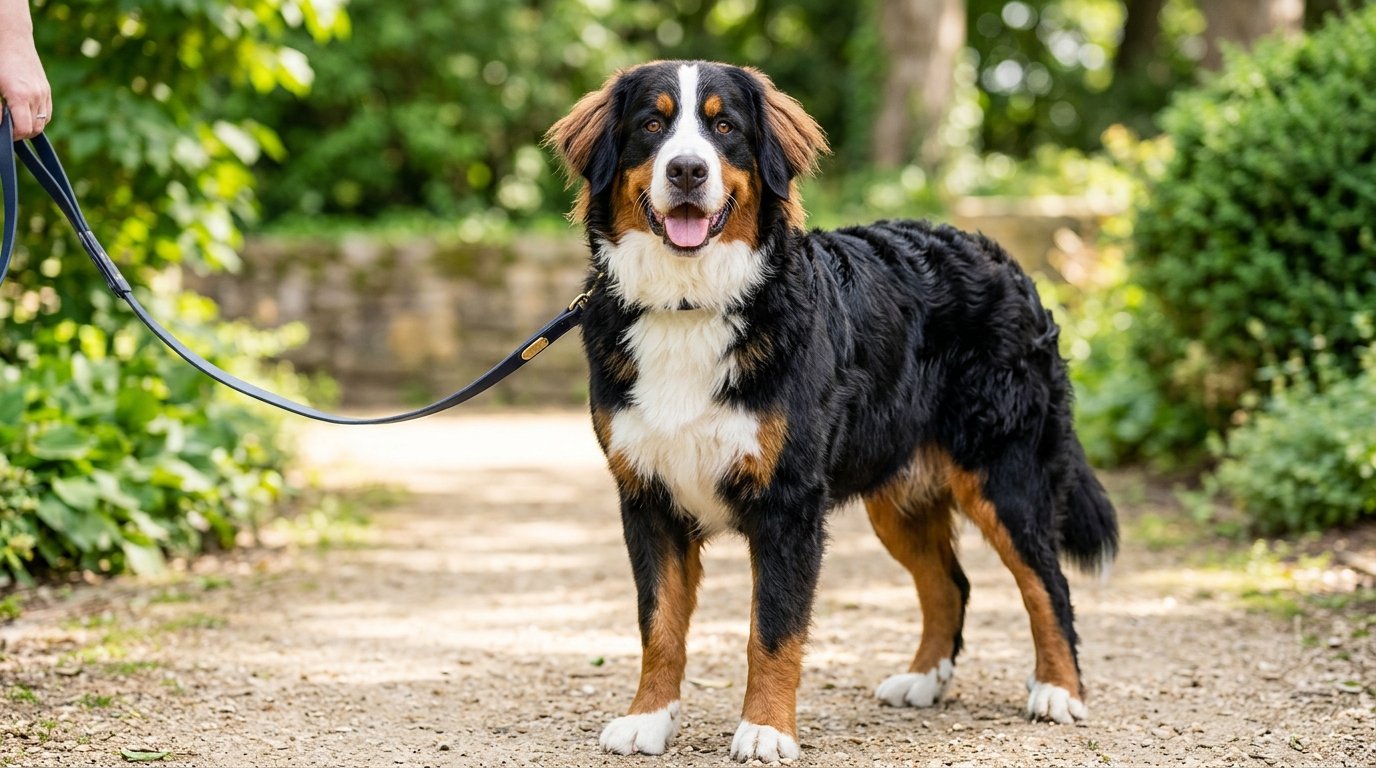
Have you ever seen a dog with a black back, tan eyebrows, and white paws and wondered what that color pattern is called? You may have heard someone describe the dog as a “tri dog” or “tri-color dog.”
The term refers to a dog with three distinct coat colors. Black, tan, and white is one familiar combination, but tri-color coats can appear in different shades and patterns depending on the breed and the dog’s genetics.
You can find tri-color dogs among Beagles, Bernese Mountain Dogs, Australian Shepherds, Pembroke Welsh Corgis, and several other breeds. Although these dogs may share a three-color appearance, they can have very different personalities, sizes, grooming needs, and exercise requirements.
This guide explains what tri dogs are, how their coat patterns develop, which breeds commonly display three colors, and what prospective owners should know before choosing a dog based on its appearance.
What Does “Tri Dog” Mean?
A tri dog is an informal term for a dog with a tri-color coat pattern. The word “tri” means three, so the description refers to the presence of three distinct colors in the dog’s coat.
A classic example is a dog with:
- Black: Often covering much of the back, sides, or head.
- Tan: Commonly appearing above the eyes, on the cheeks, legs, or underside.
- White: Often visible on the chest, muzzle, paws, or neck.
Not every tri-color dog follows this exact arrangement. Some have brown instead of black, while others display grayish or diluted shades. The location and amount of each color also vary.
Importantly, tri-color describes a coat pattern, not a separate dog breed. A tri-color Beagle and a tri-color Australian Shepherd may look completely different apart from sharing three coat colors.
The University of California, Davis Veterinary Genetics Laboratory’s guide to dog coat color explains how inherited genes influence pigment production and the distribution of colors in a dog’s coat.
What Does a Tri-Color Dog Look Like?
The appearance of a tri dog depends on its breed, coat length, base color, and the placement of its markings.
Black, Tan, and White Tri-Color Dogs
This is one of the most recognizable combinations. The dog may have a darker saddle across its back, tan markings on its face and legs, and white areas on its chest and feet.
Bernese Mountain Dogs and many tri-color Beagles are familiar examples.
Brown, Tan, and White Dogs
In some dogs, brown replaces black as the main dark pigment. Tan points and white markings may complete the three-color appearance.
The shade can range from rich chocolate to a lighter liver color, depending on the dog’s inherited coat-color genes.
Blue or Gray Tri-Color Dogs
Some dogs have a diluted dark pigment that appears blue-gray rather than solid black. When tan points and white markings are also present, the overall coat may be described as blue tri-color.
The exact terminology varies among breeds and registries, so the breed standard should be consulted when precise color classification matters.
How to Recognize a Tri-Color Pattern
| Coat feature | What to look for |
|---|---|
| Base color | The main color covering much of the coat |
| Secondary color | A contrasting shade, often tan or brown |
| Third color | A separate color, frequently white |
| Marking placement | Patches, points, facial markings, or areas on the legs and chest |
| Pattern consistency | The arrangement varies by breed and individual dog |
A dog does not need perfectly balanced areas of all three colors to be described as tri-color. One color may cover most of the body while the other two appear in smaller areas.
How Do Dogs Develop Tri-Color Coats?
Tri-color patterns develop through the interaction of genes that influence pigment production and where pigment appears on the body.
Two major pigments contribute to many canine coat colors: eumelanin, which produces black or brown shades, and pheomelanin, which produces red, yellow, and related shades. Other genetic factors influence dilution and white markings.
The UC Davis Veterinary Genetics Laboratory’s coat-color resource explains the roles of the agouti, extension, and dominant-black gene regions, along with other modifiers.
In simple terms, a dog’s coat pattern reflects a combination of inherited instructions. It is not produced by one universal “tri-color gene” that works identically in every breed.
Why Do Puppies From the Same Litter Look Different?
Puppies inherit different combinations of genes from their parents. As a result, siblings may differ in coat color, markings, coat texture, and other physical traits.
Even when puppies share the same parents, they may not have identical patterns. The exact outcome depends on the genes carried by each parent and how those genes combine.
Coat appearance can also change as a puppy matures. Some dogs develop more noticeable shading or a different overall impression as their adult coat grows in.
If you are choosing a puppy, photographs of both parents and information about previous litters may provide useful clues, but they cannot guarantee the exact adult appearance.
Popular Tri-Color Dog Breeds
Tri-color coats occur in several breeds. The following examples illustrate how widely the pattern can vary.
1. Beagle
Beagles are scent hounds known for their curious nature and interest in following smells. A tri-color Beagle commonly has darker coloring across its back, tan areas around the head or legs, and white markings.
Their short coat is generally straightforward to maintain with regular brushing. However, prospective owners should be prepared for an active dog that may follow an interesting scent instead of responding immediately to a recall cue.
2. Bernese Mountain Dog
The Bernese Mountain Dog is famous for its striking black, rust, and white coat. It is a large working breed with a substantial body and a thick coat.
Its grooming needs are greater than those of a short-coated tri-color dog because the longer coat can release considerable loose hair.
Anyone considering this breed should research its size, activity requirements, and health considerations rather than focusing on the coat alone.
3. Australian Shepherd
Australian Shepherds can have black tri-color or red tri-color coats. Some also display merle patterns, which alter the appearance of dark pigment.
These dogs were developed as working herding dogs and often need regular exercise, training, and mental challenges. A tri-color Australian Shepherd is not automatically calmer or easier to manage than an Australian Shepherd with another recognized pattern.
4. Pembroke Welsh Corgi
Pembroke Welsh Corgis are compact herding dogs with short legs, upright ears, and a sturdy build. Tri-color individuals often display dark body coloring with tan and white markings.
Their small stature does not mean they need little activity. Corgis benefit from training, daily movement, and appropriate enrichment.
5. Cavalier King Charles Spaniel
Some Cavalier King Charles Spaniels have black, tan, and white markings. Their soft, feathered coats create a different appearance from the short-haired tri-color Beagle.
Regular brushing helps prevent tangles, especially around the ears, chest, and feathering.
Prospective owners should also research the breed’s health screening needs and speak with a veterinarian or responsible breeder before making a decision.
6. Rough Collie and Shetland Sheepdog
Both breeds can display tri-color patterns, often combining black, tan, and white. Their longer coats create a more dramatic appearance than those of short-haired breeds.
They may suit owners who enjoy grooming and training, but coat color alone says little about the amount of daily activity or attention a particular dog will need.
Tri-Color vs. Merle, Brindle, and Bi-Color
Coat descriptions can be confusing because some terms refer to the number of colors, while others describe how colors are distributed.
| Term | Meaning | How it differs from tri-color |
|---|---|---|
| Tri-color | Three distinct coat colors | Describes the number of colors |
| Bi-color | Two coat colors | Has two main colors rather than three |
| Merle | Irregular patches of diluted pigment | Describes a pattern that can occur with other markings |
| Brindle | Darker stripes over a lighter base | Describes a striped pattern |
| Roan | A mixture of colored and white hairs | Describes how individual hairs create a flecked appearance |
These descriptions are not always mutually exclusive. For example, a dog may have a merle pattern and additional tan and white markings.
The breed’s recognized terminology matters if you are researching pedigrees, show standards, or genetic testing.
Does a Tri-Color Coat Affect a Dog’s Personality?
No reliable rule says that tri-color dogs share one personality simply because their coats have three colors.
A tri-color Beagle may show the scent-driven behavior associated with its breed, while a tri-color Australian Shepherd may have strong herding instincts. These differences reflect breed background and individual characteristics, not the number of colors in the coat.
When choosing a dog, consider:
- Energy level and exercise needs.
- Comfort around children and other animals.
- Training requirements.
- Grooming and shedding.
- Health history and screening.
- Your available time and living environment.
A dog should be selected for the fit between its needs and your lifestyle, not just its markings.
How to Care for a Tri-Color Dog
There is no special care routine required simply because a dog is tri-color. Grooming, exercise, feeding, and preventive veterinary care should be based on the breed and individual dog.
Grooming and Coat Maintenance
A short-coated tri-color dog may need only regular brushing and occasional baths, while a long-coated dog may require more frequent brushing to prevent tangles.
Inspect the skin during grooming. Look for redness, persistent itching, sores, or unusual hair loss, and contact a veterinarian if these signs continue.
Do not use bleaching products or harsh dyes to make the colors more vivid. These products can irritate the skin or expose the dog to unsafe substances.
Nutrition and Exercise
Feed a complete and balanced diet appropriate for the dog’s age and health. Portion sizes should reflect individual calorie needs and body condition.
Exercise requirements differ greatly between breeds. A working herding dog may need substantial physical and mental activity, while another tri-color companion may be satisfied with a more moderate routine.
Your veterinarian can help you select an appropriate diet and activity plan.
Health and Genetic Considerations
Tri-color is an appearance description, not a diagnosis or a guarantee of health.
Certain genetic variants affect coat appearance and may be relevant to particular breeds. For example, merle inheritance deserves careful consideration in breeding decisions. Ask a responsible breeder about appropriate health screening and consult a veterinarian or qualified veterinary geneticist when genetic concerns arise.
Do not assume a dog is unhealthy because it has a particular coat pattern, and do not assume it is healthy because its markings look typical.
Common Myths About Tri Dogs
Myth 1: Tri Dogs Are a Separate Breed
Fact: Tri-color describes a coat pattern shared by dogs from many breeds and mixed backgrounds.
Myth 2: All Tri-Color Dogs Are Black, Tan, and White
Fact: That is a common combination, but other dark shades and color combinations can occur.
Myth 3: Tri-Color Dogs Have Similar Personalities
Fact: Temperament varies by breed, genetics, early experiences, training, and individual character.
Myth 4: A Rare Tri-Color Pattern Means a Better Dog
Fact: Rarity does not establish health, temperament, or suitability as a companion. Responsible breeding and an appropriate match matter much more.
Frequently Asked Questions
What is a tri dog?
A tri dog is a dog with a tri-color coat pattern. The colors may include black, tan, and white or other combinations, depending on the dog’s genetics and breed.
Which dog breeds can be tri-color?
Beagles, Bernese Mountain Dogs, Australian Shepherds, Pembroke Welsh Corgis, Cavalier King Charles Spaniels, and several other breeds can display tri-color coats.
Are tri-color dogs rare?
It depends on the breed and the particular color combination. Tri-color is familiar in some breeds and less common in others, so there is no single rarity estimate that applies to all tri dogs.
Do tri-color puppies keep the same markings as adults?
The general pattern may remain recognizable, but coat shade and the appearance of markings can change as a puppy matures. The degree of change varies by dog.
Does tri-color mean the dog is purebred?
No. Both purebred and mixed-breed dogs can have tri-color coats. Appearance alone cannot establish pedigree.
Are tri-color dogs expensive?
Price depends on the breed, location, breeder practices, pedigree, demand, and health screening. A three-color coat does not automatically justify a higher price.
Can two tri-color dogs produce puppies with different colors?
Yes. Puppies can inherit different combinations of coat-color genes from their parents. The likely outcomes depend on the specific genetic variants involved.
Final Thoughts
Tri dogs stand out because of their three-color coats, but their appeal goes beyond appearance. From the compact Corgi to the large Bernese Mountain Dog, tri-color patterns occur in dogs with very different histories, temperaments, and care requirements.
If you are considering a tri-color puppy, learn about the breed or breeds behind it, ask about health screening, and choose a dog whose needs fit your lifestyle.
Looking for practical advice to help your dog thrive? Visit Dog Wellness Hub for useful guidance on grooming, nutrition, training, and everyday pet care.
Health Disclaimer
This article is for general educational purposes and does not replace veterinary advice. Contact a veterinarian about persistent skin changes, unusual hair loss, or other health concerns. For questions about inherited coat traits or breeding genetics, consult a qualified veterinary professional.
No comment