
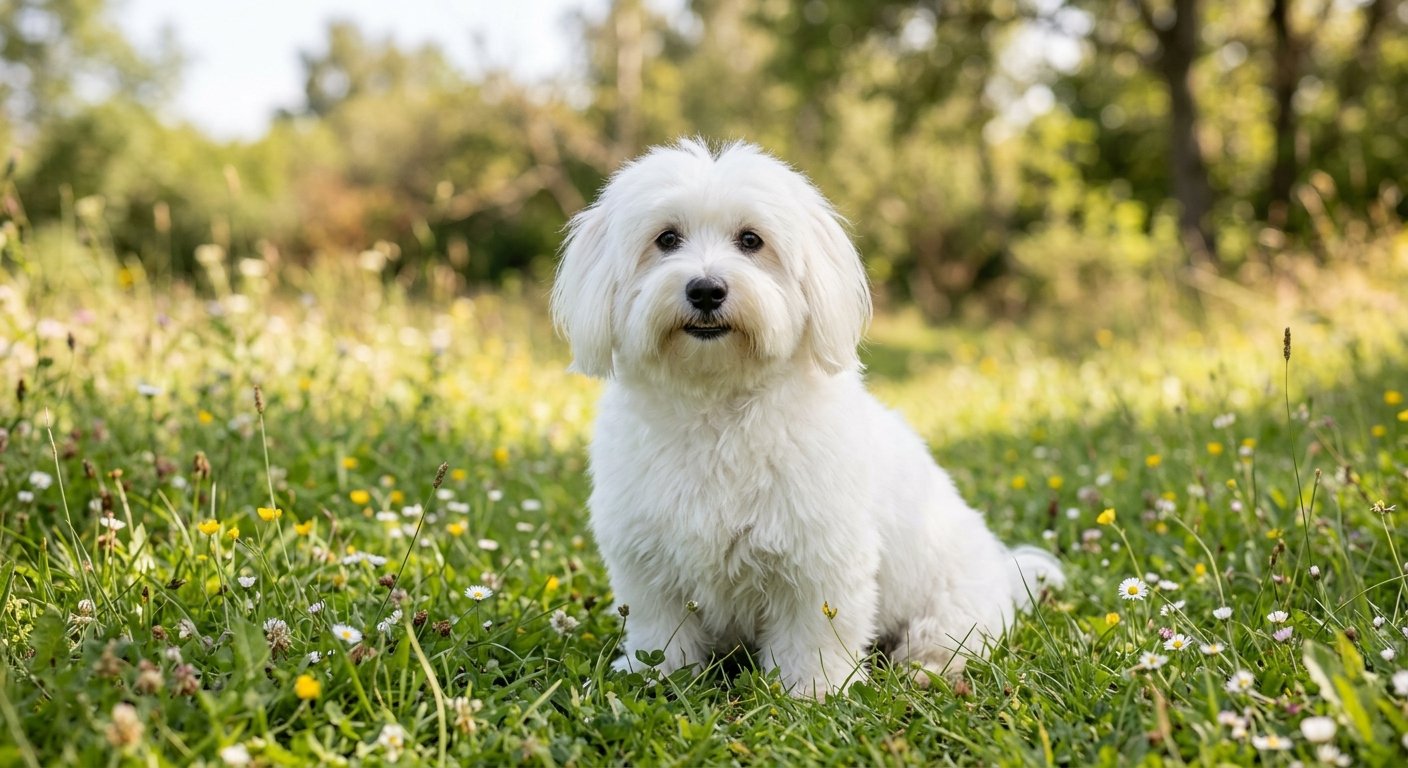
The Coton de Tulear is a small companion dog best known for its soft, cotton-like coat, expressive dark eyes, and cheerful personality. Although many people picture a bright white Coton, the breed can display subtle shades and markings that make individual dogs look different from one another.
Some puppies are born with noticeable patches of color that fade as they mature. Others develop light shading around the ears or retain small areas of cream, gray, or other permitted markings. Understanding these changes can help prospective owners know what to expect as their puppy grows.
However, coat color is only one part of the breed’s appeal. The Coton de Tulear is also known for its affectionate nature and need for companionship. Its coat requires regular care, particularly if you want to keep it long and free of tangles.
This guide explains Coton de Tulear coat colors, how the coat may change with age, what the breed looks like, and how to care for its distinctive hair.
What Colors Do Coton de Tulear Dogs Come In?
The Coton de Tulear is most strongly associated with white, but its coat may show subtle color variations, especially during puppyhood.
The American Kennel Club’s official Coton de Tulear breed profile describes the breed’s white coat and notes that certain light shadings may be present.
Common descriptions include:
- White: The characteristic color associated with the breed.
- White with cream shading: Light cream may appear on the ears or in other areas.
- White with light gray markings: Some dogs may show subtle gray shading, particularly when young.
- White with pale tan or champagne tones: These shades may be visible in certain coats, although their significance depends on the dog’s age and the applicable breed standard.
These descriptions should not be treated as a guarantee that every shade is accepted for conformation showing. Breed standards can differ in their wording, and the rules used by a kennel club may not be identical to informal descriptions used by breeders.
If you are buying a puppy for showing, consult the relevant registry’s current breed standard. If you want a companion, coat health, temperament, and responsible breeding practices matter more than a minor difference in shade.
Why Is the Coton de Tulear Usually White?
The Coton de Tulear’s white appearance is one of its defining characteristics. Coat color results from inherited genetic factors that influence pigment production and its distribution throughout the hair.
Dogs have several genetic systems that affect coat color, and the outcome depends on the combination inherited from their parents. White coats can arise through different genetic mechanisms, so it is not accurate to assume that all white dogs share one identical genetic explanation.
For the Coton de Tulear, the breed standard emphasizes a predominantly white coat. Small areas of light shading may be seen, particularly in puppies, but a dog’s appearance should be assessed using the relevant breed standard if show eligibility matters.
The UC Davis Veterinary Genetics Laboratory’s dog coat-color resource provides a useful explanation of the genetics behind canine coat color.
Coton de Tulear Puppy Colors vs. Adult Coat Colors
One of the most interesting features of the Coton de Tulear is that a puppy’s coat may not look exactly like its adult coat.
A puppy may have light cream or grayish shading that becomes less noticeable as it matures. In other dogs, subtle markings remain visible.
What Changes as the Puppy Grows?
Several aspects of the coat can change with development:
- The shade of the hair may appear lighter or more uniform.
- The texture may become longer and more cotton-like.
- Areas of puppy shading may become less noticeable.
- Grooming may become more demanding as the coat grows.
The timing and extent of these changes vary between individuals. There is no universal age at which every Coton de Tulear develops its final coat color or texture.
Photographs of the parents may provide some context, but they cannot guarantee exactly how a puppy will look as an adult.
Should You Worry About a Puppy With Cream Markings?
Not necessarily. A small amount of light shading does not automatically indicate a health problem.
However, color alone cannot establish whether a puppy is purebred or whether its breeding is responsible. Ask the breeder for pedigree documentation, veterinary records, and an explanation of the puppy’s background.
If a puppy has skin irritation, hair loss, sores, or unusual changes in pigmentation accompanied by other symptoms, seek veterinary advice. Those concerns should be assessed separately from normal coat-color variation.
Coton de Tulear Coat Texture and Appearance
The name Coton de Tulear refers to the breed’s cotton-like coat. Its hair is typically soft and can grow quite long if it is not trimmed.
Is the Coton de Tulear’s Coat Hair or Fur?
In everyday conversation, people often use “hair” and “fur” interchangeably. For grooming purposes, the important point is that the Coton de Tulear has a long, soft coat that can tangle and mat without regular care.
The coat is not maintenance-free, even though it may look fluffy and lightweight.
Long hair can collect debris and form knots in areas that experience friction, such as behind the ears, beneath the legs, around the collar, and near the tail.
Does the Coton de Tulear Shed?
Coton de Tulears are often described as low-shedding dogs, but low shedding does not mean no shedding.
Loose hairs may become trapped in the coat instead of falling away immediately. Regular brushing helps remove those hairs and reduces the chance of tangles.
The amount of visible shedding varies between dogs and may depend on coat condition, grooming, and individual characteristics.
Is the Coton de Tulear Hypoallergenic?
No dog can be guaranteed to be completely hypoallergenic.
People with dog allergies may react to proteins found in dander, saliva, and other materials, not simply to visible hair. A lower-shedding coat may be easier to manage in some homes, but it does not eliminate allergy risk.
If someone in your household has a dog allergy, spend time around the breed before making a commitment and discuss allergy management with a healthcare professional.
Coton de Tulear Coat Colors Compared
The following table summarizes common descriptions used when discussing the breed’s appearance.
| Coat description | What it looks like | What owners should know |
|---|---|---|
| Predominantly white | White across most of the body | The characteristic appearance of the breed |
| White with cream shading | Pale cream areas, sometimes around the ears | Shading may become less noticeable as the coat matures |
| White with light gray shading | Subtle grayish areas | The appearance can vary between puppies and adults |
| White with pale tan tones | Light beige or champagne-like shading | Confirm breed-standard terminology if showing the dog |
This table describes visual possibilities rather than a definitive list of every officially accepted show color. Refer to the appropriate kennel club standard for formal classification.
Does Coat Color Affect a Coton de Tulear’s Personality?
There is no reliable basis for assuming that a Coton de Tulear’s personality changes because its coat is whiter, creamier, or slightly gray.
The breed is commonly described as cheerful, affectionate, and people-oriented. However, individual temperament depends on genetics, socialization, training, health, and experience.
When choosing a puppy, pay attention to its behavior and environment rather than selecting solely by color.
Consider whether the puppy appears comfortable with gentle handling, how it responds to everyday sounds, and what information the breeder can provide about the parents’ temperament.
How to Keep a White Coton de Tulear Coat Clean
A white coat can show dirt and discoloration more easily than a dark coat. However, frequent bathing is not always the best solution.
The goal is to maintain a clean, comfortable coat without irritating the skin.
Brush Regularly
Brushing is one of the most important parts of Coton de Tulear care.
Use a suitable brush and comb to work through the coat gently. Pay particular attention to:
- Behind the ears.
- The underside and armpits.
- The legs and paws.
- Areas beneath a harness or collar.
- The tail and hindquarters.
Work in small sections rather than pulling forcefully through knots. If a mat is tight against the skin, seek help from a professional groomer instead of cutting it out with scissors.
Bathe When Necessary
Use a shampoo formulated for dogs and rinse thoroughly. The appropriate bathing frequency depends on the dog’s lifestyle, coat condition, and skin needs.
Avoid harsh whitening products, household cleaners, and human hair treatments. These can irritate the skin or expose the dog to unsafe ingredients.
If the coat develops persistent staining around the eyes or mouth, discuss the cause with your veterinarian or groomer rather than trying to bleach the area.
Prevent Tangles Before They Become Mats
A long coat can look smooth on the surface while knots develop underneath.
Check the coat down to the skin during grooming. A comb can help identify tangles that a surface brush may miss.
If brushing becomes painful or the dog strongly resists handling, make the sessions shorter and more rewarding. Severe matting may require professional grooming.
Coton de Tulear Grooming: Long Coat vs. Short Trim
Owners can choose a longer coat or maintain a shorter companion trim, depending on preference and the dog’s tolerance for grooming.
| Grooming style | Advantages | Considerations |
|---|---|---|
| Longer coat | Preserves the breed’s flowing, cotton-like appearance | Requires regular brushing and careful mat prevention |
| Shorter trim | Easier to maintain for many households | Still needs brushing, bathing, nail care, and skin checks |
| Professional grooming | Helps manage coat condition and difficult tangles | Requires regular appointments and a budget for grooming |
A shorter trim does not eliminate all grooming needs, but it may be a practical option for owners who want a manageable coat.
Ask your groomer to recommend a style that suits the dog’s coat texture, activity level, and comfort.
Coton de Tulear Personality and Lifestyle Needs
Although this article focuses on color, a dog’s temperament and care requirements are more important to daily life than its exact shade.
Coton de Tulears are commonly kept as companion dogs and may enjoy spending time close to their families.
They can be playful and curious, but their need for companionship means that a suitable home routine matters.
Are Coton de Tulears Good Family Dogs?
They can make affectionate family companions when their needs and temperament suit the household.
Teach children to handle the dog gently and avoid pulling its hair, ears, or tail. Small dogs should be supervised around young children to reduce the risk of accidental injury.
Do Coton de Tulears Need Much Exercise?
They need regular activity, but their routine should suit their age, fitness, and health.
Walks, supervised play, and short training sessions can provide physical activity and mental stimulation. Puppies and senior dogs may need different routines.
If your dog becomes unusually tired, limps, or resists movement, seek veterinary advice rather than assuming it simply needs more exercise.
Can Coton de Tulears Be Left Alone?
Some may struggle when separated from their owners for long periods, particularly if they have not learned to settle comfortably on their own.
Build independence gradually and provide a safe resting area with appropriate enrichment. If your dog shows persistent distress when alone, seek advice from a qualified trainer or veterinary behavior professional.
Health Considerations for Coton de Tulears
Coat color alone does not determine a dog’s overall health. Responsible breeding, preventive veterinary care, nutrition, and individual medical history are more useful indicators.
Skin and Coat Problems
Persistent itching, redness, sores, scaling, or unusual hair loss should not be treated as normal coat maintenance issues.
These symptoms may have several causes, including parasites, infections, or allergies. A veterinarian can help determine the cause and recommend suitable treatment.
Dental Health
Small companion dogs can develop dental problems, so routine oral care is important.
Brush with dog-safe toothpaste and ask your veterinarian to check the teeth and gums during examinations. Persistent bad breath, difficulty eating, bleeding gums, or changes in chewing behavior deserve attention.
Inherited Health Concerns
Coton de Tulears can have inherited health risks, and responsible breeders should understand the screening recommendations relevant to the breed.
Ask for health records and documentation of appropriate testing. A puppy’s coat color or fluffy appearance does not establish that it is free of inherited conditions.
Your veterinarian can help develop a preventive-care plan suited to the dog’s age and individual needs.
How to Choose a Healthy Coton de Tulear Puppy
If you are considering buying a Coton de Tulear, choose a breeder who is willing to discuss health, temperament, and the puppy’s background.
Ask:
- Can I see the puppy’s veterinary records?
- Can I learn about the parents’ health and temperament?
- What health screening has been completed?
- How have the puppies been socialized?
- What grooming routine does the breeder recommend?
- Can you explain the puppy’s coat color and whether its appearance may change?
- What support is available after the puppy goes home?
Be cautious of sellers who guarantee an exact adult coat shade or use color rarity to justify a high price without providing evidence of responsible breeding.
If you are interested in a companion rather than a show dog, prioritize health, temperament, and suitability for your home over minor coat-color differences.
Adoption may also be an option. An adult Coton de Tulear can offer a clearer picture of its coat texture, grooming needs, and personality.
Common Myths About Coton de Tulear Colors
Myth 1: Every Coton de Tulear Is Pure White From Birth
Fact: Puppies may show subtle shading or markings. Their appearance can change as the coat matures.
Myth 2: A Cream-Shaded Puppy Is Automatically Not Purebred
Fact: Appearance alone cannot establish pedigree. Consult documentation and the relevant breed standard rather than relying on color alone.
Myth 3: White Dogs Do Not Shed
Fact: Coton de Tulears may shed less visibly than some other dogs, but no coat should be assumed to produce no loose hair.
Myth 4: A White Coat Is Always Easy to Keep Clean
Fact: White hair may show dirt and discoloration more readily. Regular brushing, appropriate bathing, and coat maintenance are important.
Myth 5: A Particular Coat Color Guarantees a Certain Personality
Fact: Coat color is not a reliable predictor of temperament. Genetics, socialization, health, and individual experience all matter.
Frequently Asked Questions About Coton de Tulear Colors
Are Coton de Tulears always white?
White is the breed’s characteristic coat color, but some individuals may have light cream, gray, or other subtle shading. Formal show eligibility depends on the applicable breed standard.
Can a Coton de Tulear puppy change color as it grows?
Yes, the appearance of the coat can change as the puppy matures. Light shading may become less noticeable, although the degree of change varies.
Are cream Coton de Tulears rare?
Rarity depends on how the term is used and the population being considered. A seller’s claim that a puppy is rare should not be accepted as proof of higher quality or health.
Do Coton de Tulears shed a lot?
They are often described as low-shedding dogs, but individual shedding varies. Regular brushing helps remove loose hair and prevent tangles.
Are Coton de Tulears hypoallergenic?
No dog is guaranteed to be hypoallergenic. People with allergies may react to proteins in dander, saliva, and other materials, even when a dog sheds relatively little.
How often should I groom a Coton de Tulear?
Grooming frequency depends on coat length, texture, and lifestyle. Long coats need regular brushing to prevent tangles, while shorter trims may be easier to maintain.
Does coat color affect a Coton de Tulear’s health?
Coat color alone does not establish overall health. Responsible breeding, appropriate screening, veterinary care, and the dog’s individual medical history are more useful indicators.
Final Thoughts: Choosing the Right Coton de Tulear
The Coton de Tulear is known for its soft white coat, cheerful appearance, and companionable nature. Light cream or gray shading can add variety to an individual dog’s appearance, especially during puppyhood, but color is only one small part of choosing the right companion.
Before bringing one home, learn about its grooming needs, ask about health screening, and make sure you can provide regular care and companionship.
With a suitable grooming routine, balanced nutrition, preventive veterinary care, and a home environment that meets its needs, a Coton de Tulear can be a rewarding addition to the family.
Want to make your dog’s everyday care easier? Visit Dog Wellness Hub for practical guidance on grooming, nutrition, training, and responsible pet care.
Veterinary Disclaimer
This article is for general educational purposes and does not replace veterinary advice, diagnosis, or treatment. Consult a veterinarian about persistent skin changes, unusual hair loss, dental problems, or other health concerns. For formal show-color classification, consult the current breed standard of the relevant kennel club.
No comment