Taking Puppy Home In Car sounds simple, but that first ride can shape your puppy’s whole first day. A little planning helps you keep the trip safe, calm, and much easier on both of you.
Bringing home a puppy is one of those moments you remember for years. You picture the tiny paws, the sleepy face, and that first look in the rearview mirror when it finally hits you: this little dog is yours now. But mixed in with all that excitement, there is usually a bit of worry too. Will the puppy cry? Get sick? Have an accident? Need to stop every few minutes?
The good news is that most first rides go better when you keep things simple. You do not need a perfect trip. You just need a safe setup, a calm attitude, and realistic expectations.
In this guide, you’ll learn:
- How to prepare your car before pickup
- Where your puppy should ride
- What to pack for the trip
- How to handle whining, stress, or motion sickness
- What to do when you get home
- Common mistakes that make the first ride harder
If this is your first puppy, do not overthink it. A steady, quiet ride home is often the best gift you can give your new dog on day one.
Why the First Car Ride Matters?
A puppy’s first trip home is more than a drive. It is a big life change happening all at once.
Your puppy is leaving behind everything familiar. That might be littermates, a breeder’s home, a foster setup, or a shelter environment. Even if the puppy seems confident, the day is still a lot to process. New people, new smells, new hands, and then a moving car on top of it all.
That is why bringing puppy home in car should be treated with care. A loud, chaotic ride can pile more stress onto an already big day. A quiet, secure ride gives your puppy a softer landing.
Some puppies cry the whole first stretch of the trip. Some shake a little. Some fall asleep almost right away from pure exhaustion. All of those responses can be normal. Your job is not to force comfort. Your job is to make things feel steady and safe.
Before You Leave, Set Up the Car
A little preparation helps more than most people expect. Before you pick up your puppy, get the car ready so you are not trying to sort things out in the driveway.
Clear The Space
Take out loose items that can roll around, fall, or become a distraction. That includes:
- Bags
- Food wrappers
- Water bottles
- Sports gear
- Charging cords
- Tools or cleaning supplies
A puppy does not need much room, but the space should feel uncluttered and secure.
Keep The Temperature Comfortable
Young puppies can get too hot or too cold faster than adult dogs. Try to make the car feel mild and comfortable before the puppy gets in.
Avoid:
- Blasting cold air directly at the crate
- Parking for long periods with the puppy inside
- Wrapping the puppy in thick blankets unless it is truly cold
Bring Help If You Can
If possible, have one person drive and one person sit near the puppy. That does not mean someone should hold the puppy. It just helps to have another calm person there if you need to pass over a towel, talk softly, or manage a quick stop.
If you are driving alone, that is fine too. Just make sure your puppy is safely secured before the car starts moving.
The Safest Place For A Puppy in The Car
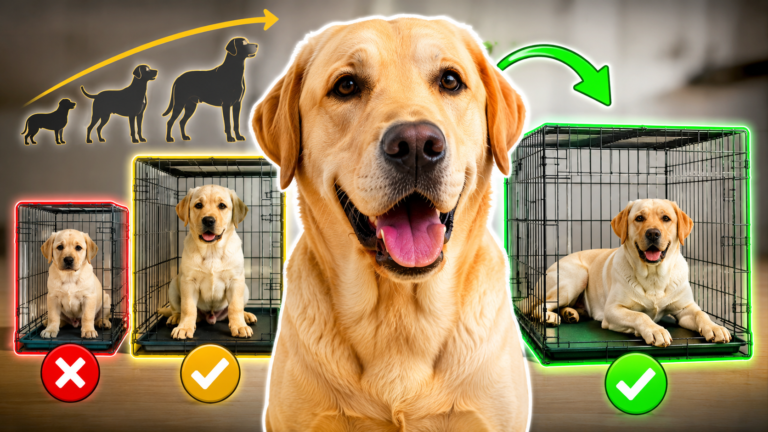
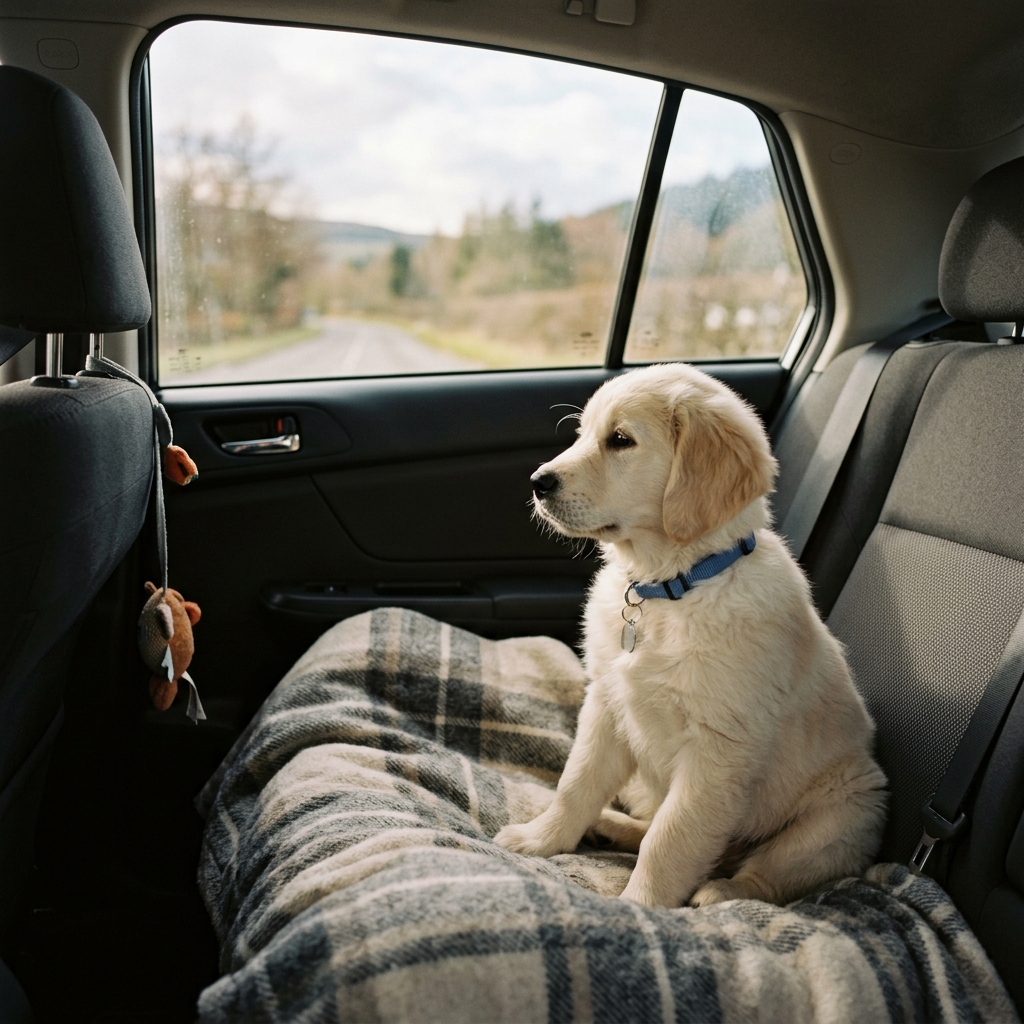
The safest spot for most puppies is in a secured crate or carrier in the back seat.
That setup protects the puppy, limits movement, and helps avoid driver distraction. It also gives a nervous puppy a smaller space, which can feel less overwhelming than being loose in a car.
For many owners, bringing a puppy home in the car goes much more smoothly when the puppy has a crate with a towel inside and not much else.
Why A Crate Works Well
A crate or carrier can:
- Keep the puppy from roaming
- Lower the chance of injury during sudden stops
- Help contain accidents
- Give the puppy a den-like place to settle
You do not need to overdo the bedding. One soft towel or washable blanket is usually enough.
Should You Hold The Puppy?
No, even though it feels tempting.
A puppy on your lap may seem cozy, but it is not safe. In a sudden stop, even at low speed, a tiny puppy can get hurt badly. A loose puppy can also crawl under the driver’s arms, feet, or dashboard area.
If you want to comfort the puppy, use your voice. Soft, relaxed talking is often enough.
The American Veterinary Medical Association also recommends securing pets during travel for safety: traveling-your-pet
What To Pack For The Ride Home?
The best way to bring a puppy home in the car is not to pack a hundred things. It is to bring the few items you are most likely to need.
Basic Ride-Home Checklist
Bring:
- A secure crate or carrier
- Two or three old towels
- Puppy pads if you want extra protection
- Paper towels
- Pet-safe wipes
- A leash
- A collar if appropriate for the puppy’s size and age
- A small bowl
- Water for longer trips
- Any medical papers or feeding notes
- A trash bag for dirty towels
If the breeder, rescue, or foster can send a small blanket or cloth with a familiar scent, that can help too.
What Not To Bring
Try not to turn the ride into a party. Skip:
- Loud squeaky toys
- Big meals before the trip
- Strong air fresheners
- A car full of people
- Lots of treats
The first ride home should feel low-key.
What The First Few Minutes May Look Like?
This part catches new puppy owners off guard. The first ten or fifteen minutes are often the most unsettled.
Your puppy may:
- Whine
- Drool
- Pant lightly
- Turn in circles
- Scratch at the crate
- Curl up and go to sleep
That is one reason the best way to bring new puppy home in car is to expect a little messiness and stay calm through it.
Do not keep opening the crate. Do not keep lifting the puppy out. Do not let everyone in the car talk at once. Just drive smoothly and let the puppy adjust.
What Helps
- Quiet voices
- Slow driving
- Gentle turns and stops
- A stable crate
- Realistic expectations
What Usually Makes Things Worse
- Passing the puppy from person to person
- Taking constant photos
- Feeding snacks during the ride
- Loud music
- Overreacting to every whine
A puppy does not need a big performance from you. It needs a calm adult.
Food, Water, And Potty Breaks
Ask before pickup when the puppy last ate, drank, and went potty. That gives you a better sense of what to expect.
Before You Leave
If the ride is short, it is often better not to feed a full meal right before departure. A full stomach plus stress plus motion is not always a great combination.
That is why the best way to bring puppy home in car often involves timing the trip after a potty break, not right after a meal.
During The Drive
For short drives, most puppies do not need food. For longer drives, offer small amounts of water during stops.
If you stop:
- Keep the puppy on leash
- Pick a quiet area
- Keep the stop short
- Do not let the puppy wander where many unknown dogs have been if vaccines are not complete
The CDC has a helpful pet health page that covers basic dog safety and care
What IF Your Puppy Gets Carsick?
Some puppies do fine in the car from day one. Others drool all over the towel before you even leave the parking lot.
Motion sickness in puppies is not unusual. Their inner ear is still developing, and stress can make the problem worse.
Signs OF Carsickness
Watch for:
- Heavy drooling
- Lip licking
- Yawning over and over
- Restlessness
- Vomiting
- Whining that builds instead of settles
If your puppy gets sick, pull over safely when you can. Clean it up, change the towel, give the puppy a minute, and move on without making it a huge event.
Small Things That May Help
- Keep the car cool
- Drive gently
- Avoid feeding too much beforehand
- Keep the crate steady and level
If car sickness keeps happening on future rides, talk with your veterinarian.
Bringing A Puppy Home On A Long Car Ride
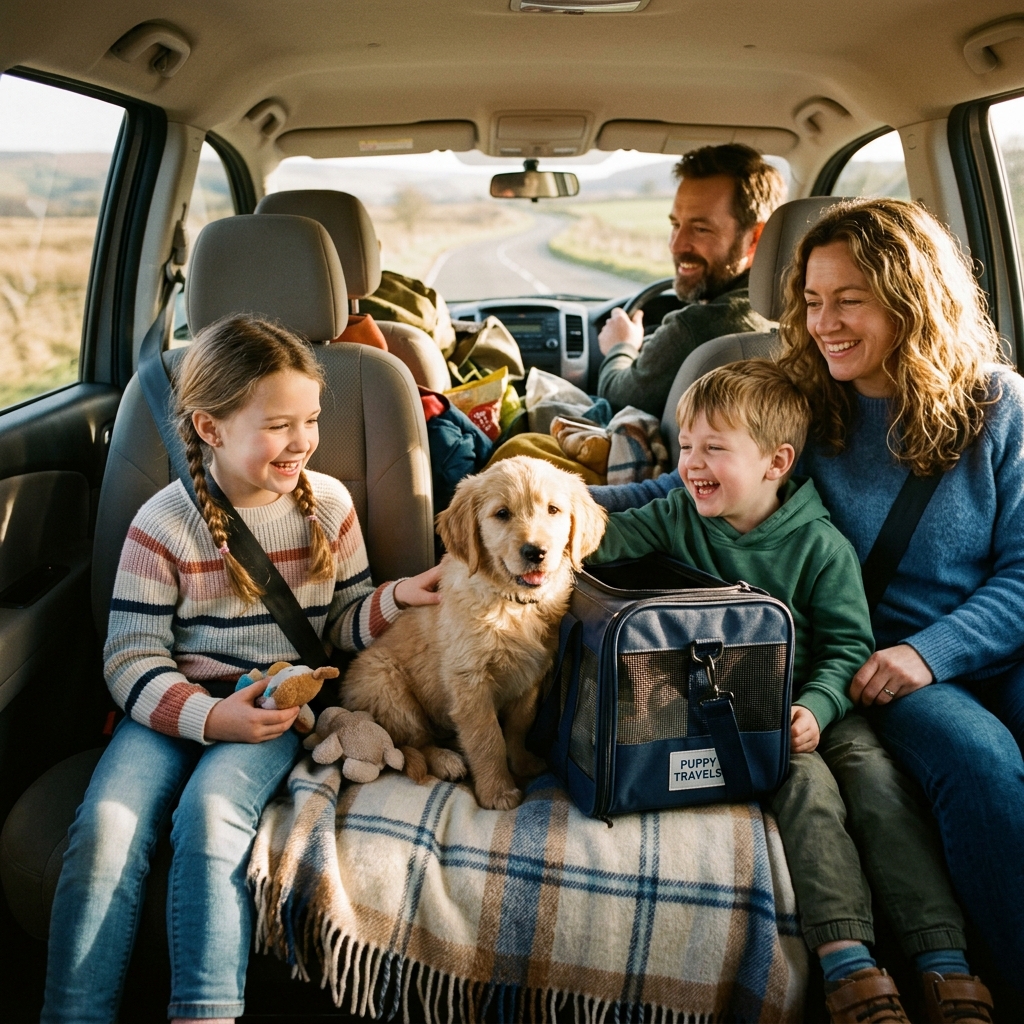
A one-hour trip is one thing. Bringing a new puppy home in the car for several hours takes more patience and a bit more planning.
Keep The Day Simple
Pickup day is not the day to run errands or stop for lunch with friends. Go, get the puppy, and head home.
Plan Short Breaks
If you are bringing home puppy in car on a longer route, stop every couple of hours if needed for water, cleanup, or a potty chance. Keep each break short and calm.
Do not be surprised if your puppy does not potty right away in a new place. Some puppies are too unsure at first.
Watch The Puppy, Not The Clock
A sleepy puppy may be fine. A puppy that keeps vomiting, pants heavily in a cool car, or seems overly weak needs closer attention.
If you are bringing new puppy home in car over a long distance, it is smart to ask the breeder, rescue, or vet ahead of time if they have travel tips for that specific pup.
A More Realistic Picture OF The Ride Home
A lot of blog posts make the first ride home sound either perfect or dramatic. Most of the time, it is neither. It is usually a mix of sweet, awkward, and a little messy.
I remember one pickup day that felt like a good example of real life with a new puppy. The puppy was tiny, soft, and confident for about three minutes. Then we got into the car and that brave little attitude disappeared. He looked around, made a small unhappy sound, stepped on his blanket, turned around twice, and then let out the saddest cry like we had ruined his whole week.
So we did what works more often than people think: not much.
My friend drove. I sat beside the crate in the back. I did not keep sticking my hands in. I did not try to scoop him up every time he made a noise. I just stayed nearby and talked once in a while in a normal voice, the same way you would talk to a dog at home when you want things to feel easy and safe.
For the first part of the drive, he fussed on and off. Then he got quiet. Then he shuffled into the corner of the crate, sighed like a tiny old man, and fell asleep.
About halfway through, we pulled over in a quiet spot because I had that nervous new-owner thought: what if he needs to potty right now? We gave him a short leash break. He mostly sniffed my shoe and looked confused. No potty, no big moment, nothing dramatic. Back in the crate he went.
A little later, there was a small accident in the towel. Not a disaster. Just puppy life. We swapped the towel, wiped things down, and kept going.
That, honestly, is what a good trip often looks like. Not smooth from start to finish. Not awful either. Just manageable. A little whining, a nap, maybe a mess, maybe no mess, and a lot of reminding yourself that your puppy does not need perfection from you.
That is often the bringing new puppy home long car ride approach that works best. Keep the mood calm. Keep the setup simple. Let the puppy have feelings without turning every moment into a crisis.
Common Mistakes New Owners Make:
Even loving owners can make the first trip harder than it needs to be.
Letting The Puppy Ride Loose
This is the biggest safety mistake. A loose puppy can fall, get stepped on, or distract the driver.
Turning The Ride Into An Event
The bringing puppy home car ride should be boring in the best possible way. Quiet is good.
Feeding Too Much Too Soon
A heavy meal before a car ride can backfire quickly.
Expecting Instant Trust
Some puppies bond fast. Others need a little space. Both are normal.
Rushing The First Hour At Home
A noisy welcome can overwhelm a puppy that has already had a full day.
What To Do Right After You Get Home
This part matters more than people think.
When you pull into the driveway, it is easy to feel like the hard part is over. But your puppy is still taking in a lot. New house, new smells, new floor, new voices, new everything.
So try to keep the arrival soft.
Take your puppy to the potty area first if you can. Then bring them inside without a parade. No crowding, no loud greetings, no rush to show off every room in the house. Let the puppy move at a slower pace.
Put down a little water. Show them where they can rest. Sit nearby and let them look around. Some puppies want to explore right away. Others just want to press against your leg or curl up somewhere quiet.
If you have kids, this is a good time to ask for calm bodies and gentle voices. If you have other pets, slow introductions are better than fast ones. There is no prize for doing everything in the first hour.
I always think of this part as the exhale after the ride. Your puppy has made it through a strange, tiring day. What helps most now is a peaceful home, a bit of patience, and room to settle in without pressure.
For many families, taking puppy home in car feels like the main event. In truth, the quiet hour after you arrive is just as important.
For more general pet travel and safety guidance, MedlinePlus also offers useful information here: https://medlineplus.gov/pethealth.html
Final Thoughts
Your puppy’s first ride home does not need to be flawless to be a good one. Safe is better than fancy. Calm is better than busy. Simple is better than overplanned.
Most puppies will tell you what kind of ride it is by how they respond. Some cry. Some sleep. Some drool. Some have an accident. None of that means you failed. It just means you brought home a baby animal on a day full of change.
If you stay patient, secure the puppy properly, and keep the mood easy, you are already doing a lot right.
FAQs
Should I Feed My Puppy Before The Car Ride Home?
A small meal may be okay with enough time before travel, but a full meal right before the drive can raise the chance of nausea.
Is it Okay To Hold My Puppy On The Way Home?
No. A secured crate or carrier is the safest option for both the puppy and the driver.
What IF My Puppy Cries During The Whole Ride?
That can happen. Keep the ride quiet, drive gently, and give the puppy time. Many settle once the car has been moving for a while.
Make The First Ride A Gentle Start
That first drive home is the beginning of your life together. Keep it quiet, safe, and simple, and your puppy will have a much easier start. Save this guide before pickup day so you can head out feeling prepared instead of overwhelmed.
Disclaimer: The information provided in this article is for educational and informational purposes only and is not intended as veterinary or professional advice.
About The Author