Bringing a new puppy home is easily one of life’s most rewarding experiences. You spend hours playing tug-of-war, teaching basic commands, and taking hundreds of photos of them sleeping in funny positions. But between those potty training sessions and exciting walks around the neighborhood, a big question always pops up for every dog owner: when to start grooming puppy.
If you are reading this guide on DogWellnessHub.com, you have probably noticed your little friend is starting to smell a bit funky. Or maybe their coat just does not feel as incredibly soft as the day you brought them home. Do not worry at all. Every single pet parent goes through this exact phase.
In this comprehensive guide, we will walk through the clear signs that your puppy needs a grooming session—questions like when should I groom my puppy, when can a puppy get groomed, and when can you groom a puppy come up all the time for new pet parents. We’ll cover how to handle changes in their coat, identify when to take puppy to groomer, and give you expert tips so you’ll always know When Can a Puppy Get Groomed and keep the whole process stress-free. Let us dive into the best ways to keep your dog comfortable, clean, and completely healthy.
Why Early Puppy Grooming Actually Matters?
A lot of people assume that grooming is just about making a dog look pretty or getting them ready for a dog show. However, it goes so much deeper than pure aesthetics. Regular, consistent care of your pet is a fundamental part of their preventive health care routine.
When you get your puppy used to a brush, the sound of running water, and having their paws handled from a very young age, you do them a massive favor for the rest of their life. Dogs that never get used to grooming when they are young often develop severe fear and anxiety later on. Trying to clip the nails of an anxious eighty-pound dog is not fun for you, the groomer, or the dog.
Furthermore, keeping their coat totally clean prevents serious skin issues, painful bacterial infections, and the nasty buildup of parasites like fleas and ticks. If you want to dig deeper into how physical upkeep directly impacts overall animal health, you can read the fantastic resources provided by the American Veterinary Medical Association (AVMA), which offers reliable, science-backed information on animal welfare.
Clear Signs Your Puppy Needs A Bath OR Brush:
Dogs cannot talk to us to tell us when they feel dirty or uncomfortable. Instead, we have to rely on their body language and physical condition to give us clues. Here are the most common signs you need to look out for.
The Distinct “Doggy Smell” And Visible Dirt:
The absolute most obvious sign that it is bath time is the smell. Puppies are naturally curious creatures. They love to explore every corner of the yard, dig their noses deep into the dirt, and happily roll around on wet grass.
If you run your hand down their back and feel a gritty layer of dust, it is time for a wash. Similarly, if your dog leaves a strong, lingering odor on your hands after a quick petting session, you need to grab the puppy shampoo. You do not need to bathe them every single week. In fact, washing them too often can strip their skin of natural oils and cause severe dryness. A gentle bath when there is visible dirt or a strong odor is the perfect balance.
Coat Changes: Tangles, Mats, And Shedding:
Your puppy’s coat will go through some major changes as they grow up. Right around four to six months of age, many dogs start to blow out their incredibly soft puppy coat to make room for their thicker adult coat.
During this big transition phase, it is extremely easy for painful knots and mats to form.
- Check right behind the ears: This is a spot where the hair is typically very fine and tends to tangle up super quickly.
- Feel their armpits and belly: The constant friction from walking and running makes these hidden areas prime real estate for tight mats.
- Watch for loose hair around the house: If you notice your dark clothes or living room furniture suddenly covered in pet hair, your dog desperately needs daily brushing sessions to pull out that dead coat.
Leaving knots in a dog’s coat is not just a cosmetic issue. It is actually very painful for the animal. Tight mats constantly pull tight on the skin with every single step the dog takes, which can cause severe irritation and even open sores.
Behavioral Shifts: Scratching And Licking
If you suddenly notice your dog scratching themselves way more than normal, obsessively licking their paws, or constantly rubbing their face against your living room rug, their skin is crying out for help. Sometimes, this just means they have dry skin. Other times, it points to environmental allergies or the presence of pests.
A good, soothing bath with a calming puppy-safe shampoo—preferably one loaded with natural ingredients like oatmeal or aloe vera—can relieve a lot of this itching. However, if the scratching simply will not stop, it is always a smart idea to consult reliable health sources. You can review the safety guidelines from the FDA on pet health and products to ensure the grooming items you use at home are strictly safe and approved.
The First Major Milestone: Professional Grooming
One of the most frequent questions we hear from readers is exactly when they should take their puppy to a professional groomer for the very first time. The answer changes a bit depending on your specific breed, but there is a golden rule that works wonderfully for almost everyone.
When to Schedule the First Visit?
Most seasoned experts highly recommend scheduling that very first visit to the grooming salon when your puppy is right between 12 and 16 weeks of age. By this point in their life, your dog should have received all their core vaccinations. This medical protection keeps them safe in a busy environment where plenty of other animals hang out.
What To Expect During the “Introductory Visit”
You should know that this very first visit should absolutely not be for a full, comprehensive haircut. In the professional dog grooming world, this is affectionately called an “introductory visit” or a “puppy trim.” The main goal here is just to help the puppy get used to a brand new environment.
A good groomer will help your dog get comfortable with:
- The incredibly loud noises of high-velocity dryers.
- The weird sensation of standing still on an elevated grooming table.
- Having a complete stranger gently handle their paws, ears, and tail.
- The buzzing sound of hair clippers right next to their face.
Keeping this experience upbeat, positive, and filled with tasty treats ensures your dog will never panic when they see the groomer in the future.
Beyond The Coat: Nails, Ears, And Teeth
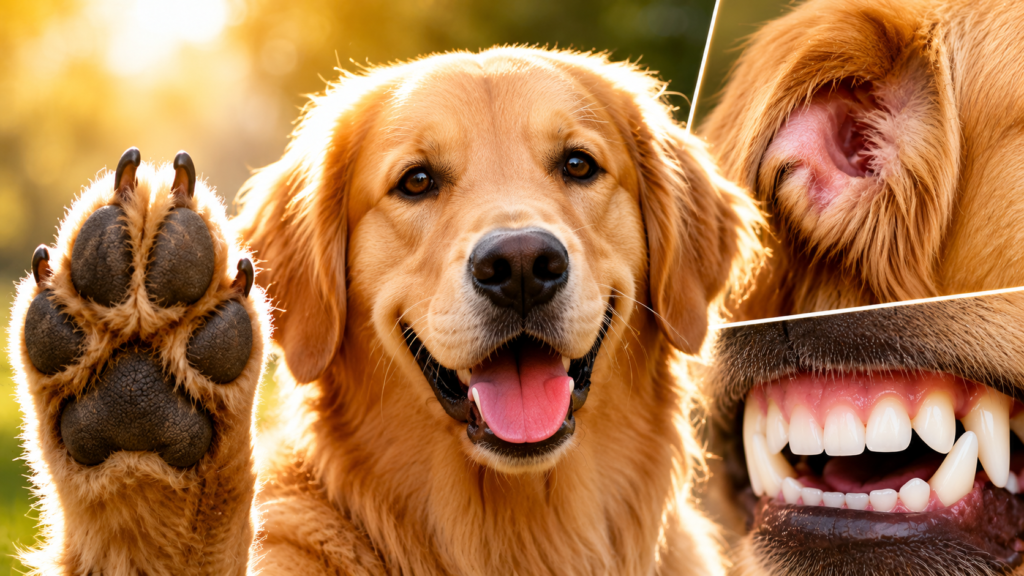
Grooming is definitely not just about soap and hair. There are three highly critical areas that new puppy owners tend to overlook entirely. Taking care of these spots is vital for their long-term health and comfort.
Safe Nail Trimming Practices:
If you can easily hear the “click, click, click” of your dog’s nails as they walk across your kitchen floor, they are simply too long. Long nails alter the actual physical way your dog walks. Over time, this poor posture causes severe, lasting pain in their joints.
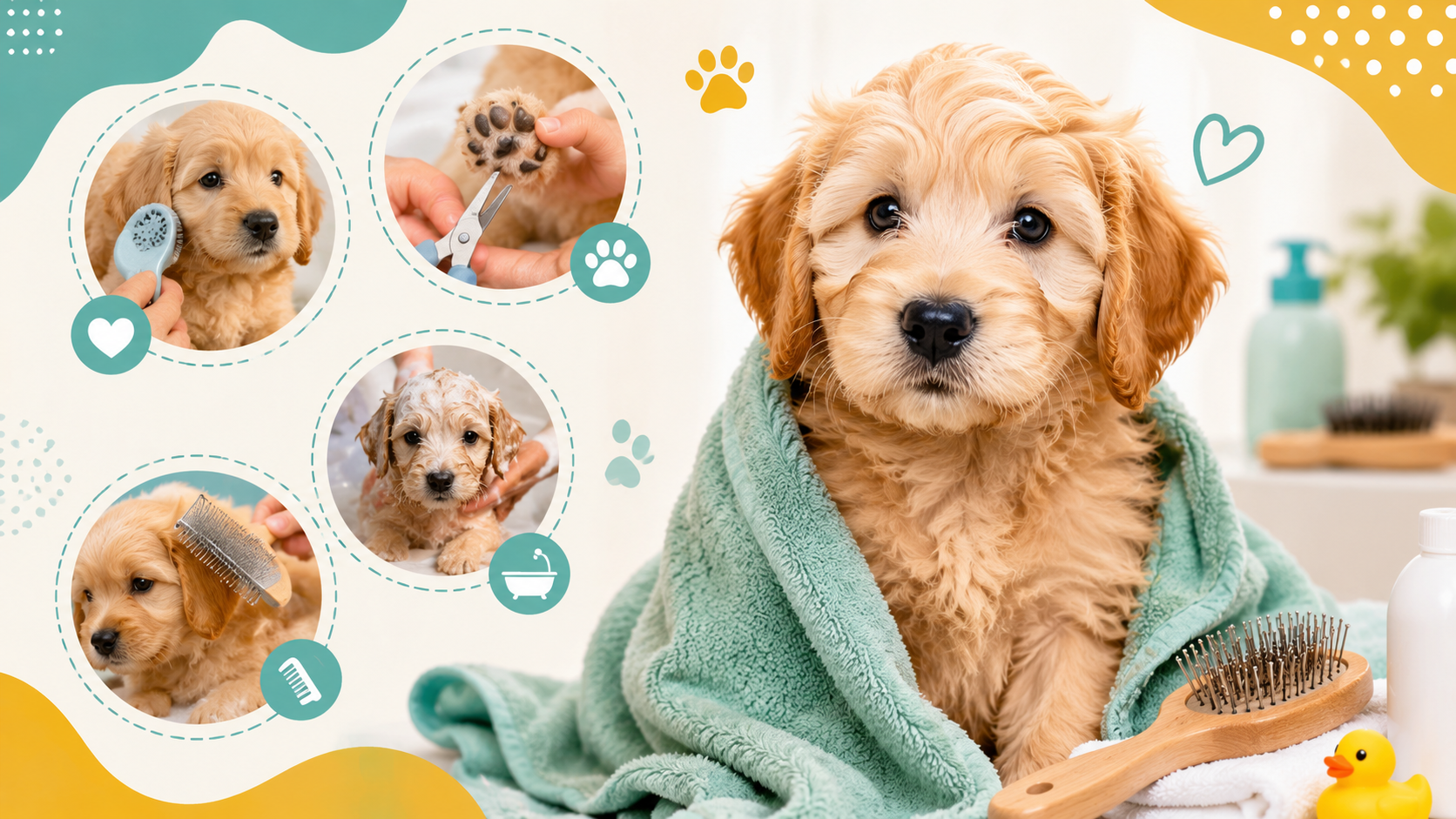
Get your puppy used to having their feet touched from day one. Gently rub each toe while you both relax and watch television on the couch. When it actually comes time to trim the nails, strictly use a sharp nail clipper designed for dogs. Only clip off the very tiny, curved tip to avoid hitting the quick—the pink blood vessel right inside the nail.
Keeping Ears Clean And Infection-Free:
Dogs with long, floppy ears—like Golden Retrievers, Basset Hounds, or Cocker Spaniels—are incredibly prone to nasty ear infections. The heavy ear flap blocks fresh air from circulating down into the ear canal, creating a dark, moist environment where bacteria thrive.
Make it a solid habit to peek inside your puppy’s ears once a week. If you notice a funky smell that reminds you of yeast, dark red skin, or thick brown discharge, it is time to clean them. Use a gentle, dog-approved ear cleaning solution and a plain cotton ball. Never, ever stick a cotton swab down into your dog’s ear canal, as this can easily cause permanent hearing damage.
Early Dental Health Habits:
Brushing a squirmy dog’s teeth probably sounds like a completely overwhelming chore, but it is necessary. Dental disease is incredibly common in adult dogs, leading to tooth loss and heart problems.
Start by simply massaging their gums with your bare finger when they are a little pup. A few weeks later, introduce a soft-bristled doggy toothbrush and a pet-safe toothpaste. Please remember to never use human toothpaste, as the fluoride and artificial sweeteners are highly toxic to dogs. Doing this basic routine just three times a week completely prevents tartar buildup and keeps their breath smelling fresh.
Building An At-Home Grooming Routine:
The real secret to having a beautifully groomed, well-behaved puppy is simple consistency. You do not need to carve out hours of free time every single day. Dedicating just five to ten minutes to a quick brushing session works wonders. It also deeply strengthens the emotional bond between you and your pet.
Use this quiet time to gently pet them, speak to them in a soft, encouraging voice, and hand out a few high-value training treats. Very quickly, your dog will stop viewing the brush as a scary tool. Instead, they will see it as a wonderful signal that they are getting undivided attention from their absolute favorite person in the world.
If you own a long-haired breed like a Poodle or a Shih Tzu, invest the money in a high-quality metal greyhound comb and a slicker brush. For short-haired breeds like Pugs or Boxers, a rubber curry brush is an amazing option. It pulls out the loose hair effortlessly and feels exactly like a soothing massage for them.
Detailed FAQ ON Puppy Grooming
How Often should I Actually Bathe My Puppy?
For the vast majority of dogs, a good bath every 4 to 6 weeks is perfectly fine. Bathing them more often than that will strip out the natural oils in their skin, leaving them itchy, flaky, and uncomfortable. Always adjust based on how dirty they get outside.
Can I Just Use MY Own Human Shampoo ON MY Dog?
Absolutely not. The pH level of human skin is vastly different from a dog’s skin. Using your own expensive shampoo will severely irritate your puppy’s skin and disrupt their natural acid mantle. Always buy a mild, tearless shampoo made specifically for canines.
My Puppy Absolutely Hates Being Brushed. What Do I Do?
Take it very, very slow. Show them the brush and give them a treat. Then, brush them just one or two times and immediately hand them a very tasty reward like a tiny piece of plain chicken. Slowly increase the brushing time day by day. Patience and positive reinforcement will fix this issue over time.
When Is IT Completely Safe TO Give My Puppy A Full Haircut?
You can usually start doing small, sanitary trims around their eyes and paw pads right at 12 weeks, assuming they are fully vaccinated. For a complete, full-body haircut, you generally want to wait until they are at least six months old, or whenever their adult coat has clearly started to push through.
Take The Next Step For Your Puppy’s Wellness:
Understanding exactly when and how to groom your puppy is honestly one of the best ways to show them how much you love them. With a bit of practice, plenty of patience, and the right tools in your cabinet, grooming sessions will easily turn into special moments of connection between you two.
If you want to continue learning the absolute best ways to care for your four-legged best friend, we invite you to explore the rest of our in-depth articles right here at DogWellnessHub.com. Take a moment to subscribe to our weekly newsletter to get practical, expert pet care tips sent straight to your inbox. Let us help you ensure your dog lives their absolute happiest, healthiest life possible!
About The Author