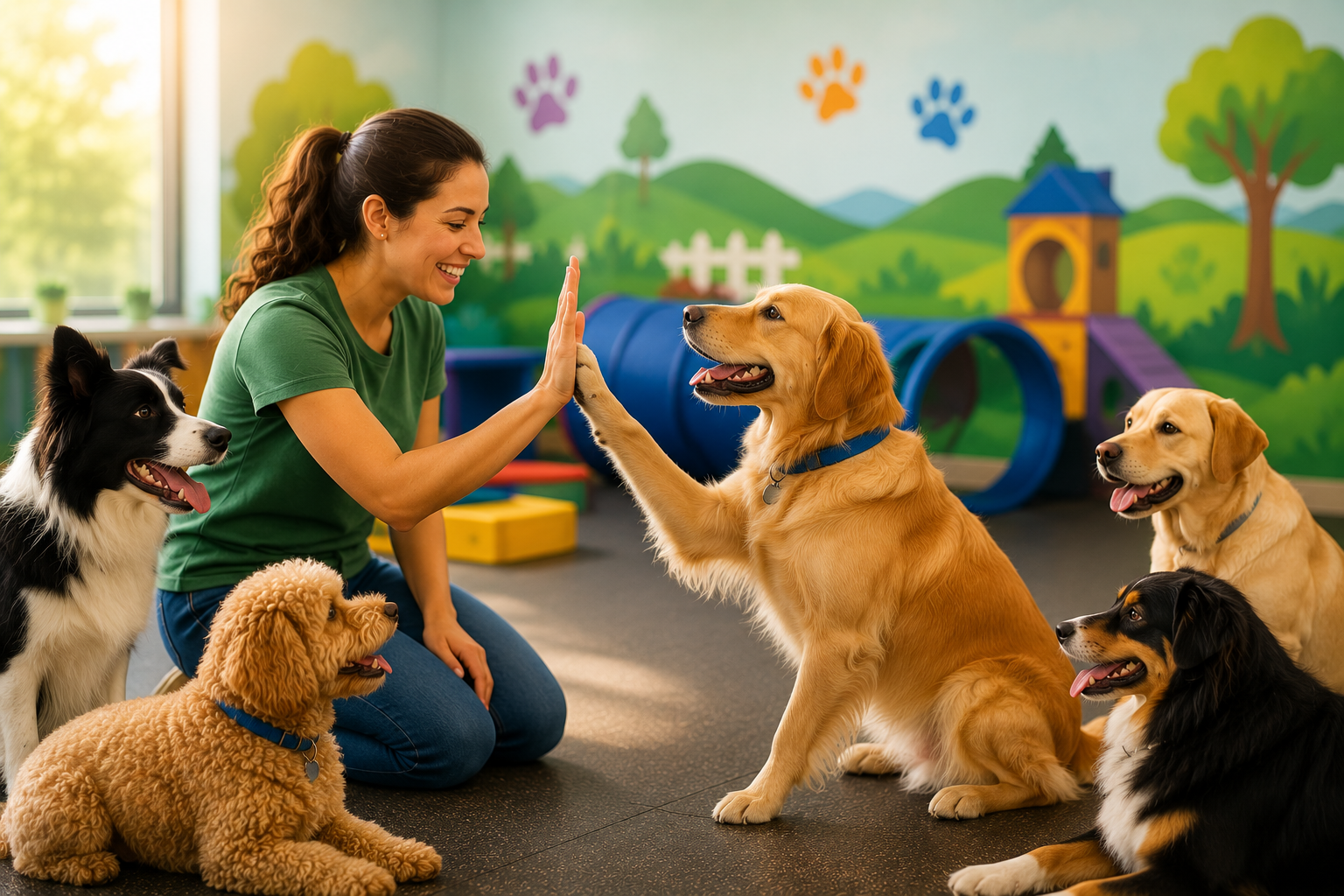
Daycare with positive reinforcement techniques can help dogs build calmer habits, feel more secure around people and other dogs, and learn better behavior without fear or force. If you want a daycare setting that supports manners, confidence, and lower stress, it helps to know what this approach looks like and why it can make such a big difference.
Dog daycare can be a great outlet, but not every facility handles behavior the same way. Some still lean on loud corrections, physical pressure, or old-school methods that can leave dogs tense or confused. A better daycare rewards good choices, supports emotional balance, and gives dogs room to learn in a way that feels safe.
In this guide, we’ll look at how positive reinforcement works in daycare, why it can lead to better behavior over time, and what to check before choosing a place for your dog.
What Is Daycare With Positive Reinforcement Techniques?
At its simplest, positive reinforcement means rewarding behavior you want to see again. When a dog sits calmly, checks in with staff, greets politely, or responds to a cue, something pleasant follows. That reward may be:
- A small treat
- Praise
- A toy
- Access to play
- Gentle attention
- A break in a quiet area
With repetition, dogs begin to connect those calm, thoughtful behaviors with good outcomes. That’s how learning sticks.
In a daycare setting, that matters a lot. Dogs deal with noise, movement, new smells, and social pressure all at once. A strong daycare program does more than watch the room. It helps dogs settle, interact with better manners, and come down from excitement without being scared into compliance.
Positive reinforcement is also widely supported by veterinary and animal behavior professionals. Reward-based training is generally favored over punishment-based handling because it helps dogs learn while protecting their emotional wellbeing.
Why This Approach Leads To Better Behavior?
Dogs usually learn best when they feel safe. That idea sits at the center of why positive reinforcement can shape more reliable behavior in daycare.
When dogs are punished for barking, backing away, or getting too wound up, they may stop for a moment. But stopping a behavior is not the same as learning a better one. In some dogs, punishment adds stress. That stress can show up later as reactivity, shutdown behavior, or rougher play.
Reward-based daycare takes a different path. It focuses on:
- Teaching replacement behaviors
- Lowering stress during social interaction
- Building confidence in shy dogs
- Helping energetic dogs practice self-control
- Creating predictable routines
That can lead to better behavior at daycare, and sometimes at home too.
Dogs Learn Patterns, Not Just Commands
A lot of behavior change happens in small, ordinary moments. Staff may reward a dog for:
- Waiting at a gate instead of rushing through
- Greeting another dog calmly
- Coming when called
- Taking breaks after play
- Settling on a mat
- Choosing to disengage from rough play
Those repeated moments matter. Over time, dogs learn that calm choices work. Chaos does not pay off the same way.
Emotional Health Affects Behavior:
Behavior is not just about obedience. Emotion plays a huge role. A dog who feels anxious, overstimulated, or frustrated may have a hard time making good choices in a group setting. Positive reinforcement helps staff guide the dog without adding more pressure.
That can be especially helpful for dogs who are:
- Young and still learning social skills
- Sensitive to noise or movement
- Recovering from a stressful past
- Easily frustrated in groups
- Prone to over-arousal during play
When a daycare respects the emotional side of behavior, progress tends to be steadier and more lasting.
What Positive Reinforcement Looks Like In A Good Dog Daycare?
A daycare can say all the right things online. What matters is what staff actually do during the day. The best programs make their training style easy to see in daily routines.
Here are signs you’re looking at the right kind of place.
Staff Redirect Instead of Intimidate:
Good staff do not rely on yelling, harsh leash pops, alpha rolls, or forced submissions. They step in early, interrupt unsafe behavior, and guide dogs toward a better option.
That might mean:
- Calling a dog away from rough play
- Guiding dogs into smaller groups
- Using treats for recall and check-ins
- Rewarding calm behavior near excitement
- Giving rest breaks before problems build
That kind of handling teaches instead of scares.
Play Groups Are Thoughtfully Managed:
A positive dog daycare is not a free-for-all. Dogs should be grouped by more than size. Temperament, age, energy level, and play style all matter.
For example:
- Gentle dogs do better with other soft social dogs
- Puppies need supervision and shorter play sessions
- High-energy dogs need structure, not just space
- Some dogs prefer people over group play
When dogs are matched well, the whole day tends to go more smoothly. It also lowers the chance of bad experiences that can lead to fear or rude habits.
Rest Is Part OF The Program
Many behavior issues in daycare start with over-arousal. Dogs get tired, but they keep going. Then you see mouthiness, pushiness, jumping, barking, or reactivity.
A solid daycare routine includes:
- Scheduled downtime
- Quiet recovery spaces
- Water breaks
- Short training moments
- Staff-monitored decompression
Rest is not extra. It is part of helping dogs stay regulated and make better choices.
Benefits For Puppies, Adult Dogs, And Nervous Dogs:
Different dogs benefit from reward-based daycare in different ways. Age, personality, and past experience all shape what they need.
Puppies Learn Social Skills Early
For young dogs, daycare can be helpful when the environment is structured and closely supervised. One common question is doggy daycare good for puppies. In the right setting, yes, it can be.
Puppies can benefit from:
- Safe exposure to other dogs
- Gentle handling from trained staff
- Reinforcement for polite greetings
- Early practice with routines and rest
- Confidence-building in new spaces
The key is balance. Puppies do not need endless play. They need short, positive experiences with enough rest to process what they’ve learned.
Adult Dogs Practice Better Habits
For adult dogs, daycare can reinforce existing skills and help them use those skills around distractions.
This may include:
- Coming when called
- Settling after excitement
- Walking with staff calmly
- Sharing space without guarding
- Greeting people without jumping
That kind of repetition can carry into daily life and support better manners over time.
Some Dogs May Improve When Left Alone Less Often
Pet owners often ask, does doggy daycare help with separation anxiety. For some dogs, it can help by reducing boredom and cutting down on time spent alone.
Still, daycare is not a cure for true separation anxiety. Dogs with severe distress when left alone often need a behavior plan built with a qualified professional. Daycare may be a useful part of support, but it is not a full replacement for treatment.
How to Choose The Right Daycare For Your Dog?

Not every daycare will suit every dog. The right fit depends on your dog’s age, health, personality, and stress level.
Questions To Ask Before You Enroll
Ask clear, direct questions such as:
- How do you handle barking, jumping, or rough play?
- Do you use treats, praise, toys, or other rewards?
- How are dogs grouped?
- How often do dogs get rest breaks?
- What training does your staff have in behavior and body language?
- What happens if a dog seems overwhelmed?
- Can I tour the facility first?
Listen closely to the answers. If staff talk mostly about dominance, pack leader ideas, or harsh correction, that should give you pause.
Watch for Clean, Calm, And Clear Systems:
A good daycare should feel organized. It does not have to be silent, but it should not feel frantic.
Look for:
- Clean play areas
- Staff actively supervising
- Dogs that are engaged but not frantic
- Clear barriers and separate spaces
- Safe introductions
- Written policies on behavior, health, and emergencies
A calm environment usually tells you a lot about how the dogs are being handled.
Consider The Dog, Not Just The Price:
Budget matters, and many owners compare puppy daycare cost before making a choice. That makes sense. Still, price should not be the only deciding factor.
A lower-cost daycare may seem attractive at first, but if it lacks structure or trained staff, your dog may come home overstimulated, stressed, or even injured. Paying a bit more can be worth it if the program offers better supervision, safer handling, and stronger behavior support.
Red Flags That Should Make You Pause
Some problems are easy to miss, especially if a facility has polished marketing. It helps to know what to watch for.
Be careful if you notice:
- Staff using punishment-based tools or techniques
- No temperament screening before group play
- Overcrowded playrooms
- Dogs with no access to breaks
- Vague answers about training methods
- Frequent reports of “scuffles” as if that is normal
- No discussion of stress signals or behavior monitoring
A daycare should protect both physical safety and emotional wellbeing. If either one is missing, keep looking.
How Positive Daycare Supports Life At Home?
A well-run daycare can help outside the facility too. Dogs who practice calm behavior in stimulating settings often have an easier time settling into everyday routines.
You may notice improvement in:
- Greetings at the door
- Loose-leash walking
- Play manners
- Recovery after excitement
- Confidence in new places
- Ability to settle in the evening
That said, daycare works best when it supports your home routine rather than replacing it. Dogs still need sleep, one-on-one time, walks, and clear expectations at home.
Keep Expectations Realistic:
Even a great daycare is not magic. Progress depends on:
- Your dog’s age and temperament
- How often they attend
- Staff skill and consistency
- Whether your home routine supports the same habits
It helps to think of daycare as one part of a bigger picture.
A Quick Note For People Interested In The Industry:
Some readers may also be exploring how to start a dog daycare. If that is your goal, positive reinforcement should be built into the foundation of the business, not added later as a selling point.
A strong daycare business needs:
- Staff education in dog body language
- Safe handling protocols
- Sensible group sizes
- Written emergency plans
- Clear cleaning standards
- A behavior philosophy that puts welfare first
Long-term trust comes from doing things well, not just saying the right words.
Final Thoughts
Daycare with positive reinforcement techniques gives dogs more than a place to spend the day. It gives them a chance to practice better habits in an environment built on trust, safety, and clear communication.
For many dogs, that can mean calmer behavior, stronger social skills, and less stress around people and other dogs. The best daycare programs do more than supervise play. They actively teach dogs how to make good choices in a setting that feels stable and supportive.
If you’re comparing facilities now, slow down and ask real questions. Watch how staff interact with the dogs. Look for a place that teaches behavior with patience instead of force.
If you want more practical dog care tips, behavior guides, and everyday wellness advice, explore more articles on Dog Wellness Hub and keep building a routine that helps your dog feel safe, balanced, and understood.
About The Author