How To Put Ear Drops In Dogs can feel harder than it sounds, especially if your dog squirms, pulls away, or hates having their ears touched. The good news is that with the right setup, a calm approach, and a little patience, this routine can become much less stressful for both of you. In this guide, you’ll learn simple steps, common mistakes to avoid, and practical ways to make ear drops easier and safer at home.
Ear problems are common in dogs, and treatment often depends on using medication the right way. If the drops do not reach the ear canal properly, they may not work as well as they should. That can drag out discomfort and make the whole process frustrating.
This article walks you through the process in a clear, gentle way. We’ll cover how to prepare, how to position your dog, what to do after the drops go in, and when it’s time to contact your veterinarian.
Why Giving Ear Drops The Right Way Matters?
Dogs can develop ear issues for many reasons. Allergies, trapped moisture, wax buildup, mites, and bacterial or yeast infections can all play a role. According to the American Veterinary Medical Association, ear problems should be taken seriously because untreated issues can worsen and become painful over time.
When you apply medicine correctly, you help:
- Get the drops where they need to go
- Reduce irritation faster
- Lower the risk of repeat infections
- Make treatment days shorter and smoother
If your dog has a red, swollen, painful, or foul-smelling ear, it’s best to follow your vet’s exact instructions. Some ear problems can look similar but need very different treatment.
Before You Start: Gather Everything First
Trying to find supplies while your dog is already nervous rarely ends well. Set up before you bring your dog over.
What You’ll Need?
- Prescribed ear drops
- Cotton balls or gauze
- A towel
- Treats your dog really likes
- Good lighting
- A calm space with little noise
If your vet also prescribed an ear cleaner, use it only as directed. Do not assume cleaning and medicating should happen back to back unless your vet told you to do that.
Check The Medication Label:
Before you begin, read the instructions carefully:
- Make sure you have the right dog and the right medication
- Check how many drops to use
- See how often it should be given
- Look for storage instructions
- Confirm whether the bottle should be shaken
This sounds basic, but it matters. A quick label check can prevent dosing mistakes.
Help Your Dog Feel Safe First:
Many dogs resist ear drops because they expect discomfort. A calm start can change the whole experience.
Pick The Right Moment:
Choose a time when your dog is relaxed, not playful or overexcited. After a walk or a meal is often easier than during a busy part of the day.
Use A Calm, Steady Tone:
Speak normally. Avoid turning the moment into a big event. Dogs notice tension fast. If you sound worried or rushed, your dog may tense up too.
Reward Before, During, And After:
This is one of the best ways to build cooperation.
Try this pattern:
- Show the bottle
- Give a treat
- Touch the ear gently
- Give another treat
- Apply the drops
- Reward again
Over time, your dog may start to see ear care as something manageable, not scary.
Step-By-Step: How To Apply Ear Drops Correctly:
Here’s the simple process most dog owners can follow at home.
- Position Your Dog Comfortably
Small dogs can sit on your lap or on a stable surface with a towel under them. Larger dogs often do best sitting beside you on the floor.
You do not need to pin your dog down unless your vet specifically advised a restraint method. Gentle control works better than force for most dogs.
In many cases, how to apply ear drops for dogs starts with choosing a position that keeps your dog from backing away while still letting them feel secure.
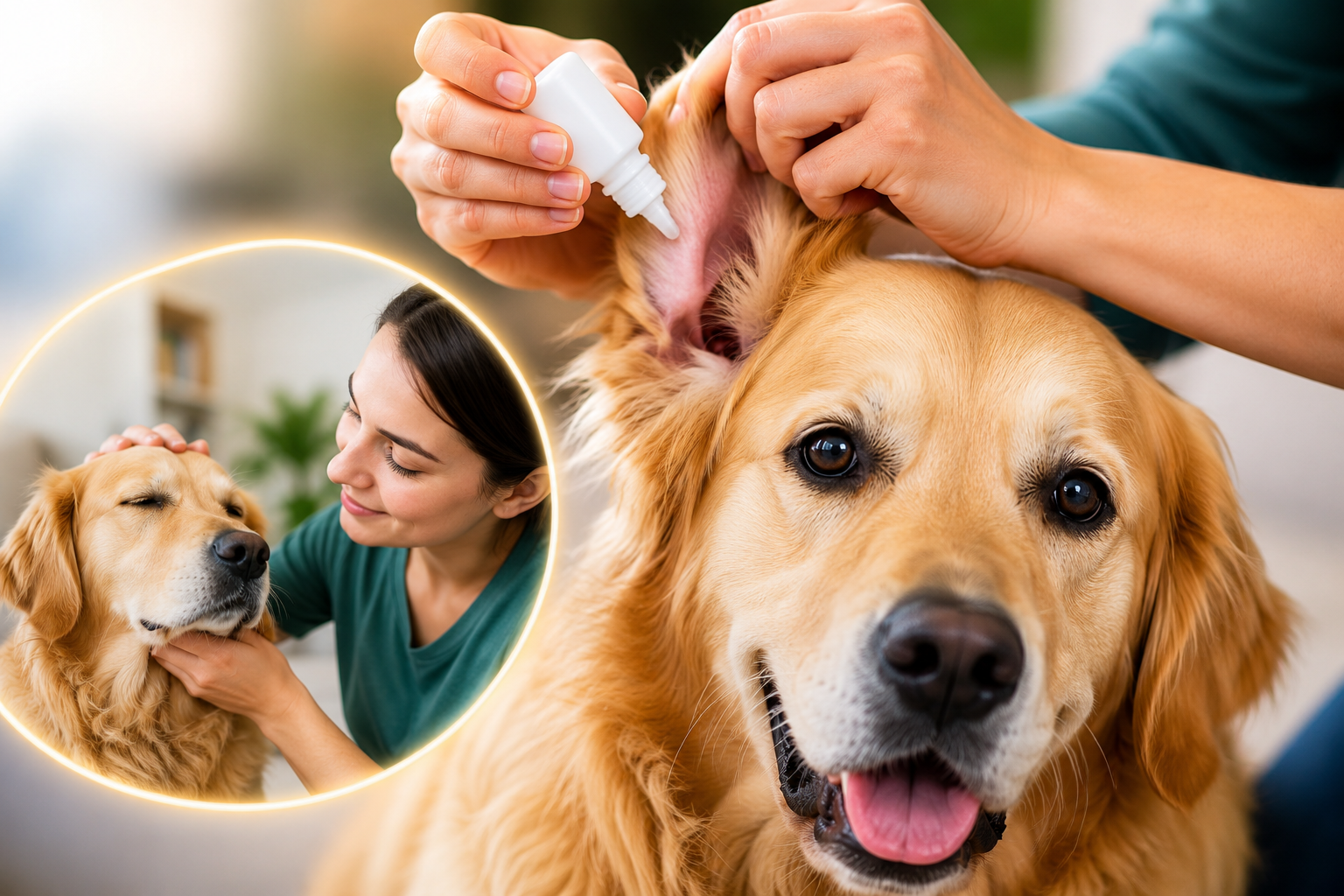
- Lift The Ear Flap:
Gently hold the ear flap up to expose the ear canal. Be slow and careful. If your dog flinches hard or cries, stop and reassess. Pain can be a sign the ear is badly inflamed or injured.
Do not push anything deep into the ear.
- Place The Nozzle Above The Ear canal:
Hold the bottle tip just above the opening. Try not to let the nozzle touch the ear itself. This helps keep the bottle clean and lowers the chance of contamination.
If you’ve been wondering how to give ear drops to dogs, this is the part where many people rush. Slow down here. A steady hand matters more than speed.
- Apply The Correct Number OF Drops:
Squeeze the bottle gently and count the drops based on the prescription. More is not better. Too much medication can create mess, waste product, and make your dog shake it out immediately.
- Massage The Base OF The Ear:
After the drops go in, gently massage the base of the ear for about 20 to 30 seconds. This helps move the medication deeper into the canal.
You may hear a soft squishing sound. That’s normal.
For many pet parents, how to apply dog ear drops gets easier once they understand that the massage step is what helps spread the medicine where it needs to go.
- Let Your Dog Shake Their Head:
Most dogs will shake right away. That’s okay. Stand back a little and let it happen. Then use cotton or gauze to wipe away any excess from the outer ear flap.
Do not use cotton swabs inside the canal. The U.S. Food and Drug Administration warns pet owners to use animal medications exactly as directed and to avoid risky home treatment habits that can make problems worse.
Simple Restraint Tips For Wiggly Dogs:
Some dogs are calm. Others act like ear drops are a personal insult. If your dog wriggles, these gentle restraint ideas can help.
For Small Dogs:
- Wrap them loosely in a towel like a burrito
- Keep them on your lap facing away from you
- Ask a helper to offer treats from the front
For Medium OR Large Dogs:
- Sit beside them rather than face-to-face
- Back them gently into a corner or couch for stability
- Have a helper support the chest and offer calm reassurance
If you’re trying to figure out how to give ear drops to a dog that keeps pulling away, the answer is usually not more force. It’s better setup, better timing, and better rewards.
Common Mistakes To Avoid:
Even caring dog owners can make small mistakes that affect treatment.
- Skipping The Full Course:
Your dog may seem better after a few days, but stopping early can let the problem come back. Finish the medication exactly as prescribed unless your vet tells you otherwise.
- Using Leftover Medication:
Never use old ear drops from a past infection. Different problems need different treatment, and some medications are unsafe if the eardrum is damaged.
- Cleaning Too Aggressively:
The outer ear can be wiped gently, but digging into the canal can push debris deeper or cause pain.
- Touching The Nozzle To The Ear:
This can contaminate the bottle and spread bacteria.
A lot of people searching how to put drops in dog’s ears are dealing with trial and error. That’s normal. Small technique changes can make a big difference.
What IF Your Dog Hates Ear Drops?
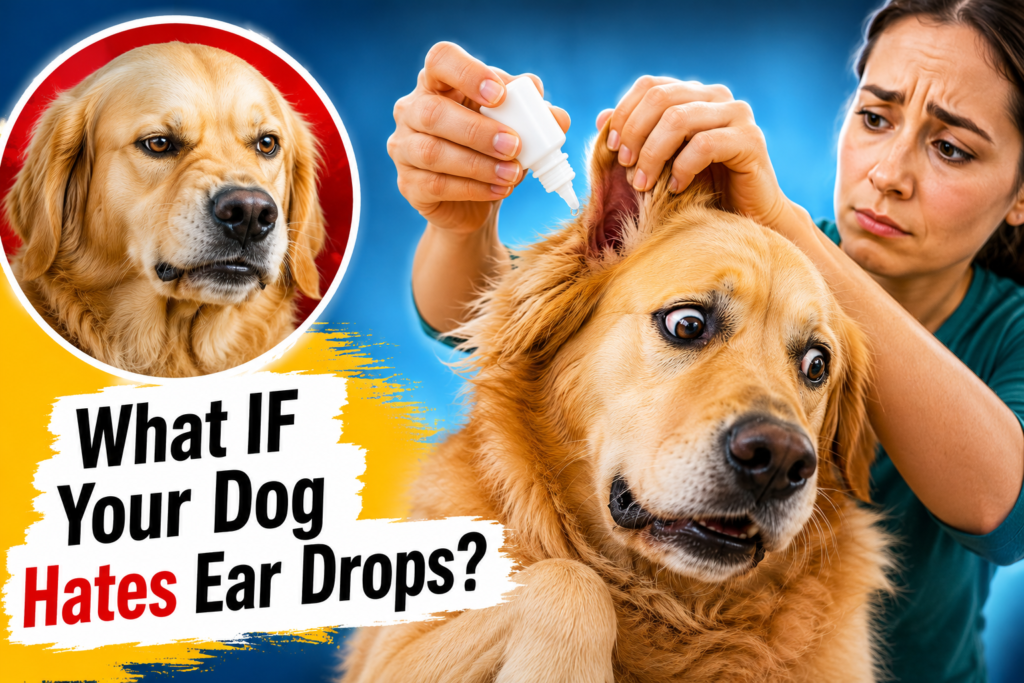
Some dogs have had painful ear infections before, so they expect every ear touch to hurt. If that sounds like your dog, take a slower training-based approach.
Break It Into Tiny Steps:
Work on one step at a time over a few sessions:
- Touch shoulder, reward
- Touch ear, reward
- Lift ear flap, reward
- Hold bottle nearby, reward
- Pretend application, reward
- Real application, reward
This may sound slow, but it often saves time in the long run.
- Use High-Value Treats:
Dry biscuits may not be enough. Try something special your dog only gets during ear care, if it fits their diet.
- Ask Your Vet About Alternatives:
If your dog is in pain, no amount of treats will solve that. Some conditions need pain relief, a different medication, or in-clinic treatment.
The American College of Veterinary Surgeons offers helpful owner education on common ear conditions in pets, which can give you more context about why some dogs become so sensitive: https://www.acvs.org/small-animal/ear-infections/
Signs You Should Call The Vet:
Home treatment is only appropriate when your vet has diagnosed the issue and prescribed medication. Call your vet if you notice:
- Strong odor from the ear
- Yellow, brown, bloody, or heavy discharge
- Head tilting
- Loss of balance
- Crying when the ear is touched
- Swelling or crusting
- No improvement after a few days
- Symptoms returning again and again
For general pet health guidance and safe medication use, the FDA’s animal health page is also helpful: https://www.fda.gov/animal-veterinary
If your dog suddenly cannot balance, seems disoriented, or has severe pain, do not wait. Get veterinary help promptly.
Tips To Make Future Ear Care Easier:
Once your dog is feeling better, you can still work on making ear handling less stressful.
- Practice Ear Touches When No Medicine IS Needed:
Gently lift the ears, look inside, and reward your dog. This helps separate ear handling from discomfort.
- Stay Consistent
Use the same calm location, tone, and reward pattern each time. Predictability helps dogs relax.
- Know Your Dog’s Triggers
Some dogs hate being cornered. Others dislike having their head held. Watch what bothers your dog and adjust your handling.
In everyday life, how to put ear drops in dogs becomes much easier when ear handling is already familiar and not only connected to infection or pain.
A Calm Routine Works Better Than a Fast One
Many owners think the goal is to get it over with quickly. But with dogs, fast can feel rough or scary. Calm and steady usually works better.
A good routine looks like this:
- Prepare supplies first
- Bring your dog to a quiet space
- Use a relaxed voice
- Position gently
- Apply drops correctly
- Massage the ear
- Reward generously
That’s it. Not perfect. Just consistent.
Final Thoughts:
Giving ear drops does not have to turn into a wrestling match. With a little preparation, a gentle touch, and the right pacing, most dogs can learn to tolerate it well. The key is to stay calm, follow the prescription closely, and stop guessing if something seems off.
If your dog is dealing with recurring ear problems, don’t just treat the symptoms and move on. Repeated ear issues can point to allergies, chronic inflammation, or another root cause that needs proper attention.
If you found this guide helpful, explore more practical dog care articles at Dog Wellness Hub for simple, trustworthy advice that helps you care for your dog with more confidence and less stress.
FAQs
How Often Should I Put Ear Drops In My Dog’s Ears?
Only as often as your veterinarian prescribed. Do not increase or reduce the schedule on your own.
Can I Clean My Dog’s Ears Before Using The Drops?
Sometimes yes, but only if your vet recommended a cleaner and explained when to use it. Some ears are too irritated for extra cleaning.
What IF My Dog Shakes Out The Drops Right Away?
That happens often. Try to massage the ear right after applying the drops so more of the medication moves into the canal before the head shake.
Can I Use Human Ear Drops ON My Dog?
No. Human medications may be unsafe for dogs or wrong for the condition. Always use medication prescribed or approved by your veterinarian.
Disclaimer: The information provided in this article is for educational and informational purposes only and is not intended as veterinary or professional advice.
About The Author