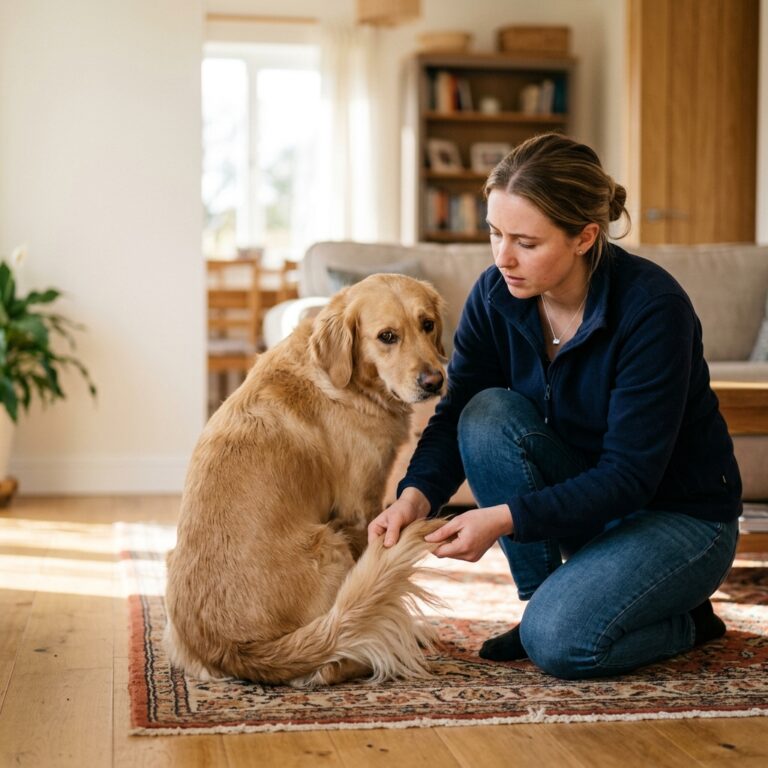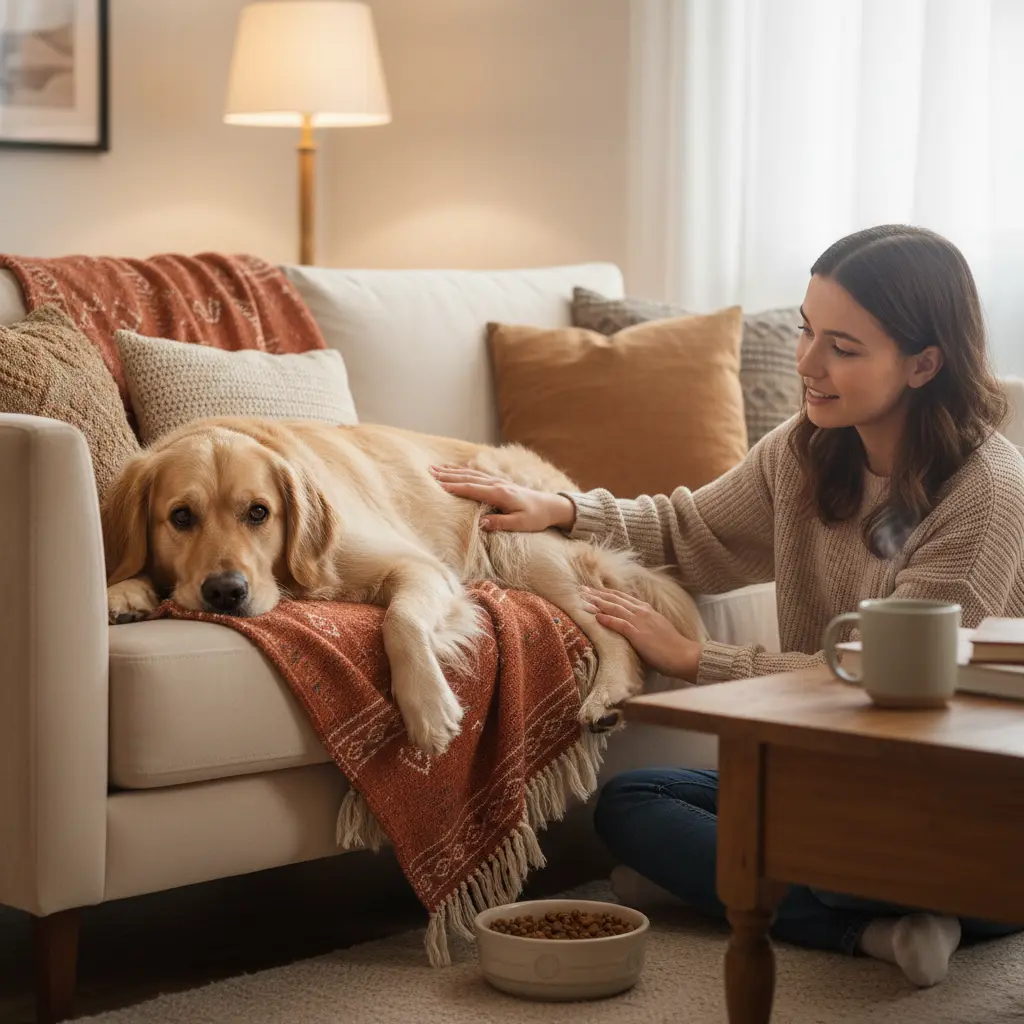
It’s 10:00 PM on a Tuesday. The house is quiet, the TV is low, and your dog is curled up beside you. Suddenly, a noise breaks the silence—a loud, rumbling squelch that sounds like a plumbing issue in an old house. You look down, and your dog looks back with big, apologetic eyes.
What Are The Causes of Stomach Gurgling in Dogs:
You have probably heard this symphony before if you own a dog. Although borborygmi is the medical word, most people just refer to it as “gurgling stomach.” Even though it may seem humorous at the time, it frequently leaves us wondering: Is he okay? Is she hurting? Above all, how can I treat my dog’s churning stomach at the moment?
I’ve spent years cleaning up messes and tending to ill puppies, so I understand the depressing feeling when you realise your dog isn’t doing well. Fortunately, a rumbling stomach isn’t always a bad thing. It’s usually just gas. However, it’s important to distinguish between “I need a vet” and “I ate too fast.”
In this guide, we’ll explore what can I give my dog for a gurgling stomach, why your dog’s stomach sounds like a washing machine, simple home remedies you can try at home, and warning signs that mean it’s time to visit the vet.
Decoding The Noise: Why Is My Dog’s Stomach Is Gurgling Loud?
We need to know what’s going on within that furry belly before we search the larder for cures.
The digestive tract of a dog is a busy region. In order to pass food, gas, and liquids through the intestines, it is continuously contracting and relaxing. We refer to this motion as peristalsis. These movements become audible when there is a lot of gas or when the intestines are empty.
The “Normal” Noises:
Silence isn’t always beneficial for digestion, despite popular belief. In fact, a silent gut may indicate that the digestive system has shut down (ileus). In other words, some noise is a sign of good health!
The most frequent, unthreatening causes of the rumble are as follows::
- Hunger Pangs: A dog’s stomach will growl if they haven’t eaten in a while, just like humans do. An echo chamber is created by the intestines circulating air around a vacant area.
- Dietary Indiscretion: The veterinarian’s courteous way of saying “my dog ate something gross.” Their system is working extra hard to metabolize everything, be it grass, a bit of cat litter, or a spicy table scrape
- Air Gulping: Does your dog inhale food as if it were their first meal? When they eat too quickly, air is swallowed and finally has to bubble through the intestines.
When Gurgling Noise From Dogs Stomach Becomes a Concern?
The bubbling can occasionally serve as the background music for a more serious issue. Pay notice if the noise is accompanied by a bad odour (gas) or altered behaviour.
- Abrupt Dietary Changes: A dog’s microbiota may suffer greatly from abruptly switching kibble brands.
- Parasites or Infections: Intestinal worms or bacteria like Giardia can cause inflammation and excessive gas.
- Serious Gastrointestinal Issues: Conditions like Inflammatory Bowel Disease (IBD), obstructions, or pancreatitis often start with grumbling guts before escalating to vomiting or pain.
The Merck Veterinary Manual states that although borborygmus is frequently benign, it becomes clinically relevant when combined with other symptoms such as vomiting or anorexia..
Quick Relief: What Can I Give My Dog for a Gurgling Stomach?
Your dog isn’t acting seriously unwell, but they are uncomfortable and the noises are loud. You wish to assist them in settling. This is your plan of action for safe, mild therapies..
1. The Power Of Chicken And Rice For Dogs:
When it comes to Dog Home Care, this is the best. Don’t give your dog its usual kibble, which can be rich and difficult to digest, if they are hungry yet experiencing dog stomach loud gurgling.
The Complete Recipe Guide:
- Protein: Skinless, boneless, boiled chicken breast. No garlic, no onions, and no salt.
- White rice is a carb. White rice is confining and starchy, whereas brown rice contains too much fibre for an unsettled stomach.
- Ratio: Combine 50% rice and 50% chicken.
Instead of feeding this in a full dish, feed it in little, frequent portions, such as a tablespoon or two at a time. It allows the stomach to digest meals without being overburdened. If you don’t have chicken, you can use cottage cheese or boiling low-fat ground beef (be sure to drain the grease completely).
2. Safe Choice: The Benefits of Canned Pumpkin:
For dogs, pumpkin is a wonder worker. It has a lot of soluble fibre, which helps move things along if they’re constipated and absorbs more water in the stomach, which is wonderful for diarrhoea.
How to serve it:
Depending on their size, give your dog one to four tablespoons of regular canned pumpkin.
Crucial: Verify that the pumpkin puree you purchase is completely hygienic. Avoid purchasing pumpkin pie filling since it is high in sugar, includes xylitol, which is lethal to dogs, and contains spices like nutmeg, which is toxic to dogs.
3. Bone Broth:
Hydration is your top priority if your dog refuses to eat. Everything is made worse by dehydration. Bone broth offers electrolytes, is tasty, and is easy on the stomach.
You may purchase a pet-safe version or create your own by cooking chicken or beef bones in water without adding any onions or garlic. It calms the intestinal lining and encourages them to drink.
4. Ice Chips
Your dog’s stomach is too upset to manage the amount if they are swallowing water and then throwing it back up. Offer ice chips in place of the water bowl. By licking the ice, they hydrate gradually and avoid the “gulp and purge” cycle.
5. Probiotics
Now is the perfect time to use any dog-specific probiotics you may have on hand. In order to combat the harmful bacteria that cause gas, these supplements inject beneficial bacteria into the gut. For situations like this, many veterinarians advise maintaining a supply of Proviable or FortiFlora in your pet first aid box.
Dangerous Foods You Should Never Feed Your Dog:
I can’t emphasise this enough: Don’t use your human medicine closet as a pharmacy.
- No Tylenol or Ibuprofen: These can be lethal for dogs.
- No Milk: Lactose intolerance affects the majority of dogs. A gurgling stomach can become a diarrheal catastrophe if you drink milk.
- No Pepto-Bismol (without authorisation): Although the active ingredient, subsalicylate, may be prescribed by some veterinarians, it may contain salicylates, which are hazardous for certain dogs and cats. Additionally, it covers indications of internal bleeding by turning the stool black. Prior to dosing, always give your veterinarian a call or send them a text.
The Wait-and-See Method: When to Fast Your Dog Approach Explained:
Sometimes, nothing is the best thing you can do for your dog. A 12- to 24-hour fast can be quite therapeutic for healthy adult canines. It completely relieves the intestines and pancreas of the burden of digesting.
How to do it: Remove all food and treats. Maintain a supply of fresh water.
Who this is for: Adult canines who are generally healthy are the target audience.
Who this is NOT for: Puppies (they can get hypoglycemia), senior dogs, small toy breeds (like Chihuahuas), or dogs with conditions like diabetes.
Reintroduce the bland chicken and rice diet gradually over the course of the following day if the gurgling stops after the fast.
Warning Signs: When Gurgling Becomes Serious
Missing a critical symptom can be disastrous, but we all want to avoid needless emergency veterinary bills.
Stop reading this blog and give your veterinarian a call if your dog exhibits any of the following symptoms in addition to a gurgling stomach.
1. The Dangerous Bloat – GDV
Bloat, also known as Gastric Dilatation-Volvulus (GDV), is a potentially fatal condition in which the stomach twists on itself. It kills fast.
Signs:
- Retching ineffectively (trying to throw up but nothing coming up).
- A distended, firm, or bloated stomach.
- Pace, restlessness, and difficulty settling in.
- Pale gums..
According to the American Kennel Club (AKC), bloat is a top killer of dogs, especially deep-chested breeds like Great Danes and German Shepherds. If you suspect this, go to the ER immediately.
2. Vomiting and Diarrhea
It could be okay to throw up once. However, your dog is losing fluids too quickly if they frequently throw up or if the vomit or stool contains blood. Hemorrhagic gastroenteritis (HGE), which is treated with intravenous fluids, can be indicated by bloody diarrhoea, which frequently resembles raspberry jam.
3. Lethargy and Pain
Does your dog behave in a natural way? They are experiencing severe abdominal agony if they are hiding, moping, or standing in the “prayer position” (front legs down, butt in the air). This position is a classic indication of either a blockage (such as a swallowed sock) or pancreatitis.
4. Toxin Ingestion
Do not wait for symptoms to worsen if the gurgling began after you discovered an open package of chocolate, sugar-free gum, or rat poison. Speak with your veterinarian or the ASPCA Animal Poison Control Centre right away.
How To Avoid Dog Stomach Gurgling In Morning?
It’s time to consider prevention once the storm has passed and your dog is once again content and wagging. Next week, you don’t want to have to deal with this again.
1. How to Prevent Your Dog From Fast Eating?
Invest in a slow-feeder bowl if your dog is a “vacuum cleaner” eater. The dog is forced to choose the kibble from these bowls’ ridges and mazes, which keeps them from taking large breaths. It’s an inexpensive remedy that greatly improves digestion.
2. Raising Your Dog’s Bowl Is It Really Necessary?
Raised feeders may help certain dogs—especially taller ones—swallow less air, though this is debatable. Always with your veterinarian, though, as some research indicates that this may potentially raise the risk of bloat in some breeds.
3. Simple Method to Assess Your Dog’s Daily Diet
Raised feeders may help certain dogs—especially taller ones—swallow less air, though this is debatable. Always with your veterinarian, though, as some research indicates that this may potentially raise the risk of bloat in some breeds
4. Probiotic Maintenance
A daily addition of probiotic powder to their diet can significantly improve the health of dogs with sensitive stomachs. Because, let’s be honest, they are dogs, it maintains the balance of their gut flora, making it easier for their bodies to process strange foods.
5. Lock up The Trash
Garbage gut” may seem straightforward, yet it’s one of the main causes of veterinary consultations. Invest in a garbage can with a locking cover or store it in a cabinet. It is always less expensive to prevent than to treat.
What Should Be Your Action Plan for Dog’s Gurgling Stomach?
Here’s a step-by-step checklist to help you remember this the next time you start complaining:
- Examine the dog to see if they’re acting ill. Lethargic? Are you hurting?
- Yes, give the veterinarian a call.
- No, move on to step 2.
- Examine the surroundings to see whether any rubbish is missing. Have they consumed a toy?
- Yes, give the veterinarian a call.
- No, move on to step 3.
- Safe Hydration: Serve ice chips or little sips of water.
- Dietary Rest: If the dog is an adult and in good health, refrain from eating for 12 hours.
- Bland Diet: Add a little rice or pumpkin along with boiling chicken.
- Keep an eye out: Contact the veterinarian if noises continue for longer than a day..
Concluding Remarks:
A dog’s gurgling stomach is similar to an automobile’s check engine light. Sometimes it’s the engine, and other times it’s only a loose gas cap (or a swallowed goodie).
You can typically determine whether your dog has a mild stomach problem or something that requires professional assistance by listening to the sounds and studying their behaviour. Follow your instincts and pay attention to theirs. No one knows your dog better than you. If something seems “off,” calling your veterinarian is always a good idea..
Inhale deeply. Turn on the rice cooker. This is something you can handle.
About The Author